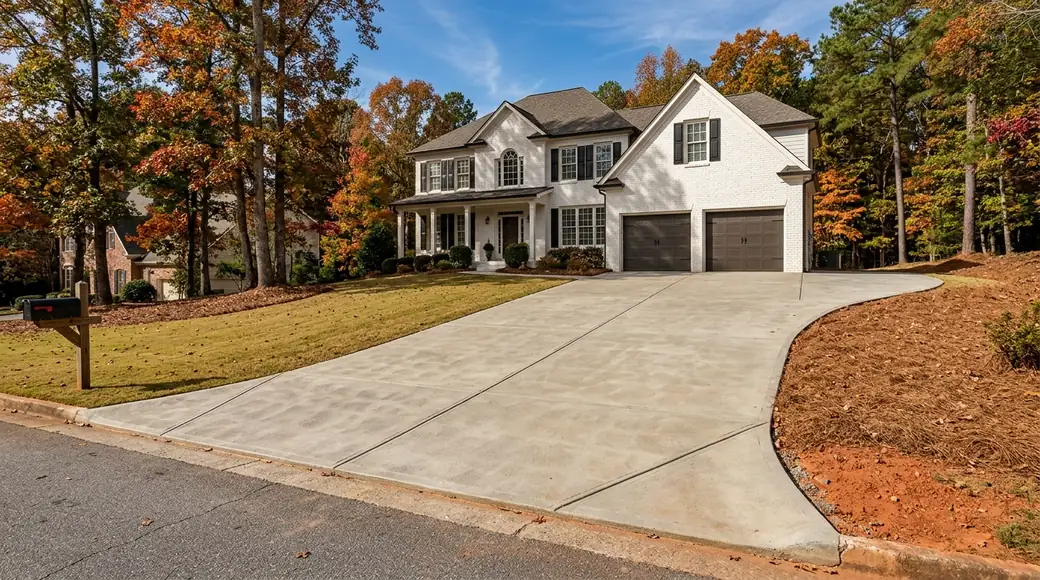
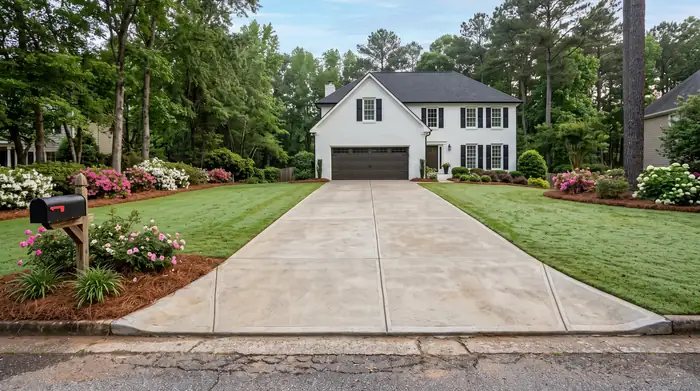
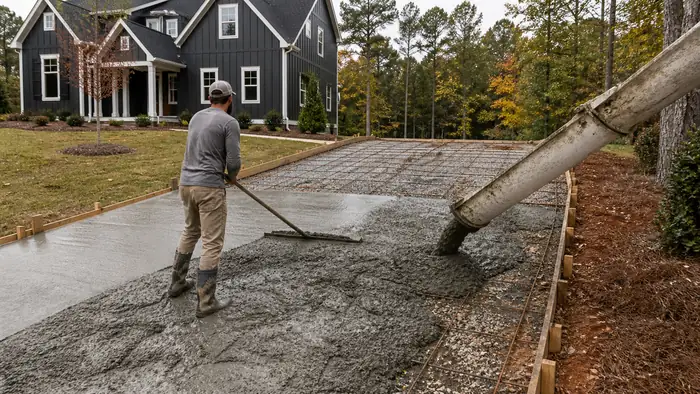
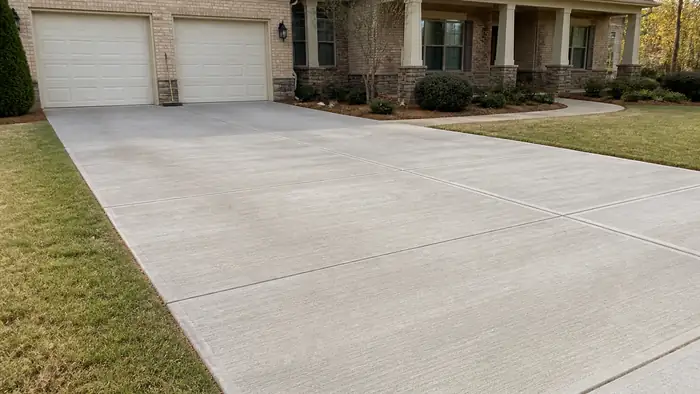
A driveway is the largest piece of flatwork on most properties, and it carries more weight and more traffic than any sidewalk on the lot. We are a concrete contractor working in Marietta, Georgia, and we cover Smyrna, Kennesaw, Roswell and the rest of metro Atlanta on the same terms. Housing here runs a wide range of ages, so some of what we pour replaces slabs that have been down for decades. Others are first pours on ground that has never held concrete. Both are ordinary work for us.
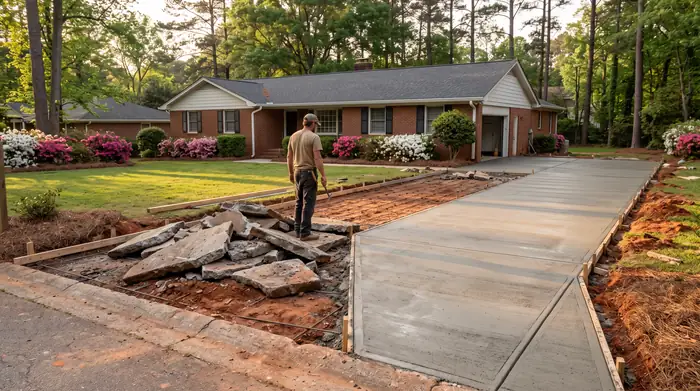
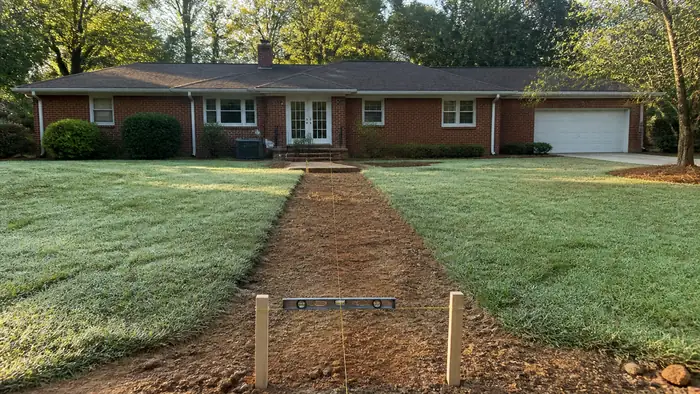
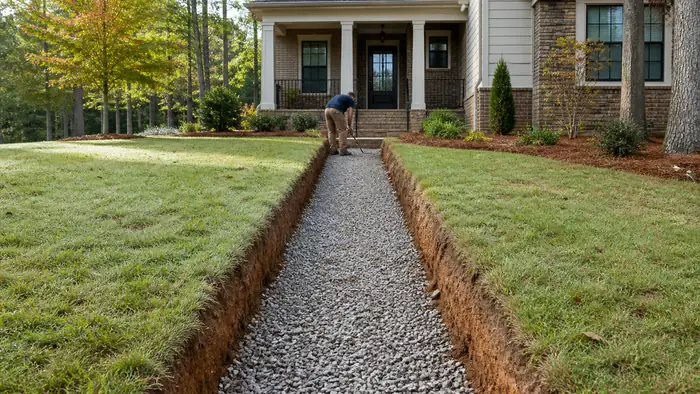
Everything starts with what is already there. Old concrete comes out, the base gets graded and compacted, and steel goes in as rebar or wire mesh depending on the slab and what will park on it. Then we pour, finish, and leave it alone to cure. Some driveways sit on commuter corridors running toward Atlanta, where a truck cannot sit across the road all day, so access gets sorted before anyone mixes anything. The pour itself is the short part.
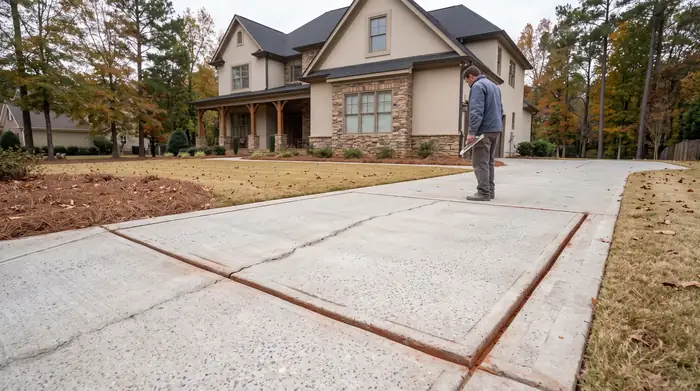
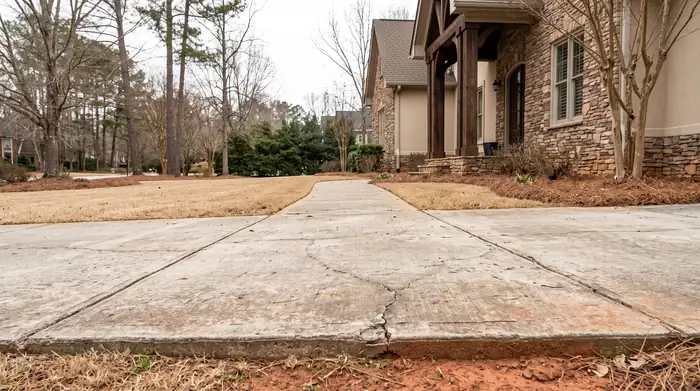
Most driveway failures trace back to the base, not the concrete. A slab poured thin, or poured over ground that was never properly compacted, cracks and settles no matter how clean the finish looked the first year. Roots lift panels. Water running the wrong way finds the garage door. Patching over any of that buys a season or two, and then the same work comes back around, which is why we would rather deal with what is under the slab than resurface a problem.
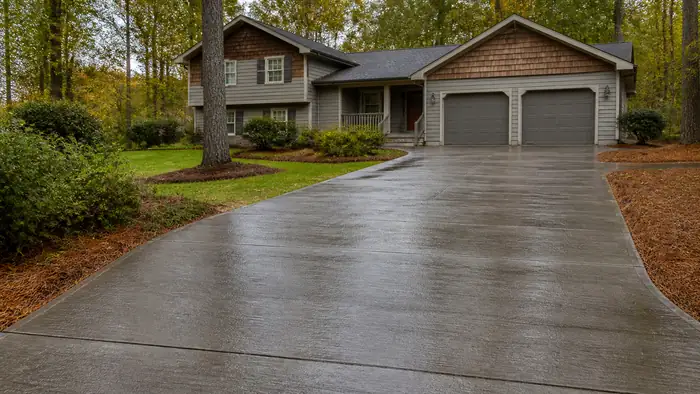
Finish is a real choice, not an add-on we push. A plain broom finish holds up well and looks right on plenty of houses, while stamped concrete, colored concrete and exposed aggregate each change how the driveway reads from the street and how it sits against the house. If a sidewalk or apron ties into the driveway, we handle it in the same pour instead of leaving a cold seam that separates later. Call for a free estimate. A driveway is easier to look at in person than to describe over the phone, and most of what matters is visible standing on it.