+1 470-666-7021
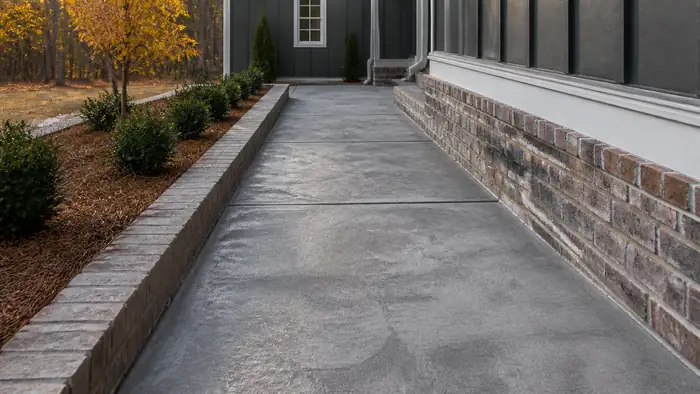
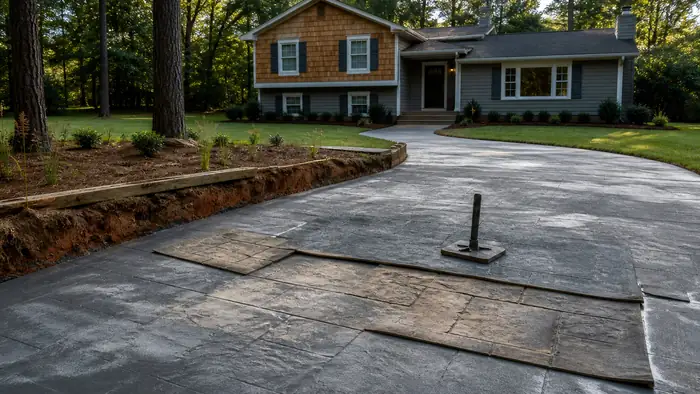
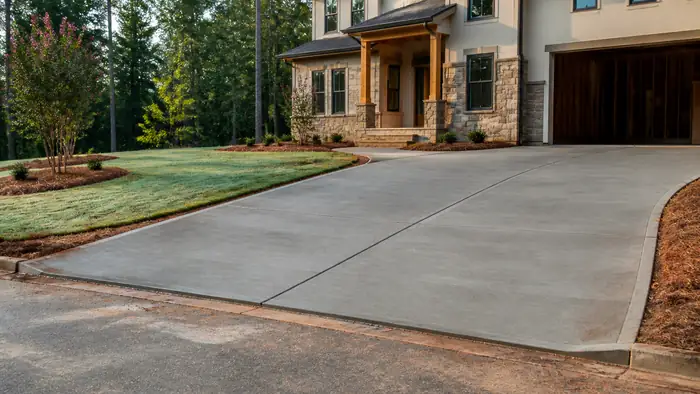
Replaced concrete driveway panel with clean saw-cut edges at a charcoal farmhouse-modern home in Marietta, GA, after a rain shower.

Repair, Leveling & Resurfacing in Kennesaw, Georgia

Repair, leveling and resurfacing are three different answers to concrete you would rather not tear out, and confusing them is how a slab gets patched when what it needed was lifting. Repair means cutting the failed section free and replacing it; leveling means bringing a settled slab back to the height it was poured at. Resurfacing bonds a fresh wearing surface onto old concrete that is solid underneath but spalled, stained or worn thin on top. Three problems, three fixes, and working out which one a slab actually needs is most of the job.

Each of those begins with what the concrete is sitting on, because a slab that settled once settles again if the base under it is still voided or still washing out. Leveling that ignores the void does not hold. On repair work we saw clean edges rather than chasing a crack around with patching compound, and on resurfacing we open the old surface up first by grinding or shot blasting so the overlay has something to grip. That overlay can finish plain, broomed, or run as stamped concrete. Same slab, three sets of tools.

Most calls are a sidewalk with one panel lifted at the joint, a driveway slab sitting low against its neighbor, or a patio surface that has scaled and gone rough underfoot. Cracks matter less than movement. A hairline crack in a slab that is holding still can sit there for years without hurting anything, while a lip on a concrete sidewalk that catches a toe is a different matter entirely. Overlays that let go almost always let go because the surface beneath them was never properly opened. Age alone tells you very little.

The real expense in this work is labor rather than material. Dealing with a void before it pulls the slab back down, doweling a replacement panel so it ties into what is left, grinding a whole surface to a clean profile: none of that is quick, and all of it decides whether the fix holds or comes back. Sometimes a slab is too far gone to be worth saving and replacing it outright is the better call, which we would rather say at the start than halfway through. Nobody enjoys hearing it.

We are a concrete contractor based in Marietta, and repair work is a steady part of what we do rather than something squeezed in between new pours. Call for a free estimate and we will walk the slab with you, point out what is failing and say why. If the concrete is sound and only looks tired, resurfacing usually covers it; if it is broken through and moving, patching buys time and nothing more, and you should hear that from the person quoting the work. Either way, you get the reasoning behind it.

Call +1 470-666-7021

Licensed, Bonded, and Insured ยท A combined 15 years of experience

Get Free Estimates

We warranty all of our work because we believe in what we do.

What Kennesaw Calls Us For

Repair, Leveling & Resurfacing

Most concrete problems start underneath. When a slab settles, we lift it back to grade instead of tearing it out, and we cut and replace the panels that are too far gone to save. Cracks get chased out, cleaned and filled. Surface spalling from age or salt usually takes an overlay. A concrete sidewalk with a lipped joint is a trip hazard, so we grind it flush or pull the panel. We say plainly when a repair is not worth doing.

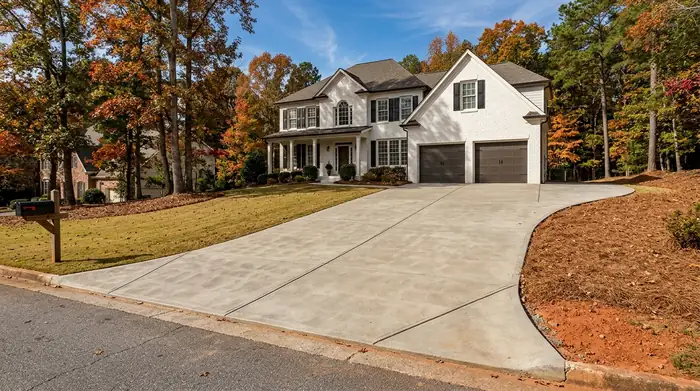
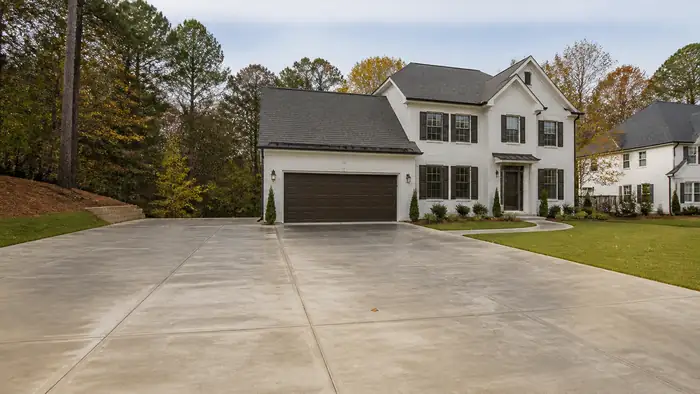
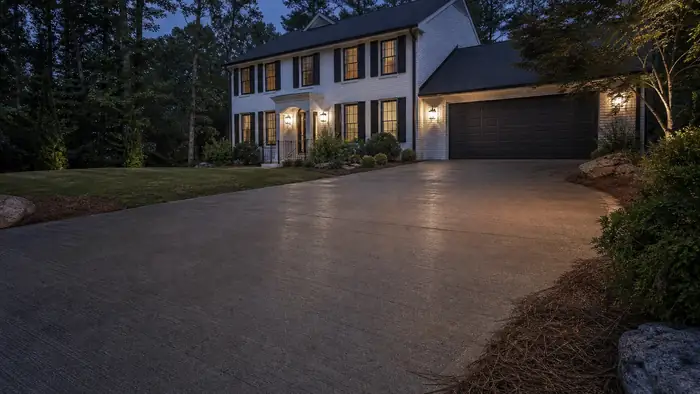
Broom-finished concrete driveway running up to a two-car garage at a painted-white-brick two-story home in Marietta, GA, in clear late-morning sun.

Driveway Installation & Replacement

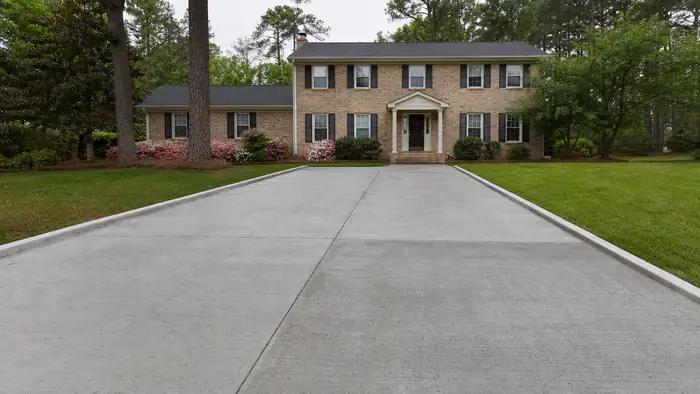
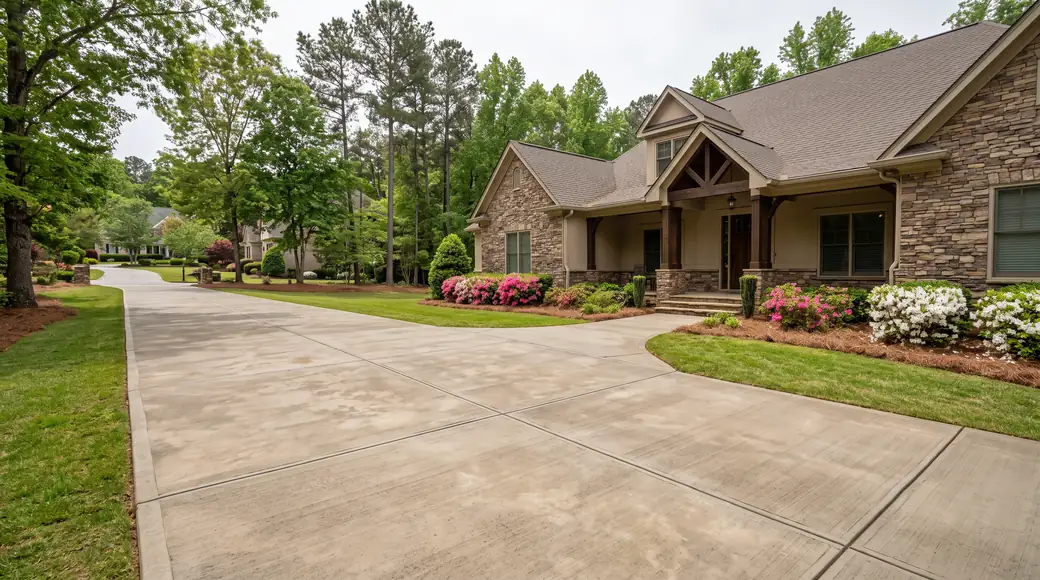
Driveways go down at four inches of concrete over a compacted base, five where trucks park or turn hard. Reinforcement is rebar on a grid or wire mesh, depending on the pour and the loads. We saw control joints so the slab cracks on our line rather than across the middle of the driveway. Old concrete driveways come out completely, apron included, because pouring over failed concrete only moves the failure up an inch.

Rectangular concrete patio with a low step up to the rear door at a brick-and-siding two-story home in Marietta, GA, after a rain shower.

Patio Construction & Outdoor Living

Patios give you the most room to pick a finish. Stamped concrete takes pattern and color while the slab is still workable: ashlar, slate, plank, wood grain. Exposed aggregate wears well and hides dirt. A broom finish is honest and easy to keep. We lay joints out around the pattern so the cuts read as part of the design, and stamped and colored concrete gets sealed, then resealed every few years.

Board-formed concrete retaining wall holding a raised lawn at a grey split-level home in Marietta, GA, under an overcast sky.

Retaining Wall Construction

Poured walls do work that stacked block cannot once a yard drops more than a few feet. The footing sits below grade and is sized for the wall above it, with vertical rebar tying the stem down into it. Behind the wall we place washed gravel and a drain line, then weep holes, because water pressure is what pushes walls over. Tall walls get battered back into the slope.

Square-edged concrete slab pad with a storage shed on it at a buff-brick ranch home in Marietta, GA, under bright midday cloud.

Concrete Slabs & Pads

Slabs and pads are the plainest thing we pour and the least forgiving. Garage floors, shed and HVAC pads, dumpster pads and walkway flatwork all live or die on subgrade prep, so we compact, run vapor barrier under enclosed slabs, and reinforce with rebar or wire mesh. Commercial concrete along retail and restaurant frontage, the kind that rings Marietta Square, takes thicker sections and joints laid out for foot traffic. Any concrete contractor can pour flat; staying flat is the job.

What to Expect on a Kennesaw Concrete Job

Every job starts on site with a tape measure and a hard look at what is already there. We walk the slab with you, measure the run, check the fall, and find where water goes when it rains. Old concrete tells us plenty. Cracks that run straight mean one thing, cracks that spider out of a corner mean another. We would rather spend the time reading it in person than guess from a photo on a phone. Measurements go on paper before we leave.

The estimate comes back in writing and broken into parts, because a number by itself tells you nothing about what you are buying. It names thickness, reinforcement, how much old material comes out, the finish, and whether a truck can reach the pour or we move the mix by buggy. If something is likely to change once demolition opens the ground up, we say so then, not later. Scope drift is the reason concrete jobs go sideways, and most of it is avoidable at the estimate stage.

Permitting depends on the address and on what the work touches. A job inside Marietta city limits pulls its permit through the City of Marietta, and anything that ties into a public sidewalk or a right of way gets handled before we order material, not after. We handle the filing. Homeowners rarely enjoy that part, and inspectors would rather deal with the contractor who poured the slab anyway. Skipping that step is how a finished driveway ends up coming back out.

Demolition day is loud and it is the fastest part of the schedule. We break the old concrete out in sections, load it, and haul it off rather than burying it in the yard. Saw cuts go where the new joint pattern wants them, so the seam between old work and new does not land in the middle of your approach. Once the ground is open, we finally see the base, which is where most failed driveways start. Nothing gets poured that day, and nothing should.

Base work is the part nobody photographs and the part that decides how long the slab lasts. We grade to the depth the pour needs, cut out soft spots, bring in stone, and compact it in lifts until a boot leaves no print. Forms go up straight, staked tight, set to a fall that moves water away from the house. A concrete installation is only as flat and as durable as the ground holding it up. We check the forms twice before anything else happens.

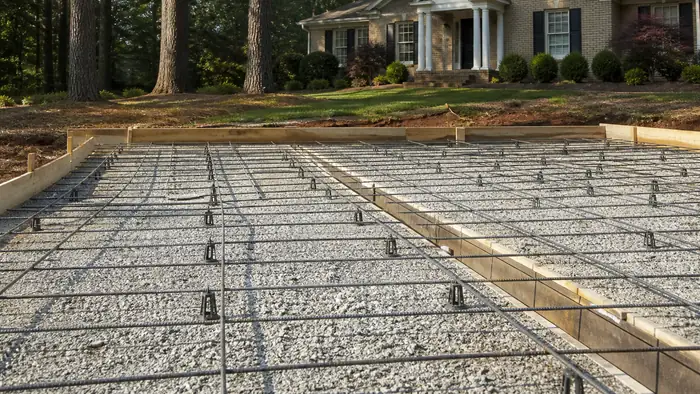
Steel goes in next. A concrete driveway carries vehicle weight, so it gets rebar on chairs, tied on a grid, sitting up in the slab where it can do something instead of lying on the dirt. Lighter flatwork may take wire mesh instead. We size the reinforcement to the load and the thickness, not to habit, and we set the joint layout at the same time so the slab cracks where we tell it to. Every slab moves. Control joints decide whether that movement shows.

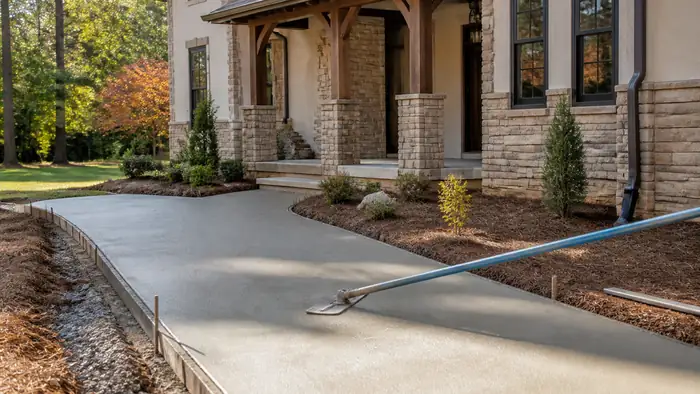
Pour day runs on the mix truck's clock, so we start early and staff it properly. Concrete gets placed, screeded, bull floated, and then left alone while the bleed water rises and goes off. Rushing that step is how you trap water in the surface and lose the finish later. Stamped and colored work happens in this window too, and stamping a large area means more hands standing by. Exposed aggregate has its own timing, since the surface paste has to come off before it sets hard.

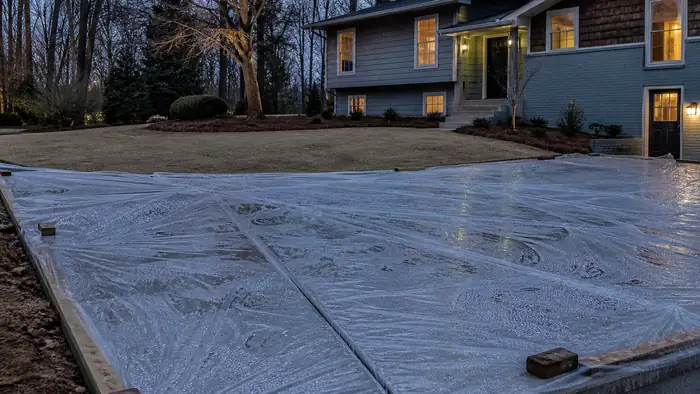
Curing is waiting, and it is the part people push against. Foot traffic comes back before vehicles do, and we give you the actual dates for your pour rather than a rule of thumb. Sidewalks and driveways both look finished long before they are strong. Before we leave, forms come out, the site gets swept, and the joints get cut. We walk it with you one more time and point out what to watch during the first month. Then it is yours.

What Kennesaw Owners Ask Us

How quickly can you get a crew to Kennesaw?

Depends on what the job is and what we already have running. Repair, leveling and resurfacing work moves faster than a full pour, since there is less material staging and less curing to plan around. Call us, tell us what the concrete is doing, and we will tell you honestly where you land in the schedule. We would rather give you a real date than an optimistic one.

Do you work on older properties in Kennesaw?

Yes. Housing around here runs a wide range of ages, and older slabs and sidewalks are a good part of what we handle. Old concrete tells you things: how it was poured, whether it had rebar or wire mesh, how the subgrade settled. We read that before we cut anything. Older flatwork often needs less replacement than people expect once the base is corrected.

How many jobs has Marietta Professional Concrete done around Kennesaw?

We are not going to throw a number at you. Kennesaw sits inside the area we cover out of Marietta, and we take concrete work there the same way we take it anywhere else on our list. What matters more for your driveway or patio is whether we can explain what went wrong with the existing slab and what we intend to do about it. Ask us that.

Is there a minimum job size for Kennesaw?

No. A single lifted sidewalk panel is a real job, and we will come look at it. Small repairs are often the ones that keep a bigger tear-out off your calendar for years. That said, if a slab is failing across the whole surface, we will tell you straight that patching it is money spent twice, and we will price the alternative instead.

Can you match concrete you did not pour in Kennesaw?

Usually close, rarely exact. Cured concrete has weathered, and the original mix, sand source and finish are all part of how it looks now. On stamped or colored concrete we can get near the pattern and tone, and on plain flatwork we match the finish and the joint layout. We will show you what to expect before we start.

Get a Free Estimate

Get Free Estimates

We warranty all of our work because we believe in what we do.

Tap to call +1 470-666-7021