+1 470-666-7021
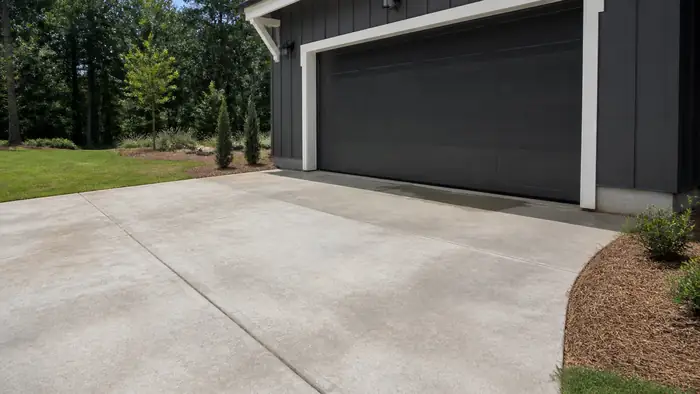
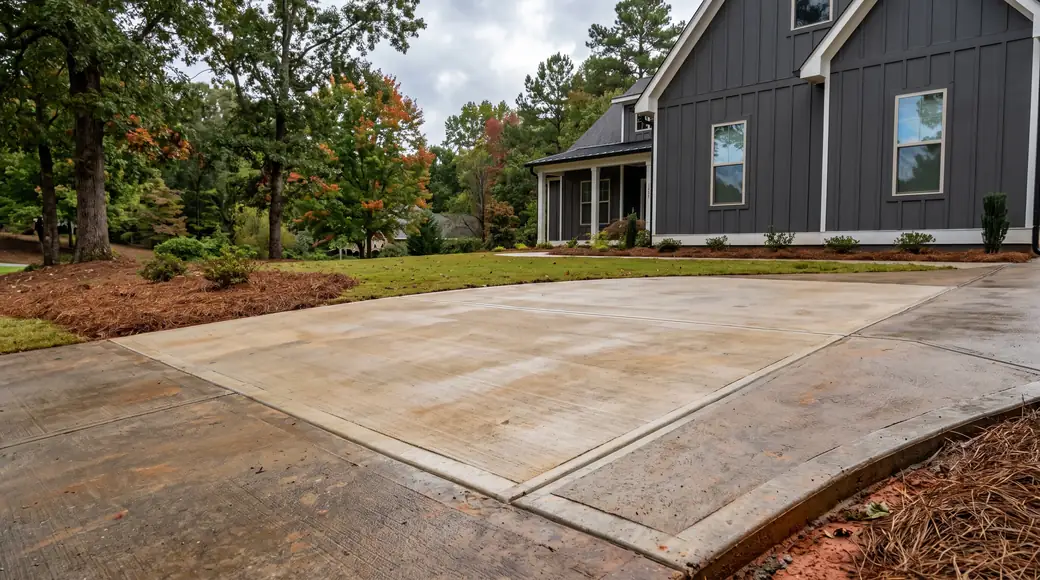
Replaced concrete driveway panel with clean saw-cut edges at a charcoal farmhouse-modern home in Marietta, GA, after a rain shower.

Repair, Leveling & Resurfacing in Marietta, GA

Repair, leveling and resurfacing all deal with the slabs you already have instead of pouring new ones. A driveway that has settled at one end, a sidewalk with a lifted joint, a patio whose color has gone chalky: three different problems with three different fixes. We are a concrete contractor working in Marietta, and most of what we look at is concrete somebody else placed years ago. Some of it is worth saving. Some of it is not, and we tell you which one you have.

Around Marietta Square, the historic downtown core, the sidewalk in front of a restaurant is also that restaurant's front door, and the same goes for the retail frontage on either side of it. Work there runs in sections so the door stays usable, and it runs around the hours the business keeps. Along the commuter corridors that run toward Atlanta, that logic carries over to lots and approaches. Residential jobs are quieter, but we still stage them so you can get in and out.

Failures stay small and simple to fix for a while, and then they stop being either. A hairline crack widens under vehicle weight until the edges start breaking away. A slab that has dropped at a joint sends water somewhere it was never meant to go, and the void underneath keeps growing. Stamped concrete loses its sealer and the pattern goes flat and gray while the slab itself is still sound. Different problems, different urgency, and they are easy to tell apart in person.

Getting this right costs mostly in preparation. Grinding, cleaning and profiling a surface takes longer than laying the overlay that goes over it, and skipping that step is the reason resurfacing work peels off in sheets a couple of seasons later. Leveling means learning what the slab is sitting on before anything gets lifted. We would rather tell you a driveway needs replacing than resurface something that comes apart again, because the second visit is worse for both of us. Call for a free estimate.
Call +1 470-666-7021

Licensed, Bonded, and Insured ยท A combined 15 years of experience

Get Free Estimates

We warranty all of our work because we believe in what we do.

Our Repair, Leveling & Resurfacing Work in Marietta

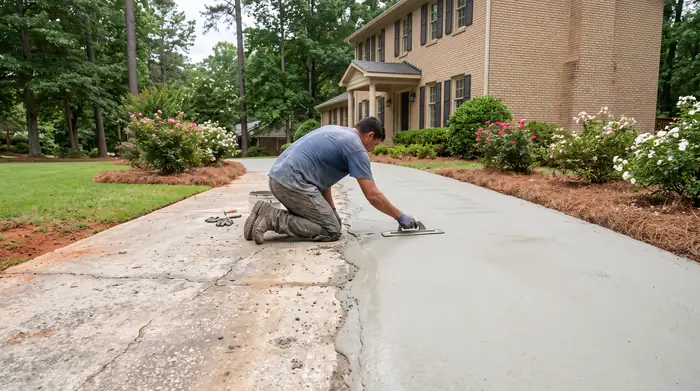
Thin concrete overlay being troweled onto an old worn slab at a tan-brick colonial in Marietta, GA, under bright midday cloud.

Concrete resurfacing

Resurfacing puts a new wearing surface over a slab that is sound underneath. We clean and profile the old concrete, patch spalls, then bond an overlay a quarter inch to a half inch thick. Stamped concrete and broom finishes both work here. What kills a resurfacing job is a slab that moves: if the base is hollow or cracks run all the way through, an overlay cracks again in the same places.

Sunken concrete slab with small drill holes for leveling at a tan-brick colonial in Marietta, GA, in clear late-morning sun.

Concrete leveling

Leveling corrects slabs that have settled out of plane. A concrete sidewalk panel that has dropped an inch at the joint is a trip hazard, and a driveway apron pitched back toward the garage sends water where you do not want it. We drill small ports, pump material under the slab until it lifts, then patch the holes. The slab has to be in decent shape first. Badly broken flatwork gets replaced, not lifted.

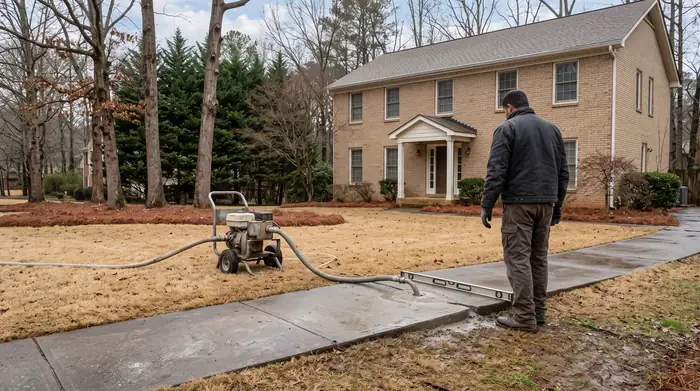
Slab-jacking pump lifting a sunken concrete slab back level at a tan-brick colonial in Marietta, GA, after a rain shower.

Concrete lifting

Lifting is the same principle applied wherever a slab has dropped: patios, steps, garage floors, walkways between buildings. Polyurethane foam goes in through holes about the diameter of a pencil, expands, and raises the concrete in small increments while we watch a level. Foam is light and cures fast, so it suits areas that see traffic. Around Marietta Square, that matters on commercial concrete where retail frontage cannot sit closed.

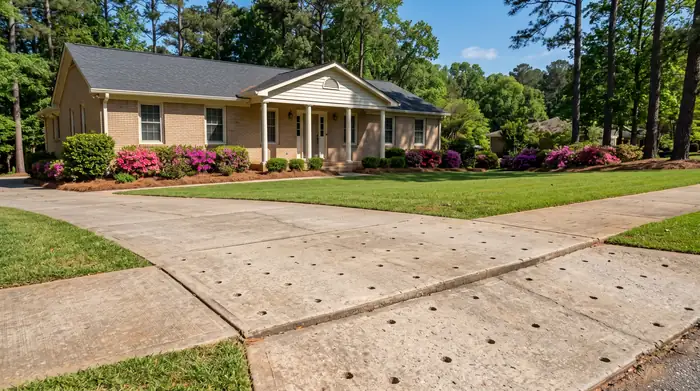
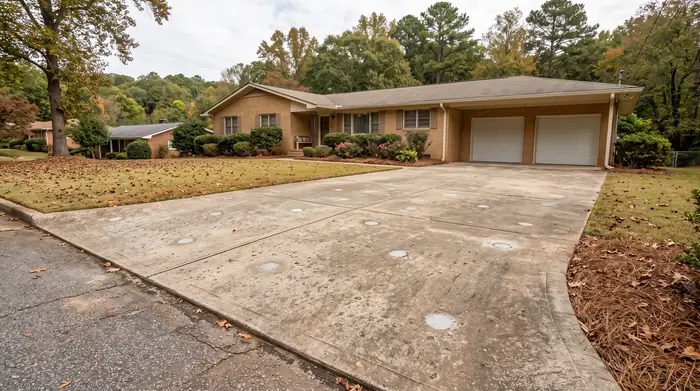
Concrete slab leveled with small patched holes from mudjacking at a buff-brick ranch home in Marietta, GA, under bright midday cloud.

Mudjacking

Mudjacking uses a cement and soil slurry instead of foam, pumped through larger holes at higher volume. It is heavier and costs less per cubic foot of fill, which makes it reasonable under thick slabs and wide driveways where the void is large. The holes are more visible after patching. We will tell you which method fits your slab, since the right answer depends on slab thickness, the size of the void, and how fast you need the surface back.

What to Expect on a Repair, Leveling & Resurfacing Job

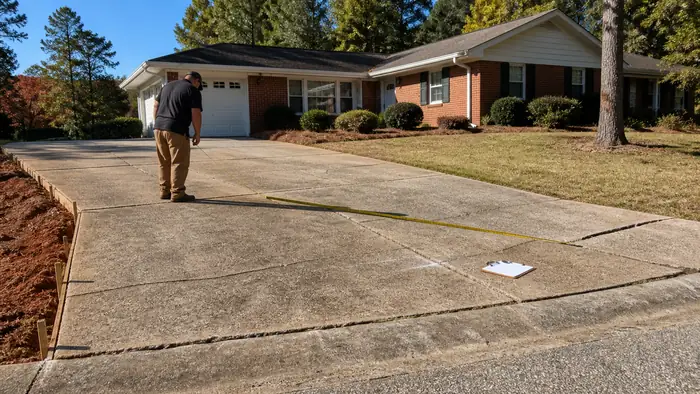
Existing driveway measured and marked before it is replaced at a red-brick ranch home in Marietta, GA, in clear late-morning sun.

Step 1: Site Evaluation

We walk the whole slab before we quote anything. That means measuring the drop across a settled section, checking where water sits after a rain, and looking at the edges for spalling, undermining or a void under the panel. Cracks tell us a lot: hairline shrinkage is different from a wide, offset crack running corner to corner. We also look at what the concrete ties into, since a driveway apron and a garage floor rarely settle together.

Settled garage approach slab the estimate would price to replace at a charcoal farmhouse-modern home in Marietta, GA, in clear late-morning sun.

Step 2: Written Estimate and Permits

You get the scope in writing: what gets removed, what stays, thickness, reinforcement, finish, and where control joints land. When the work needs a permit, the City of Marietta is the authority, and we handle the filing and inspections rather than leaving it to you. Repair scopes sometimes shift once the old slab comes out and we can see the base, so we tell you what would change the number before we start.

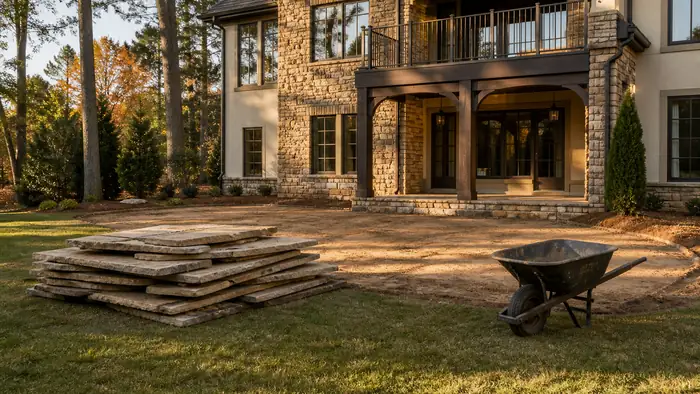
Old patio broken into slabs and stacked ready to be carried out at a stacked-stone and stucco home in Marietta, GA, in late afternoon light.

Step 3: Demolition and Base Prep

Old concrete comes out in sections, and the subgrade underneath is where most failures started. We dig out soft or washed material, bring it back with compactable stone, and run a plate compactor in lifts instead of one deep pass. Grade gets set to move water away from the house and toward the street. Skipping this step is why a fresh pour cracks in a year while the concrete itself was fine.

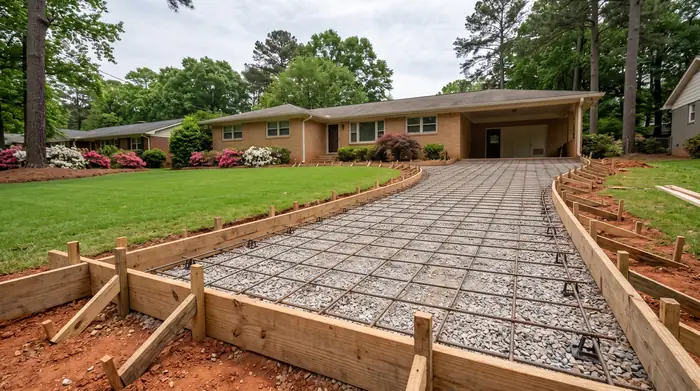
Wooden forms and rebar grid set and tied, ready for concrete at a buff-brick ranch home in Marietta, GA, under bright midday cloud.

Step 4: Forming, Steel and the Pour

Forms get staked straight and set to the finished grade so the slope reads right when the concrete is wet. Driveways get rebar on chairs, typically four inches thick and thicker at the apron where truck and delivery loads land. Sidewalks usually run wire mesh or rebar depending on the span. We pour a full section at a time, screed it, and keep the mix consistent rather than adding water at the truck.

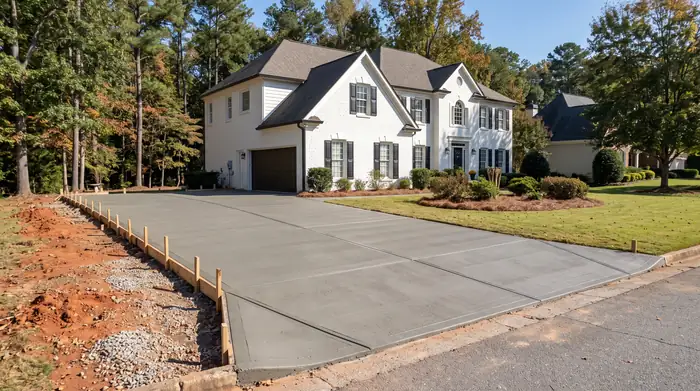
Freshly finished concrete slab curing under a clean broom texture at a painted-white-brick two-story home in Marietta, GA, in clear late-morning sun.

Step 5: Finishing, Curing and Final Walkthrough

Finish depends on the surface. Broom texture for sidewalks and most driveways, since it holds traction wet; stamped or exposed aggregate where the look matters. Control joints get cut early, at the right depth and spacing, so the slab cracks where we put the joint. Curing is the part people rush. We tell you when to walk it, when to drive it, and we walk the concrete installation with you before we pull off the site.

How Much Does Repair, Leveling & Resurfacing Cost in Marietta?

Two driveways the same size can land far apart on price, and most of the reasons are visible from the curb before anyone writes a number. What is already in the ground matters more than the finish you pick. Below is what moves a concrete job up or down, and every line is something you can walk out and check yourself.

What changes the priceWhich wayWhy
Condition of the slab that is there nowcosts moreConcrete that sounds hollow underfoot or has settled at the joints usually means the base failed too, so the base gets rebuilt before new flatwork goes down.
How close a truck can get to the pourcosts moreWhen the mixer cannot back within chute reach, concrete moves by buggy or pump. That is added labor, added equipment, and a longer day.
Slab thickness the use calls forcosts moreA sidewalk carries people. A concrete driveway carries vehicles, and one that sees a delivery truck or an RV needs more concrete under it than a car does.
Rebar instead of wire meshcosts moreRebar has to be cut, tied and set on chairs, which takes longer than rolling mesh. Heavier loads and wider slabs call for it.
Demolition and haul offcosts moreOld concrete gets broken out, loaded and trucked away before we form. Pouring over bare dirt skips that step entirely.
How the site drains todaycosts lessGround that already sheds water needs little regrading. Low spots need fill, compaction, and sometimes a rebuilt slope so the new slab drains away from the house.
Utilities, meters and tree roots in the waycosts moreAnything buried under the footprint gets hand dug around or worked over, and that slows excavation down to a crawl.
Stamped, colored or exposed aggregate finishcosts moreA broom finish is one pass. Stamped concrete adds release, mats, detail work and sealing, and colored concrete adds material and care on placement.

Compare bids line by line. Ask each concrete contractor for the slab thickness, the reinforcement and its spacing, how much base goes down and how it gets compacted, and whether demolition, haul off and the actual measured square footage are in the number. Bids that leave those blank are not quoting the same job.

Questions About Repair, Leveling & Resurfacing

Will a resurfaced Marietta slab match the concrete next to it?

No, not exactly. A resurfacer goes down over existing concrete, and the new layer carries its own color and texture while the old slab beside it has spent years weathering. We can get close on tone, and stamped or colored work gives us more control over the final look. If a seamless match across a driveway matters to you, resurfacing the whole surface reads better than patching one panel.

Is repair cheaper than replacement for a Marietta driveway?

Usually, yes. Repair keeps the existing slab, so we skip demolition, hauling, and the full pour of new concrete driveways. The savings hold when the base underneath is sound and the damage sits on the surface. Once a slab has broken into loose pieces, or the ground beneath it has washed out, repair starts stacking costs without fixing the actual problem, and replacement becomes the honest answer.

How does concrete lifting work, and does it last in Georgia?

We drill small ports through the sunken slab, pump material into the void underneath, and let it fill and raise the concrete back to grade. The slab itself stays put. Lifting lasts as long as the ground beneath it stays stable, which is why we look at drainage and runoff before quoting the work. Fix what emptied the void and the correction holds.

How soon can we walk on repaired concrete in Georgia weather?

Foot traffic is typically fine within a day on most patch and resurfacing work, though the product and the weather set the real schedule. Heat speeds curing. Rain and cool damp air slow it. Vehicles need considerably longer than feet do, so a repaired concrete driveway stays clear of cars well after you are walking on it. We tell you the specific window before we leave.

Is my Marietta concrete worth repairing, or should it be replaced?

Depends on what is failing. Surface problems (spalling, shallow cracks, worn flatwork, discoloration) repair well and the fix holds. Structural failure is different: slabs split through their full depth, sections rocking underfoot, rebar or wire mesh exposed and rusting, or a base that has eroded away. We walk the slab and tell you which one you have, including when replacement is the cheaper decision over ten years.

What causes concrete to sink in Marietta, Georgia?

Voids under the slab. Water is nearly always the culprit, moving fine material out from beneath the concrete until nothing supports it. Downspouts dumping alongside a driveway do it. So does poorly compacted fill from the original concrete installation, which settles under load over time. Older houses around Marietta Square and newer builds both show it. Tree roots and utility trench settlement account for the rest.

Get a Free Estimate

Get Free Estimates

We warranty all of our work because we believe in what we do.

Tap to call +1 470-666-7021