+1 470-666-7021
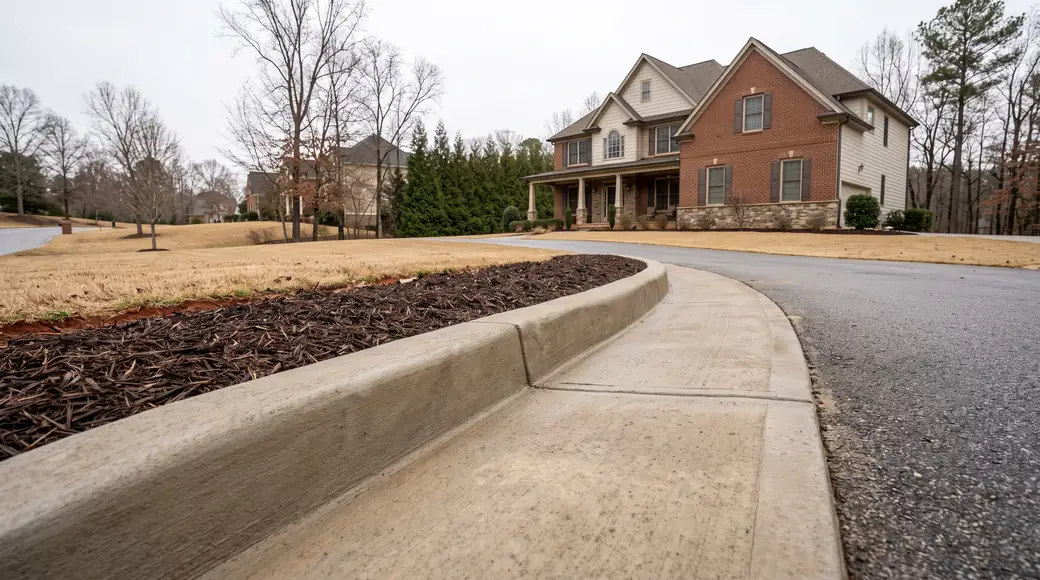
Poured concrete curbing with a rolled profile along a driveway edge at a brick-and-siding two-story home in Marietta, GA, under an overcast sky.

Curbing & Edging in Marietta, GA

Curbing and edging is the concrete border that holds a driveway, a planting bed, or a walkway to a fixed line. It keeps mulch out of the grass and gravel off the lawn, and it gives a yard an edge that stays where you put it through mowing season. We pour it as a continuous ribbon or in formed sections, depending on the run and the radius. Marietta Professional Concrete is a concrete contractor working here in Marietta and across the metro Atlanta area.

Houses here span a wide range of ages, and the edging around an older yard rarely matches what a newer subdivision put in. Some of it is poured concrete that has held its line for decades. Some of it is plastic or steel that lifted years ago and has been crooked ever since. We look at what is already there, what the grade is doing, and where water goes before saying anything about replacing it. That conversation happens on site.

Edging fails in a few predictable ways. Poor base is the usual culprit: soft or uncompacted ground under a narrow pour lets the ribbon settle unevenly, and once it tips, water starts running somewhere you did not want it. Sections crack where no control joint was ever cut. Edges chip under mower wheels. Tree roots lift a run and split it. None of that is mysterious, and most of it traces back to what happened before the concrete came out of the truck.

Getting it right is mostly unglamorous work. The base gets dug to depth and compacted, the line gets set true, and joints go in at spacing that lets the concrete move without tearing itself apart. Where a curb ties into a slab or a driveway, rebar or wire mesh carries that connection instead of leaving it to friction. Finish is a choice: broom, exposed aggregate, stamped concrete, or colored concrete matched to a patio you already have. Good curbing reads as part of the property, not as an addition to it.

Commercial flatwork runs on the same principles with harder use. Around Marietta Square, the historic downtown core, retail and restaurant frontage puts curbing and sidewalk edges underfoot all day, and they have to hold up to it without becoming a trip hazard. The commuter corridors running toward Atlanta carry that same foot traffic past the businesses along them. We take residential and commercial concrete work throughout Marietta and out toward Smyrna. Call for an estimate on what you have in mind.
Call +1 470-666-7021

Licensed, Bonded, and Insured ยท A combined 15 years of experience

Get Free Estimates

We warranty all of our work because we believe in what we do.

Our Curbing & Edging Work in Marietta

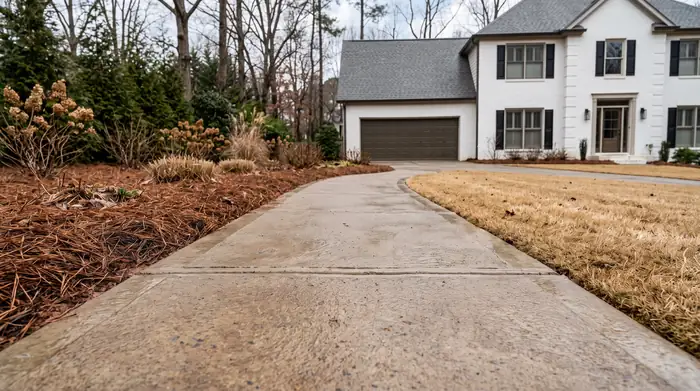
Low concrete edging strip along a mulched garden bed at a painted-white-brick two-story home in Marietta, GA, after a rain shower.

Concrete edging

Concrete edging is a poured border that holds a bed, walkway or driveway apron in place. We form it in a continuous line, usually four to six inches wide, with the depth set by what it has to hold back. Reinforcement matters more than people expect: short lengths of rebar or wire mesh keep a thin ribbon from cracking as it settles. Edging can be broom finished, troweled smooth, or run as stamped concrete to match a patio.

Failures usually start at the joints. Edging poured without control joints cracks on its own schedule, and edging poured directly on loose fill drops away from the bed it was meant to hold. We cut joints at regular spacing and compact the base first.

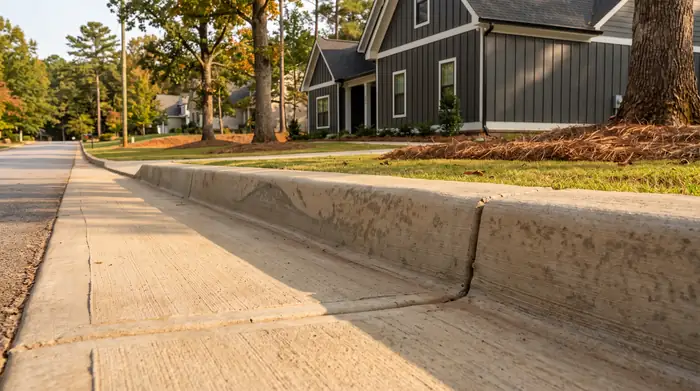
Concrete curb and gutter along a residential street at a charcoal farmhouse-modern home in Marietta, GA, in late afternoon light.

Curb and gutter

Curb and gutter is one pour that carries water instead of letting it stand. The curb face turns runoff, and the gutter pan channels it toward an inlet or a low point. This is the same detail used along commercial concrete frontage near the Marietta Square, where a parking area meets a sidewalk and both need a clean edge.

Slope is the whole job. A gutter pan that runs flat holds water, stains, and breaks apart at the seams over time. We set string lines before forming, check fall along the run, and tie the pan into the adjacent slab or concrete sidewalk so there is no lip to catch a wheel.

What to Expect on a Curbing & Edging Job

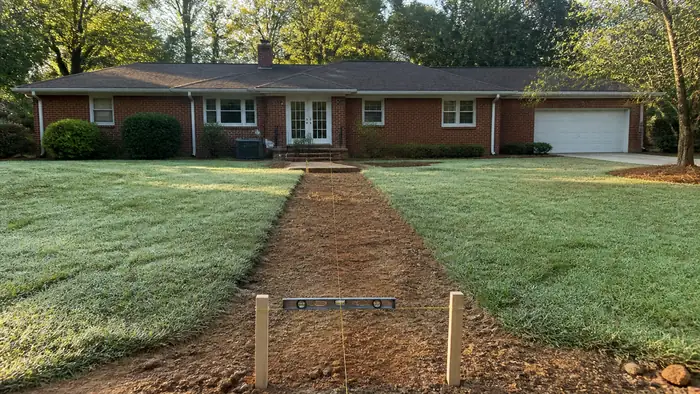
Backyard grade checked with a level and string before a patio pour at a red-brick ranch home in Marietta, GA, in early morning light.

Step 1: Site Evaluation

We walk the run with you and look at what the edging has to hold back: a bed that keeps spilling onto the lawn, a driveway apron losing its shoulder, a path that has sunk on one side. We check drainage, tree roots, existing slab edges and how tight the mower gets. Grades matter more than anything. Curbing that traps water against a foundation is worse than no curbing, so we read the fall of the yard first.

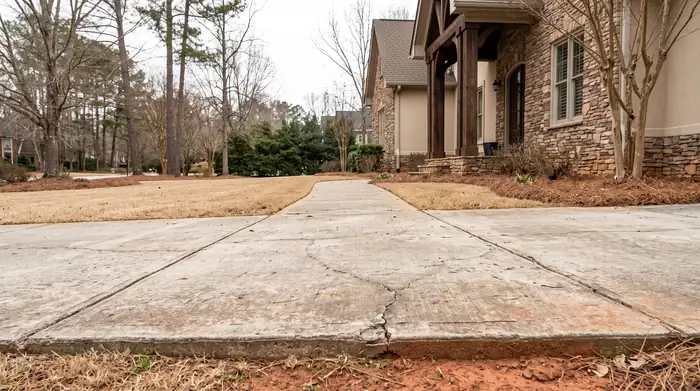
Concrete driveway and walk at a home, the kind of job an estimate covers at a stacked-stone and stucco home in Marietta, GA, under an overcast sky.

Step 2: Written Estimate and Permits

You get the scope in writing: linear footage, profile, depth, finish, color if any, and what we haul away. Nothing starts until you have read it. Curbing on its own usually sits outside permit territory, but work that ties into concrete installation near the right of way, a new concrete driveway approach, or public sidewalks can trigger review by the City of Marietta. We handle that filing and the inspection scheduling.

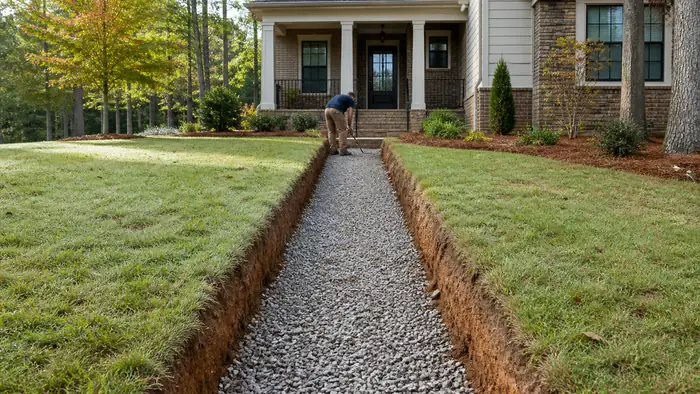
Front walkway removed and the trench squared out for a new pour at a brick-and-siding two-story home in Marietta, GA, in early morning light.

Step 3: Demolition and Base Prep

Old brick edging, plastic strip, timbers and crumbling concrete come out first. We cut sod along the line, trench to depth, and pull roots that would lift the curb later. Then compacted base goes in, graded to a consistent bottom. Soft spots get dug deeper rather than filled and hoped over. Most failed edging we replace was poured on loose dirt, which is why it moved within a season or two.

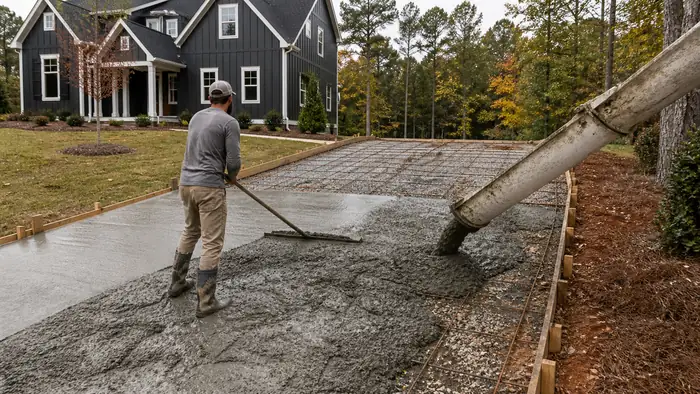
Concrete coming down the chute into formed driveway bays at a charcoal farmhouse-modern home in Marietta, GA, under an overcast sky.

Step 4: Forming, Steel and the Pour

For formed curbing we set and stake wood or flex board to the layout line, check it for straight runs and clean radii, and add rebar where the curb takes load or spans a soft area. Extruded curb goes through the machine with the mix kept stiff. Poured monolithic with adjoining flatwork, the edge shares the slab's wire mesh or steel. We place, consolidate and screed in one continuous pass.

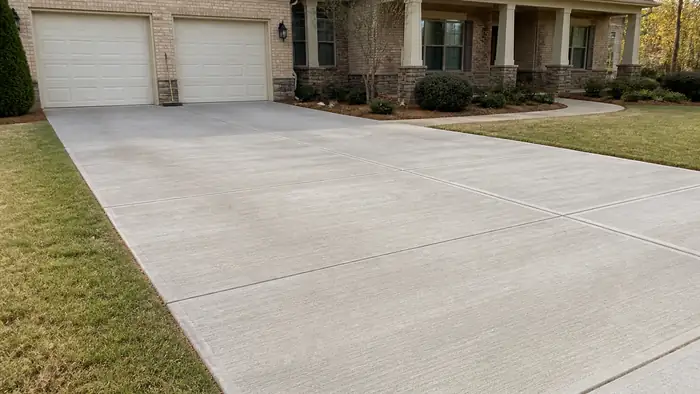
Cured driveway swept clean with the forms stripped away at a brick-and-siding two-story home in Marietta, GA, under bright midday cloud.

Step 5: Finishing, Curing and Final Walkthrough

Finish depends on the profile: a light broom for grip, a trowel and edge for a crisp corner, stamped or exposed aggregate to match existing driveways. Color is mixed in or cast on before troweling. We tool control joints so cracking follows a line we chose. Curing compound goes down the same day. We walk it with you, then tell you when to keep mowers, cars and sprinklers off it.

How Much Does Curbing & Edging Cost in Marietta?

Curbing and edging gets priced off the length of the run and the conditions around it. Two houses on the same block can land in different places. Most of what moves the number is visible before anyone writes a bid, so you can walk your own property and see it. These are the things we look at first.

What changes the priceWhich wayWhy
Existing curb, brick edging or old concrete along the linecosts moreIt gets broken out, loaded and hauled off before we set a single form, and that is labor and disposal stacked ahead of the pour.
Mature tree roots crossing the runcosts moreRoots have to be cut, worked around, or the line shifts, and the base under that stretch usually needs rebuilding.
How close a truck can park to the workcosts less when closeConcrete that comes off the chute straight into the forms moves fast. A long buggy or wheelbarrow run adds crew and hours.
Thickness and reinforcement the job calls forcosts more when heavierCurbing that takes tires wants real depth plus rebar or wire mesh tied in. A planting bed edge does not need either.
Sprinkler heads, drip lines and shallow utilities near the linecosts moreWe hand dig anywhere something is buried close, and any reroute or repair gets added to the work.
Tight curves and short broken segments instead of long straight runscosts moreCurved forms are cut, staked and set piece by piece. A straight hundred feet goes in at a fraction of that effort.
Which way the ground drains along the runcosts more when water sitsA curb set across the fall becomes a dam unless we regrade behind it or build a break in for the water to leave.
Stamped or colored finish instead of a broom or troweled edgecosts moreStamped concrete and integral color take added material, more hands working the pour on a clock, and sealer at the end.

With two bids in front of you, read past the total. Check what thickness each one commits to, whether reinforcement is named or left vague, and how deep the base runs. Removal and haul-off of the old edging should be written down, not assumed. Ask where the control joints fall and how many. A lower number usually means one of those lines is missing.

Questions About Curbing & Edging

Does curbing stop mulch washing out in Marietta storms?

Yes. A continuous concrete curb stands proud of the bed and gives mulch a wall to stop against, so water running off a lawn or a driveway carries less of it out into the street. Plastic edging lifts at the seams and mulch rides straight over the top. Height is what matters. We set the profile so the curb finishes above the mulch line, not flush with it.

What shapes and colors of curbing can I have in Marietta?

Common profiles are the slant, the mower's edge with a flat lip your wheel can ride, the square top and the rolled top. Color goes in the mix rather than on the surface, so it wears with the concrete instead of off it. Stamped rollers press a pattern into the wet curb: brick, slate, running bond. Plain gray concrete holds up well next to older brick and stone.

How long does curbing take to install on a typical Marietta lot?

The pour goes quicker than most people expect. A curb machine extrudes the concrete along the bed line at walking pace, and the slow parts are the layout, the trenching and the hand tooling at corners and returns. Curing runs longer than the pour. Keep foot traffic, mulch loads and mowers off the fresh curb until it hardens. The same work runs in Smyrna, Kennesaw, Roswell, Atlanta and across metro Atlanta.

What is the difference between curbing and edging on a Marietta property?

Edging is the line itself, the clean separation between bed and turf, and it can be a spade cut, steel, or stone. Curbing is poured concrete that makes that line permanent and raises it. Edging has to be recut every season as grass creeps back over it. A concrete curb holds the shape you gave it and gives the mower something solid to run against.

Can you edge existing Marietta beds without lifting the planting?

Yes, in most beds. The machine needs a clear path along the bed line, roughly the width of a wheelbarrow, so we trim back anything overhanging and cut the trench inside it. Established shrubs and trees stay where they are. Perennials sitting directly on the line sometimes have to be dug and set back a few inches, and we show you which ones before anything moves.

Will curbing crack when the ground moves in Georgia?

No, not as a rule, because the curb is built to move. We cut control joints at intervals down the run so the concrete has a chosen place to separate rather than a random one. Extruded curbing carries no rebar or wire mesh the way a driveway slab does. It relies on a compacted trench, correct joint spacing and a mix that is not overwatered on site.

Get a Free Estimate

Get Free Estimates

We warranty all of our work because we believe in what we do.

Tap to call +1 470-666-7021