+1 470-666-7021
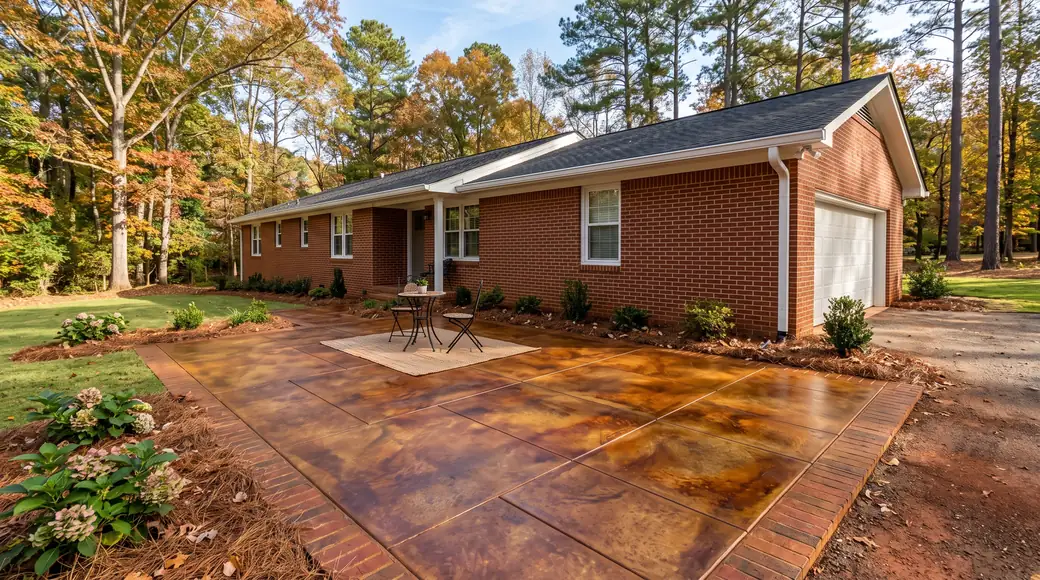
Acid-stained concrete patio in mottled earth tones at a red-brick ranch home in Marietta, GA, in clear late-morning sun.

Stained Decorative Concrete in Marietta, GA

Stained decorative concrete puts color into the slab itself instead of a coating that sits on the surface and wears off at the door. Acid stains react with lime in the concrete and leave mottled, variegated tone that shifts across a floor. Water based stains lay down more even color and open a wider range of shades. Both soak in. Neither one hides what is underneath, so the result depends on the slab already in place, or on the concrete we pour for the job.

It works on patios, garage floors, interior slabs, entries, walkways, and a concrete driveway that has held up structurally but looks tired. A stained sidewalk reads differently than stamped concrete: stamped gives you texture and a tooled pattern, stain gives you color and depth without changing the surface profile at all. The two get combined often. On commercial frontage, staining a sound existing floor avoids tearing out good concrete just to change how the space looks to somebody walking in.

We are a concrete contractor working in Marietta, Georgia, and out across metro Atlanta: Atlanta, Smyrna, Kennesaw and Roswell all get the same crew, the same scope, the same standards. Marietta Square is the historic downtown core, ringed by retail and restaurant frontage, and the commuter corridors run toward Atlanta. Work near either one needs staging that keeps foot traffic and parking moving while the slab cures, which is a scheduling problem as much as a concrete one.

Most stain jobs that disappoint went wrong long before any color came out of the sprayer. Old sealer, curing compound, patch material and adhesive residue all block penetration, and the finished slab shows every one of them as a blotch. Cracks stay visible, since stain will not fill them. On new work, the finish, the cure, and how the rebar and wire mesh were set all influence the final color. We test a sample area on your own slab and let you see it dry.

Getting it right is mostly patient prep: grinding or stripping whatever has to come off, cleaning thoroughly, controlling how much stain the concrete takes, then sealing so the color holds under sun and traffic. Decorative work sits on top of ordinary flatwork discipline, and we treat it that way from the first day on site. If you are weighing stained concrete for a patio, a floor, or an entry, call for a free estimate and we will walk the slab with you.
Call +1 470-666-7021

Licensed, Bonded, and Insured ยท A combined 15 years of experience

Get Free Estimates

We warranty all of our work because we believe in what we do.

Our Stained Decorative Concrete Work in Marietta

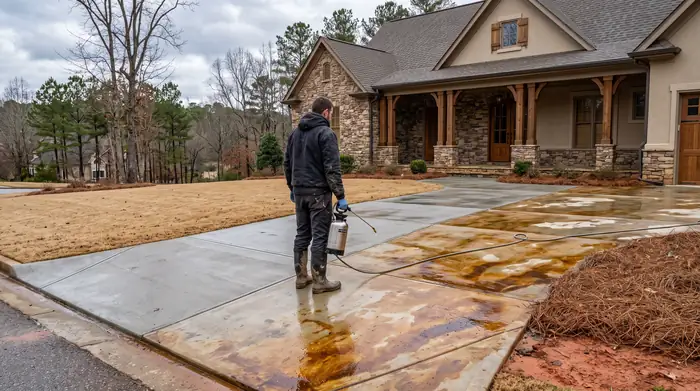
Acid stain being sprayed onto a concrete surface, half-applied at a stacked-stone and stucco home in Marietta, GA, after a rain shower.

Concrete staining

Stain colors the slab itself rather than coating it. We open the surface first, strip old sealer and curing compound, then work the stain into concrete that has cured long enough to take it. A hard troweled floor drinks less than a broom finished concrete sidewalk, so the same product reads darker in some places. That variation is the point. Patches, rebar shadows and old grease show through, which is why prep decides most of the finished result.

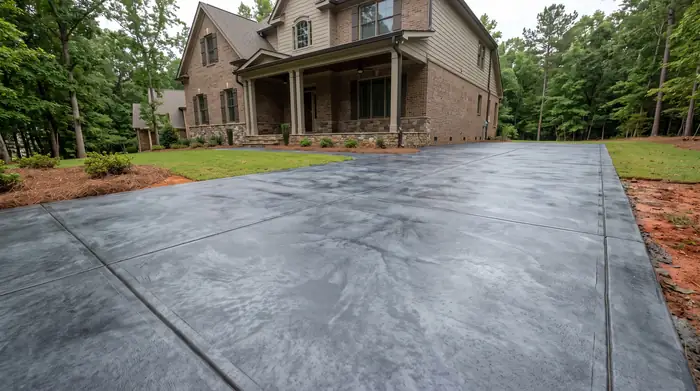
Acid-stained concrete floor in charcoal and blue-grey marbled tones at a brick-and-siding two-story home in Marietta, GA, under an overcast sky.

Acid stained concrete

Acid stained concrete works by chemistry: metallic salts react with lime in the slab and leave color that cannot peel. The reaction needs cement to feed on, so thin overlays, heavy patches and stamped concrete with release powder still in the texture all behave differently. We neutralize the residue, rinse until the water runs clear, then seal. On commercial concrete, a sidewalk carries traffic all day, so we schedule around it. No concrete contractor can rush dwell time or cure.

What to Expect on a Stained Decorative Concrete Job

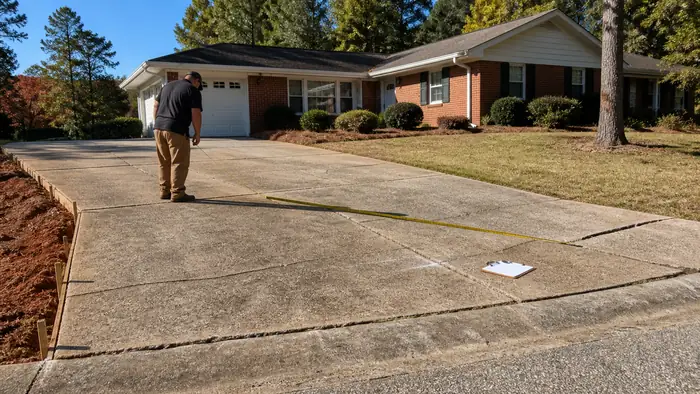
Existing driveway measured and marked before it is replaced at a red-brick ranch home in Marietta, GA, in clear late-morning sun.

Step 1: Site Evaluation

We walk the area with you and look at what the concrete has to do. Slope, drainage, where water currently goes, how thick the existing slab is, and whether tree roots or a settling subgrade caused the cracking you are looking at. On a stained job we also check the surface itself, since old patches, sealers and oil spots take color differently and that changes what the finish can look like.

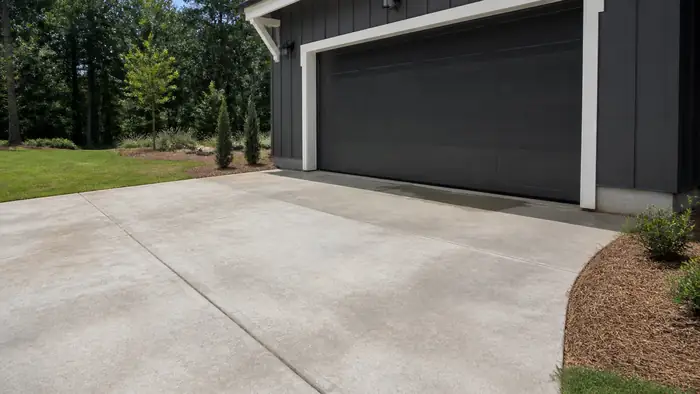
Settled garage approach slab the estimate would price to replace at a charcoal farmhouse-modern home in Marietta, GA, in clear late-morning sun.

Step 2: Written Estimate and Permits

You get the scope in writing: square footage, slab thickness, reinforcement, the stain colors, the sealer, and how the work gets staged. We handle the permit paperwork where the job needs it. Access matters too, so we sort out truck placement and where the mixer can reach before anyone commits to a date, particularly on tight lots near the Square.

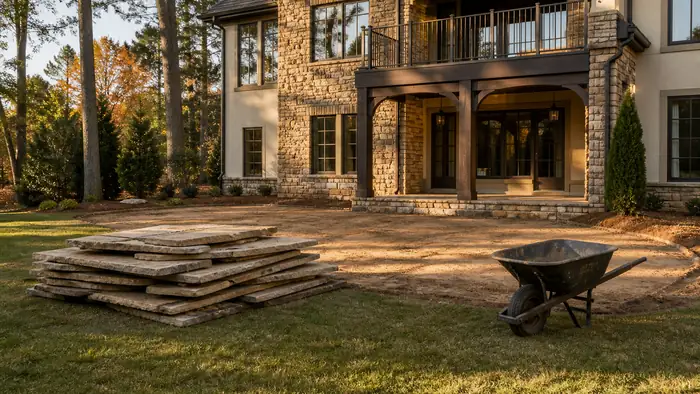
Old patio broken into slabs and stacked ready to be carried out at a stacked-stone and stucco home in Marietta, GA, in late afternoon light.

Step 3: Demolition and Base Prep

Old concrete comes out and gets hauled off. Then the real work starts: grading the subgrade, compacting it in lifts, and adding crushed stone where the soil underneath is loose or holds water. Most failed driveways we replace failed here, not in the mix. A slab poured on soft fill will crack no matter how good the finish work above it is.

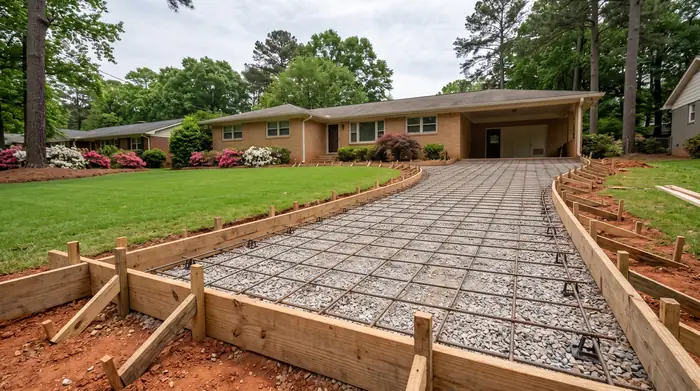
Wooden forms and rebar grid set and tied, ready for concrete at a buff-brick ranch home in Marietta, GA, under bright midday cloud.

Step 4: Forming, Steel and the Pour

Forms get set to the grade and the lines you approved, then reinforcement goes in: rebar on a driveway or anything carrying vehicle loads, wire mesh on lighter flatwork like sidewalks. Steel sits on chairs in the middle of the slab, not on the dirt, which is where it does nothing. Concrete installation runs continuously so the pour stays monolithic with no cold joints.

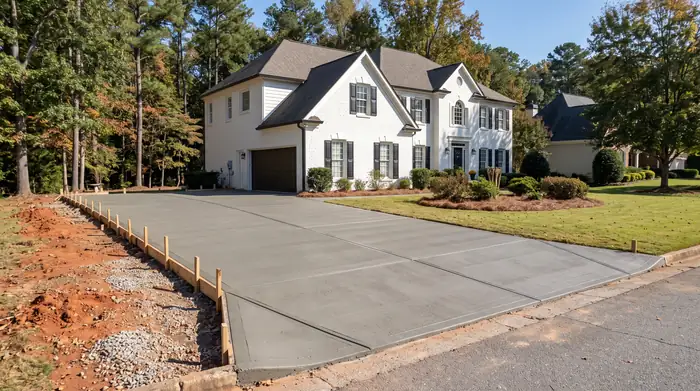
Freshly finished concrete slab curing under a clean broom texture at a painted-white-brick two-story home in Marietta, GA, in clear late-morning sun.

Step 5: Finishing, Curing and Final Walkthrough

Finishing sets the character of the surface. We screed, float, and work the stain into the slab, then cut control joints so shrinkage cracks land where we put them instead of across the middle. Curing is slow on purpose. Rushing it fades color and weakens the top layer. Once the sealer is on, we walk the concrete driveway or patio with you and go over how to keep it looking right.

How Much Does Stained Decorative Concrete Cost in Marietta?

Two stained concrete patios of the same size can land far apart on price, and the reasons are usually visible before anyone writes a number down. What sits under the old slab, how close a mixer truck gets to the work, and how much reinforcement the pour calls for move the total more than the stain color does. Most of it you can check yourself on a walk around the house.

What changes the priceWhich wayWhy
A sound existing slab we can stain in placecosts lessNo demolition, no forming, no pour. Prep, stain and sealer are a fraction of the work that new flatwork takes.
Old concrete that has to come out firstcosts moreBreaking a slab up, loading it and hauling it off is labor and dump weight spent before the first yard of concrete shows up.
Sealer, paint or old thinset on the surfacecosts moreStain needs open pores to take color. Grinding a coating off adds a full step, and it often uncovers patching we could not see underneath.
A driveway or side gate a truck can back downcosts lessChuting straight into the forms beats wheelbarrow runs or a pump, and it keeps the pour moving fast enough to finish the surface evenly.
Roots, soft fill, buried lines or an old footing in the subgradecosts moreWhatever we dig out gets replaced with compacted base. A slab poured over loose ground cracks no matter how good the finish looks on day one.
A patio slab on wire mesh instead of a driveway slab on rebarcosts lessConcrete driveways carry vehicle weight, so they get more thickness and rebar tied on chairs. A patio holding foot traffic and furniture does not.
Ground that already drains away from the housecosts lessWhere water stands or runs back toward a foundation, we build slope, and sometimes a drain, into the slab rather than pouring it flat.
Curves, borders, steps and stamped work in more than one colorcosts moreEvery radius is hand formed, and each added color means another pass of stain and release plus detail work along the edges.

Compare bids on the parts that are easy to leave off a page. Ask each contractor what thickness they are pouring, whether the reinforcement is wire mesh or rebar, how much base goes under the slab and whether it gets compacted, who hauls the old concrete off, and what sealer goes on top and how many coats. A cheaper number is usually a thinner slab, less steel or less base. Get the answers in writing before work starts.

Questions About Stained Decorative Concrete

How long does stained concrete last outdoors in Georgia?

Stain itself does not wear off, because it sits in the concrete rather than on top of it. What wears is the sealer above it, and that layer takes the sun, the tires and the foot traffic. Resealing on a regular cycle keeps the color reading the way it did on day one. A slab left unsealed will fade and dull, though the stain stays in the pores.

What colors work best for a Marietta home?

Earth tones hold up best on most houses: browns, tans, soft reds, slate greys. We look at what the house already gives us, brick, siding, roof shingles, trim, and pick something that sits alongside it instead of fighting it. Older homes near the Square usually want a quieter, more weathered tone. Newer construction can carry a cleaner, more even color without looking out of place.

Can you stain Marietta concrete that has already been sealed?

Not until the old sealer comes off. Stain has to reach bare concrete to do anything, and a sealed slab blocks it completely, so the color would either bead up or sit in patches. We grind or strip the surface first, then test a small area to confirm the concrete is open and taking color. That step adds work, but skipping it ruins the finish.

Does acid stain or dye last better in Georgia?

Acid stain. It reacts chemically with the lime in the slab and becomes part of the concrete, so sunlight has very little to work with. Dyes give you brighter and more unusual colors, and they go down faster, but many of them fade outdoors. We use dye indoors or in shade, and reach for acid stain on driveways, patios and sidewalks.

Will stain look the same on every part of my Marietta slab?

No, and it is not supposed to. Acid stain reacts with whatever is in the concrete, so denser spots, trowel marks, patches and old repairs all take color differently. You get movement and depth across the surface, closer to stone than paint. On a slab poured in sections at different times, expect visible variation between them. We show you samples so the range is no surprise.

Can you stain an existing driveway in Marietta?

Yes, if the slab is sound. We check for deep cracks, spalling, oil staining and any settling before we quote the work, because stain follows the surface and hides nothing. Clean, solid concrete takes color well no matter its age. Driveway work that touches the right of way or a sidewalk goes through the City of Marietta for permitting, and we handle that filing.

Get a Free Estimate

Get Free Estimates

We warranty all of our work because we believe in what we do.

Tap to call +1 470-666-7021