+1 470-666-7021
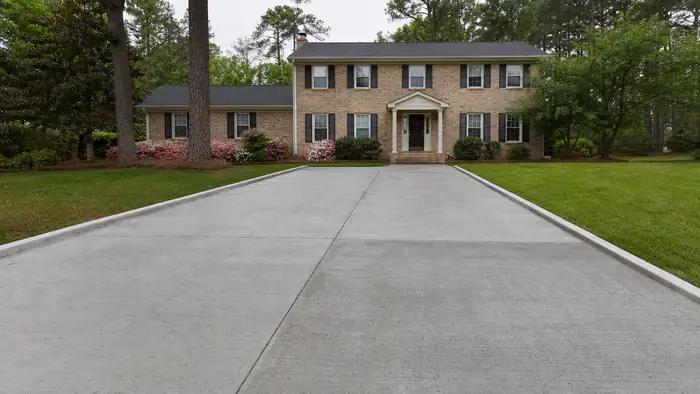
Concrete walkway meeting the driveway apron and front steps at a tan-brick colonial in Marietta, GA, in early morning light.

Walkway & Sidewalk Installation in Marietta, GA

We install walkways and sidewalks in concrete, from the short front path that runs between a driveway and a porch to the longer runs along the retail and restaurant frontage around Marietta Square. Most of it is flatwork: a slab poured flat, reinforced, finished, then left alone to cure. As a concrete contractor we handle the whole sequence, grading included, because what sits under a sidewalk decides how long the top of it stays flat. The surface is the part you see. The base is the part that lasts.

Every job starts with a walk of the route and a look at where water already goes. Permits come through the City of Marietta when the scope calls for them, and we pull what the job needs before anything gets torn out. Housing here runs a wide range of ages, so we match new work to what is already on the property instead of pouring one standard detail everywhere. Old paths get broken out and hauled off before the new base goes down.

Cracks are the complaint we hear most, and they usually trace back to a base nobody compacted or a pour with no rebar or wire mesh in it. Sidewalks that hold water were set flat where they should have carried a slope. Panels that lift at the joint were poured as one long ribbon with nowhere to move. None of that shows up in the first year. It shows up later, all at once, and by then the fix is a replacement.

Getting it right is unglamorous work done in order: excavate to depth, compact, set the forms true, place reinforcement, pour, finish, cut the joints, cure. Stamped concrete and colored concrete are there if you want the walk to read as stone or brick, and exposed aggregate gives you a surface with some grip underfoot. On commercial frontage, where the commuter corridors run toward Atlanta and the doors stay in use, we stage the pour so there is always a way in. Call for a free estimate.

Call +1 470-666-7021

Licensed, Bonded, and Insured ยท A combined 15 years of experience

Get Free Estimates

We warranty all of our work because we believe in what we do.

Our Walkway & Sidewalk Installation Work in Marietta

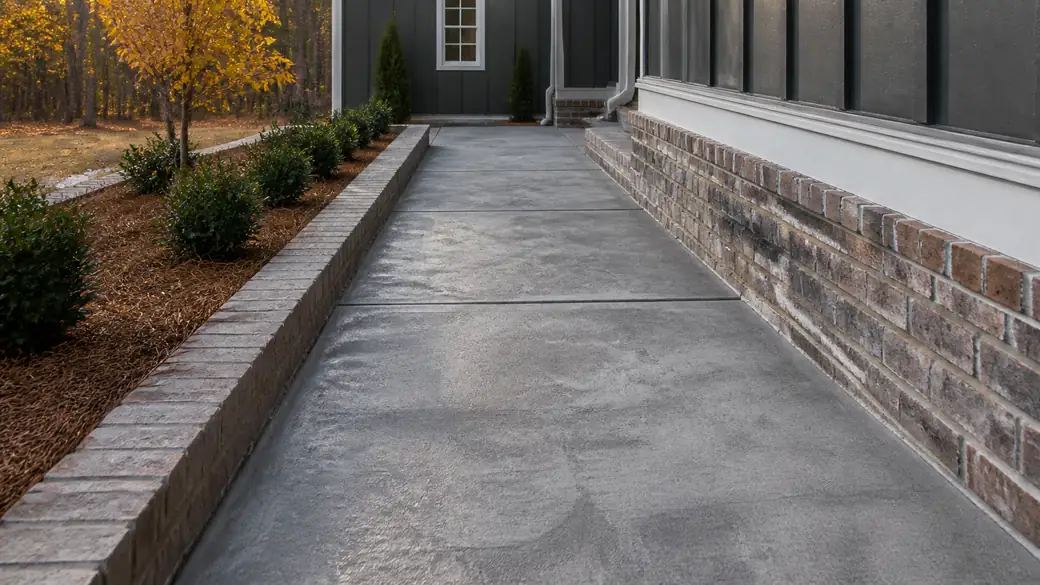
Curving concrete walkway crossing a front yard at a grey split-level home in Marietta, GA, in late afternoon light.

Concrete walkway

A concrete walkway starts with a compacted base, forms set to hold a consistent line, and four inches of concrete over wire mesh or rebar depending on the run. Control joints go in early, spaced so the slab cracks where we put the joint instead of across the middle of the path. Finish is usually a light broom for grip. Stamped concrete and colored concrete are options where the walk reads as part of the house.

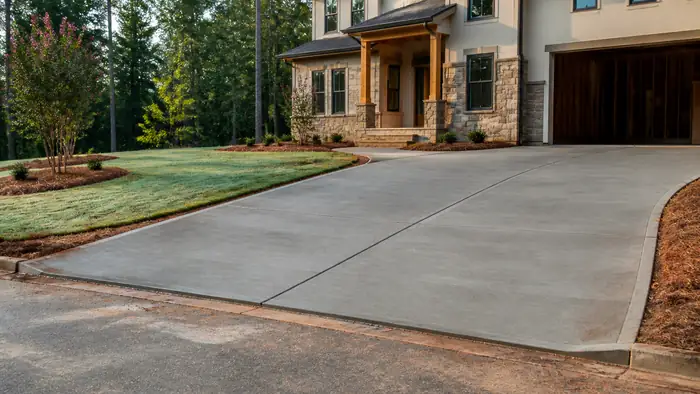
New concrete sidewalk being formed along a street with a driveway ramp at a tan-brick colonial in Marietta, GA, under an overcast sky.

Sidewalk installation

Sidewalk installation along a street frontage has to meet width and slope requirements, and hold that slope over the whole run so water sheds toward the curb instead of pooling at a low spot. We check subgrade for soft areas before pouring, since a sidewalk over loose fill settles and steps out of alignment at the joints. Thickness increases where a driveway apron crosses. Edges get tooled, then broom finished.

Narrow exposed-aggregate concrete garden path bordered by plantings at a buff-brick ranch home in Marietta, GA, after a rain shower.

Concrete path

Paths through a yard or side of a house carry people, not vehicles, so four inches over a compacted base is typical, with wire mesh for continuity. The layout matters more than the mix: we set curves and widths where people already walk, since a path that ignores the desire line gets stepped around and the grass wears through beside it. Exposed aggregate and stamped finishes both work here.

Concrete walkways connecting a driveway, front door and side gate at a stacked-stone and stucco home in Marietta, GA, in clear late-morning sun.

Walkways and pathways

Walkways and pathways connecting a drive, porch, and back patio should read as one piece of concrete work rather than three separate pours in three finishes. We match slab thickness, joint spacing, and surface texture across them, and tie elevations at the steps so nobody catches a toe on a lip. As a concrete contractor we handle residential flatwork and commercial concrete frontage, including walks fronting retail and restaurant space.

What to Expect on a Walkway & Sidewalk Installation Job

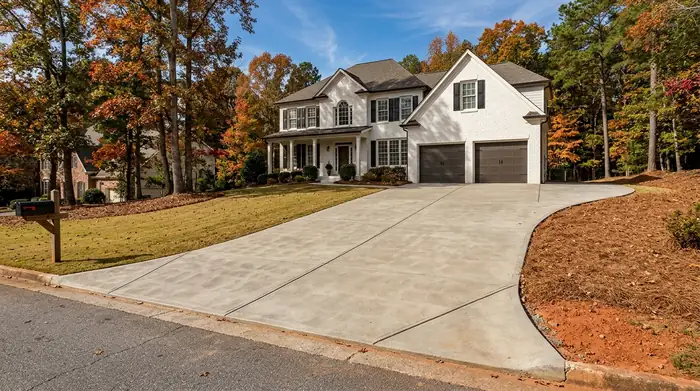
Existing driveway measured and marked before it is replaced at a red-brick ranch home in Marietta, GA, in clear late-morning sun.

Step 1: Site Evaluation

We walk the route with you and look at what the walkway has to do. Grade, drainage, tree roots, and where the water goes when it rains hard. Existing sidewalks tell us plenty: heaved panels usually mean roots or a base that was never compacted. We measure the run, mark the layout, and check how the path ties into steps, a concrete driveway, or the street.

Settled garage approach slab the estimate would price to replace at a charcoal farmhouse-modern home in Marietta, GA, in clear late-morning sun.

Step 2: Written Estimate and Permits

You get the scope of the concrete installation in writing: square footage, slab thickness, reinforcement, finish, and how we handle the tear-out. We tell you which pieces need approval before anything starts and handle that paperwork. Marietta's older streets sometimes have right-of-way sidewalks with their own rules, and downtown frontage near the Square adds another layer. Nothing gets poured until the estimate and the approvals are settled.

Old patio broken into slabs and stacked ready to be carried out at a stacked-stone and stucco home in Marietta, GA, in late afternoon light.

Step 3: Demolition and Base Prep

Old concrete comes out in pieces and gets hauled off, not buried under the new pour. We cut clean edges where new work meets existing driveways so the joint is straight. Then we grade, remove soft spots, and compact the base in lifts. This step is where most failed walkways were lost. A pretty finish over loose fill cracks within a couple of seasons, every time.

Wooden forms and rebar grid set and tied, ready for concrete at a buff-brick ranch home in Marietta, GA, under bright midday cloud.

Step 4: Forming, Steel and the Pour

Forms get set to the grade we measured, with slope carried away from the house. Walkways run four inches of concrete over compacted base, thicker where vehicles cross. Wire mesh or rebar goes in on chairs so the steel sits in the slab, not on the dirt underneath it. We pour, screed, and bull float in one continuous run so there are no cold joints in the middle of the walk.

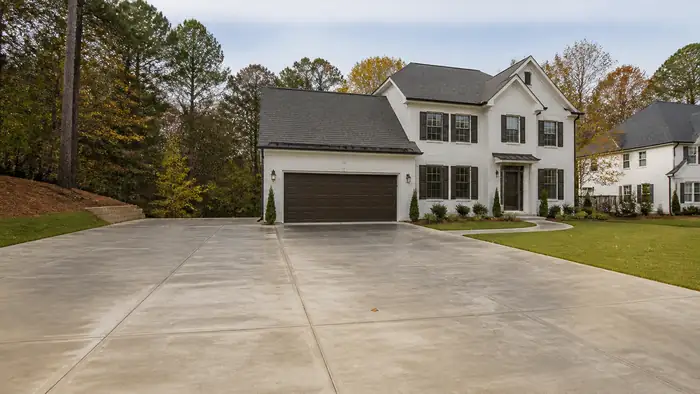
Freshly finished concrete slab curing under a clean broom texture at a painted-white-brick two-story home in Marietta, GA, in clear late-morning sun.

Step 5: Finishing, Curing and Final Walkthrough

Timing decides the finish. We wait for the bleed water, then trowel and broom for grip, or stamp and color if that is the plan. Control joints get cut at the right spacing so the concrete cracks where we tell it to. Curing runs several days, and we tell you when to walk it, when to hose it, and when heavy loads are fine. Then we look at every joint and edge together.

How Much Does Walkway & Sidewalk Installation Cost in Marietta?

Two walkways of the same size can land far apart on price, and most of that gap comes from the site rather than the concrete. What has to come out, how close a truck can get, what the slab has to carry, where water goes: those decide it. Most of it you can check yourself, standing in the yard with a tape measure.

What changes the priceWhich wayWhy
An old slab, brick path or pavers already in the groundCosts moreDemolition and haul-off are their own job, and broken concrete is heavy for its volume
Mature tree roots crossing the pathCosts moreRoots have to be cut back and the base rebuilt, or the walk routed around them
How close the mixer can parkCosts less when the chute reachesConcrete placed straight off the truck moves fast; wheelbarrow runs across a lawn or through a gate add hours and hands
Tight staging, like the storefront frontage around Marietta SquareCosts moreNowhere to set forms, stack material or stage a truck means work happens in stages
Slab thickness the use calls forCosts more as it goes upA walk that only carries foot traffic is thinner than a section a car crosses at the driveway apron
Rebar or wire mesh in the pourCosts moreReinforcement is sized to span and load, and it is real steel and real labor tying it
Which way the ground fallsCosts more if water runs toward the houseFall has to be built in, sometimes with fill, regrading or a drain line before anything is poured
Finish: broom, colored, stamped or exposed aggregateCosts more past a broom finishStamped and colored concrete need more people on site during a short working window

Read past the total on any bid. Ask for slab thickness, whether rebar or wire mesh is included, how deep the base goes, control joint spacing, and who hauls the old walk off. A low number often means a thinner slab or demolition billed later.

Questions About Walkway & Sidewalk Installation

How long does a Marietta walkway take from pour to walkable?

Light foot traffic is usually fine after a few days, though concrete keeps gaining strength for weeks after that. We tell people to stay off fresh flatwork entirely for the first day or two. Cool, damp weather slows the set. Heat speeds it up. If you have a dog or kids, plan on barricades or tape across both ends until we say it is clear.

Who is responsible for the public sidewalk outside a Marietta property?

Responsibility for the strip of concrete sidewalk between the street and a private lot depends on how the right of way was platted, and it varies block to block. Rules differ for a downtown storefront near Marietta Square and a house on a residential street. Before we quote work in that zone, we check who actually owns it. Ask us and we will look.

Can you pour a walkway over tree roots on a Marietta lot?

Sometimes, but rarely the way people picture it. A slab poured directly across live roots will crack once those roots keep growing, and they always keep growing. We would rather route the walkway around the root zone, or cut a section that can be replaced later. Removing major roots to force a straight line often kills the tree and costs you more twice.

What stops a sidewalk lifting and becoming a trip hazard in Georgia?

Good base preparation, mostly. Concrete lifts when the material under it moves, so we compact the subgrade properly and keep the thickness consistent instead of pouring thin over a soft spot. Wire mesh or rebar holds a cracked panel together rather than letting halves separate and tilt. Control joints at sensible spacing decide where cracks go. Drainage away from the slab matters too.

How wide should a front walkway be on a Marietta property?

Wide enough for two people side by side, which is the standard most homeowners land on once they walk it. Narrower reads as a path to a side door, and people step off into the grass, which wears a rut along one edge. On older houses we sometimes match the original width so the concrete work looks like it belongs. Show us the approach and we will mark it out.

Do you have to meet accessibility rules for a walkway in Marietta?

Yes for anything public facing, and commercial concrete along retail and restaurant frontage falls squarely in that category. Slope, cross slope, surface texture and clear width all have requirements, and ramps and landings have their own. Private residential walkways are looser, though the same dimensions make a walk easier to use. We build to the applicable standard either way. Tell us the use and we will scope it.

Get a Free Estimate

Get Free Estimates

We warranty all of our work because we believe in what we do.

Tap to call +1 470-666-7021