+1 470-666-7021
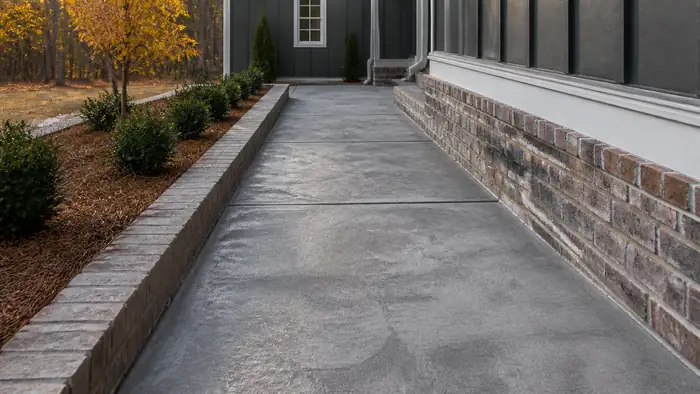
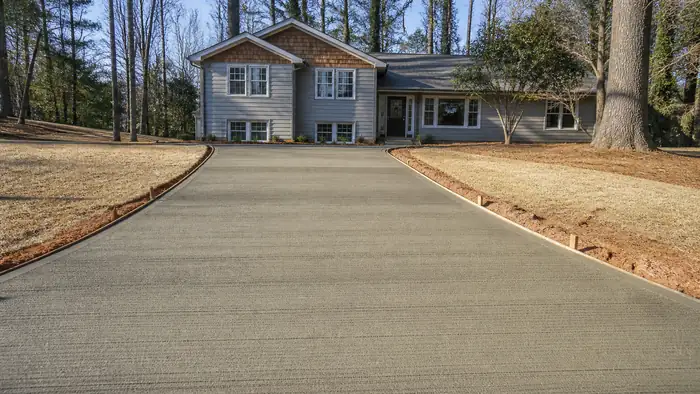
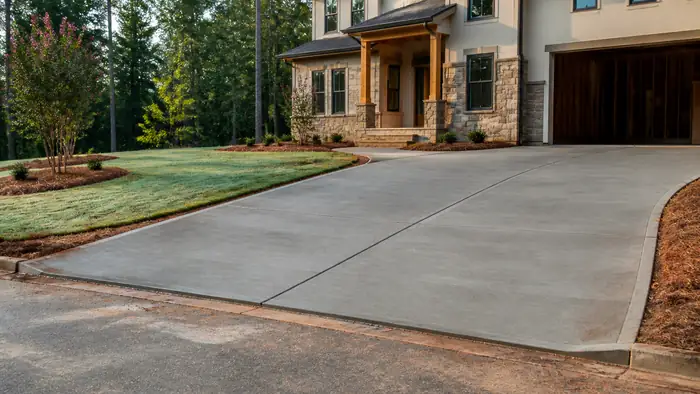
Replaced concrete driveway panel with clean saw-cut edges at a charcoal farmhouse-modern home in Marietta, GA, after a rain shower.

Repair, Leveling & Resurfacing in Smyrna, Georgia

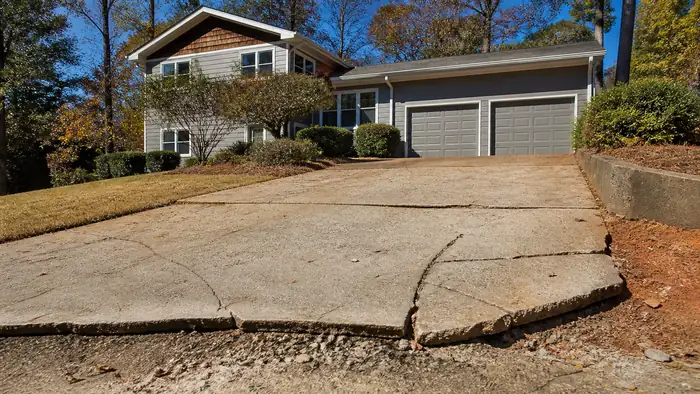
Concrete that has cracked, settled or worn thin does not always need to come out. A good deal of the work we do in Smyrna is on slabs poured decades ago, and much of it is repairable: a driveway that has dropped at one joint, a sidewalk panel lifted at the seam, a patio gone rough and pitted while the slab beneath it stays sound. We look at the slab first and tell you which of those you have. Sometimes the honest answer is replacement, and we say so.

Three different problems, three different fixes. Leveling raises a slab that has settled, lifting it back to grade through small ports instead of breaking it out. Resurfacing puts a new wearing layer over concrete whose surface has failed but whose structure has not, and that layer can be finished plain, colored, broomed or stamped. Repair is narrower: a corner rebuilt, a joint cut clean and refilled, a spalled edge taken back to sound material. Which one applies depends on what the slab is doing underneath, not just how it looks.

Most concrete failures start below the surface. Water moving under a slab carries away the base and leaves a void, and the concrete breaks where it loses support. Slabs poured without rebar or wire mesh have nothing holding the pieces together once a crack does open. Control joints cut too shallow, or cut too late, let a slab crack where it wants rather than where it was meant to. Tree roots do their own work over the years. None of that gets fixed by a coating.

Doing this properly costs time before it costs material. Voids get filled before a slab goes back down, otherwise it settles again in the same spot. Resurfacing holds only if the old surface is cleaned and profiled and the bond coat goes on correctly, and that preparation is most of the labor on the job. Stamped concrete over an existing slab needs an overlay thick enough to take the imprint and hold the detail. Skip any of it and the repair fails faster than the original concrete did.

We are a concrete contractor working through Smyrna and the wider metro Atlanta area, on residential driveways and patios as well as commercial walks, storefront aprons and flatwork. Whether it is one sunken sidewalk panel at the front steps or a parking area coming apart in several places, we will come look and tell you what the slab actually needs. Call for a free estimate. Photos help if you have them, though we would rather stand on the concrete ourselves before saying what the work will take.

Call +1 470-666-7021

Licensed, Bonded, and Insured ยท A combined 15 years of experience

Get Free Estimates

We warranty all of our work because we believe in what we do.

What Smyrna Calls Us For

Repair, Leveling & Resurfacing

Cracked and settled concrete usually comes from a base that moved, not from bad concrete. We open the crack, check what is under the slab, and either fill and level the section or take it out and repour it. Resurfacing works when the slab is sound and the wear is on top: we grind, clean, and lay an overlay that bonds to the old surface. Spalling, popped aggregate and lipped joints all get handled differently.

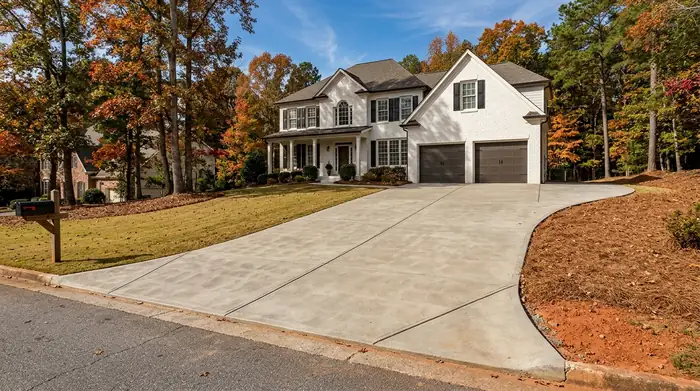
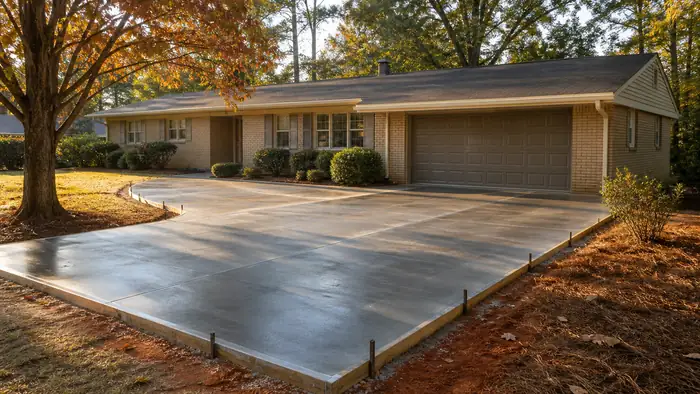
Broom-finished concrete driveway running up to a two-car garage at a painted-white-brick two-story home in Marietta, GA, in clear late-morning sun.

Driveway Installation & Replacement

Concrete driveways go in at four inches over compacted base, thickened at the edges and the apron where vehicles load them hardest. We tie in rebar or wire mesh depending on the pour, and we cut control joints early so the slab cracks where we put the line instead of across the middle. Replacement means full demolition and haul off, not a thin cap over a failing driveway.

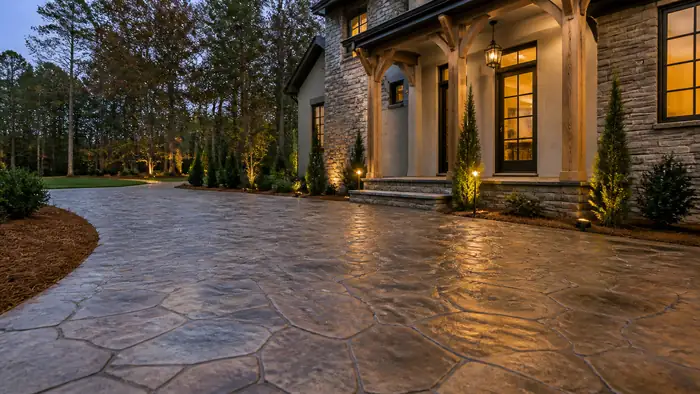
Rectangular concrete patio with a low step up to the rear door at a brick-and-siding two-story home in Marietta, GA, after a rain shower.

Patio Construction & Outdoor Living

Patios are where finish matters most, so we spend time on it. Stamped concrete takes a pattern and color while the slab is still workable, and exposed aggregate gets washed back to reveal the stone. Broom finish stays the plainest and the least slick when wet. We slope every concrete patio away from the house, seal it once it has cured, and set the joint layout to match the shape of the pour.

Board-formed concrete retaining wall holding a raised lawn at a grey split-level home in Marietta, GA, under an overcast sky.

Retaining Wall Construction

Walls fail when water builds up behind them, so drainage comes first: gravel backfill, filter fabric, and pipe running to daylight. Footings go below grade on compacted base, and reinforcement is sized to the height of the wall and what sits behind it. We build poured concrete and block walls, batter them back into the hill, and cap them. Short garden walls and tall structural walls are different jobs.

Square-edged concrete slab pad with a storage shed on it at a buff-brick ranch home in Marietta, GA, under bright midday cloud.

Concrete Slabs & Pads

Slabs and pads carry whatever you put on them, so the base is the real work: graded, compacted, and checked before any concrete arrives. Shed pads, garage floors, equipment pads and generator pads all get rebar or wire mesh, a vapor barrier where it belongs, and joints cut on a spacing that suits the thickness. We form flatwork square and finish it flat enough that water leaves instead of pooling.

What to Expect on a Smyrna Concrete Job

Every job starts with one of us standing on the concrete you already have, looking at where it cracked and asking what it did before it failed. We look at the low corners, the joints, the way water leaves the surface. Sometimes the answer is a repair. Sometimes the slab has moved too far and a fresh concrete installation is the honest call. We tell you which one we think it is, and why, while we are still standing on it.

Measurements come next, along with a written scope: what gets torn out, how thick we pour, what reinforcement goes in, how the surface gets finished, where the joints land. You have that before anyone starts. If we open the ground and find something different underneath, we stop and show you rather than adding work quietly. Changes get discussed in daylight, standing over the hole, not slipped into a bill you read later.

Old concrete has to come out before anything good goes back. We break it, load it, and haul it off, and we protect what stays: the lawn edge, the porch, the irrigation heads nobody remembers until one gets clipped. Driveways take the most tearing out and make the most noise. On sidewalks the work is smaller but the layout matters more, because the new pour has to meet whatever is already there on either side.

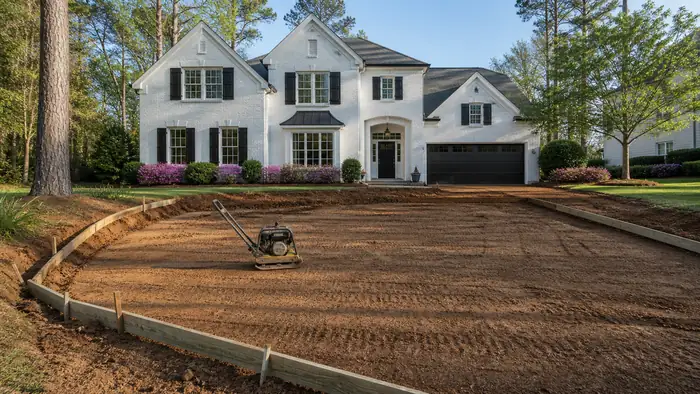
Base work decides how long a slab lasts, and almost nobody sees it. We grade for fall away from the house, cut out soft spots, bring in stone where the ground will not hold, and compact in lifts instead of one deep pass. A slab poured over loose fill cracks no matter how good the finish looks on the first day. This is the step people skip when they are moving fast.

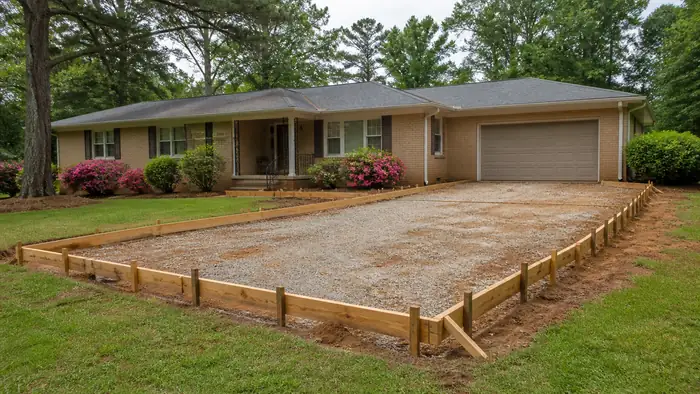
Forms go up once the base is tight, set to the grade we want rather than the grade we found. Rebar or wire mesh goes in depending on the slab and what will sit on it, held up off the ground where it can actually do something, not laid flat in the dirt. We plan control joints before the pour so they land where the concrete wants to crack anyway, and so the pattern looks deliberate.

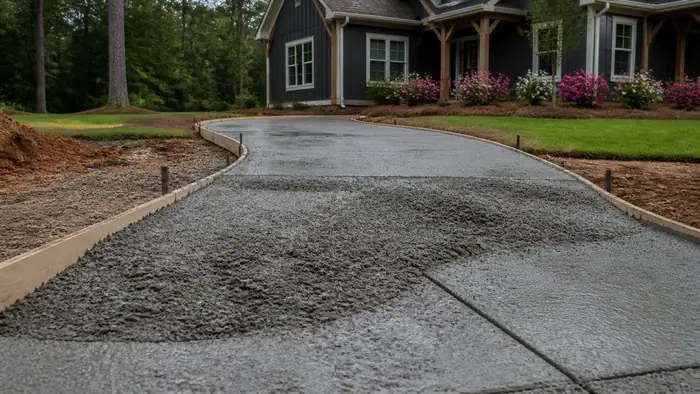
Pour day runs on the weather and on the plant. Our trucks come out of Marietta, and we start early so the mix is not sitting in the heat while we finish. Flatwork gets screeded, floated, then finished the way you picked: broom for grip, exposed aggregate, colored or stamped where you want the look. Stamped work has a short window, so we bring enough hands to keep the whole pour moving at once.

Curing is mostly waiting, and the waiting is part of the work. Keep off the fresh surface for a day, longer in cool weather, and stay off a new concrete driveway with vehicles until we tell you it will carry the load. Concrete keeps gaining strength for weeks after it stops looking new. Parking on it too early does damage you cannot see from the top and cannot undo from underneath.

Last thing we do is walk the finished work with you. We point out the joints, explain which hairlines are normal and which are not, and say what to expect from the surface over the first year. Cleanup happens before we leave: forms pulled, spoil hauled off, the drive swept down. If something looks wrong to you, say it while we are standing there. Fixing our own work is easier than explaining it later.

What Smyrna Owners Ask Us

How many jobs has Marietta Professional Concrete done around Smyrna?

We are new, and we would rather say that plainly than pad a number. The crew running your job has poured flatwork, driveways and sidewalks for years, and that experience does not reset because the business name is recent. Ask us what we have done, and we will tell you straight. We would rather earn the Smyrna work than claim it.

Does Smyrna require its own permit for this work?

It depends on the job. Repair and resurfacing that stays inside the existing footprint usually does not trigger a permit, while work that changes a driveway apron, alters drainage or touches the public sidewalk generally does. Anything falling under the City of Marietta gets handled there. We confirm requirements with the right office before we cut or pour, not after.

Is there a minimum job size for Smyrna?

No. We will take a single cracked slab section, one settled walkway panel, or a short run of concrete sidewalk just as readily as a full driveway replacement. Small repairs are how most people find out whether a contractor is worth calling twice. That said, very small jobs sometimes get scheduled alongside nearby work so the crew and the mix truck make one trip.

Do you charge more to work in Smyrna than in Marietta?

No. Our estimates come from the same things everywhere: square footage, thickness, how much old concrete has to come out, whether the pour needs rebar or wire mesh, and finish work like stamped or colored concrete. Location does not carry a surcharge. What does move an estimate is access, subgrade condition, and how far the truck can get from the pour.

What is the drive time from Marietta to Smyrna for a site visit?

Short. The two sit close together inside metro Atlanta, and on an open road it is a quick run. Traffic is the real variable here, since the commuter corridors heading toward Atlanta stack up morning and evening. We plan site visits around that rather than pretending it does not happen. Tell us what works for you and we will schedule accordingly.

Get a Free Estimate

Get Free Estimates

We warranty all of our work because we believe in what we do.

Tap to call +1 470-666-7021