+1 470-666-7021
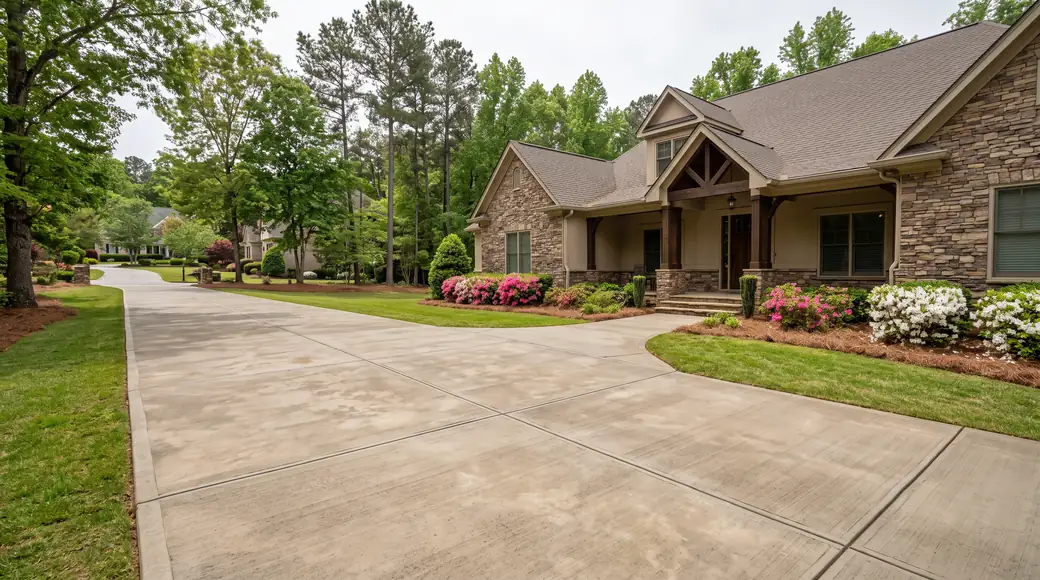
Concrete entry walk and ADA ramp at a medical office building in Marietta, GA, in clear late-morning sun.

Commercial Concrete for Medical & Dental Offices in Marietta, GA

We pour concrete for medical and dental practices in Marietta, and the work asks more of the surface than a house or a warehouse does. Patients arrive on canes, on walkers, in wheelchairs. Some are already hurting before they reach the door. A raised lip at a threshold, or a sidewalk panel that has lifted half an inch, stops a person cold and puts a practice in a bad position. We build the approach to be flat, drained and continuous. Parking lot to walkway, walkway to entry.

Marietta Square is the historic core of town, ringed by retail and restaurant frontage, and a practice with an address near it works in tight quarters: shared access, limited frontage, foot traffic that never fully stops. Offices out along the commuter corridors running toward Atlanta deal with the opposite, which is volume and turnover in the lot. A concrete contractor who has only ever poured suburban driveways feels that difference the first morning on the Square. Both are ordinary for us, here in Marietta and over in Smyrna.

Not all of it has to read as gray flatwork. Stamped concrete at an entry court, or a colored band running the length of the walk, gives a building front some warmth, and it takes the same wheelchairs and hand trucks that cross it every day. Either way, the slab underneath is built the same. Most of our work here is plainer than that: entry slabs, walkways, ramps, dumpster pads, sidewalk sections pulled out and replaced. None of it is complicated, but it is easy to do badly. Call for a free estimate.

Call +1 470-666-7021

Licensed, Bonded, and Insured ยท A combined 15 years of experience

Get Free Estimates

We warranty all of our work because we believe in what we do.

Our Commercial Concrete for Medical & Dental Offices Work in Marietta

Commercial concrete for a medical or dental office is mostly the ground your patients cross before they reach the door. The entry landing, the concrete sidewalk running in from the parking spaces, the ramp and its landings, curbing, an approach slab, a pad for the dumpster or the generator. Some of that carries vehicles. Most of it carries people who are not steady on their feet, and the two jobs want different thicknesses, different reinforcement and different finishes.

What separates this from a driveway pour is the traffic crossing it all day. Wheelchairs, walkers, rolling equipment carts, a parent with a stroller and a toddler in the other hand. Every one of those finds a lipped joint or a ponding low spot that a car would roll straight over without anyone noticing. So we set slope to move water off the walking surface and away from the threshold, and keep the run flat enough that wheels track true.

Under the surface, the work is subgrade, reinforcement and jointing. We compact the base, set forms to the grade we want the finished concrete to hold, and run rebar or wire mesh depending on what the slab is asked to carry. Thickness steps up where delivery vehicles turn or sit. Joints go where we expect the slab to move, not wherever the pour happened to end, and they get sawcut early and straight.

Finish is a safety decision on this kind of job. A broom finish gives traction on the walking surface, which matters most at a door people reach when the ground is wet. Where an entrance wants to look like something, stamped concrete, colored concrete or exposed aggregate reads well across the approach and holds up under steady foot traffic. We keep the stamped work off the ramp, where texture and slope both need to stay predictable.

Most failures we get called out to look at started below the surface. A slab poured over soft fill settles, a joint opens, and one edge ends up sitting proud of the other as a trip point in the busiest part of the walk. Patching the top of that buys a season, maybe two. Practices also keep seeing patients while the work happens, so we phase demolition and sidewalk installation to leave a usable, accessible way in.

We are a concrete contractor working in Marietta and the towns around it: Smyrna, Kennesaw, Roswell, Atlanta and the rest of metro Atlanta, all on the same terms. Offices sit everywhere from the retail and restaurant frontage around Marietta Square, the historic downtown core, out along the commuter corridors that run toward Atlanta. Call if you want someone to walk the property with you and talk through the commercial concrete it actually needs.

What to Expect on a Commercial Concrete for Medical & Dental Offices Job

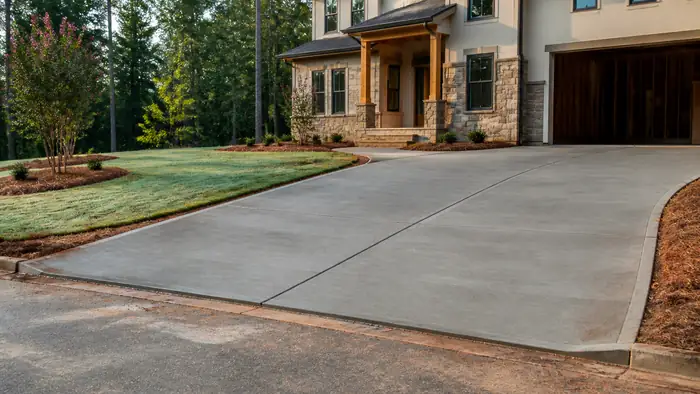
Entrance walkway checked for trip hazards at a business door in Marietta, GA, in late afternoon light.

Step 1: Site Evaluation

We walk the property with you and measure what is already there: slab thickness where an edge is exposed, cracking patterns, how water leaves the lot, and where pavement has settled away from door thresholds. Entrances at a medical office carry wheelchairs, walkers and gurneys, so we check slope and lippage at every door. We note utility lines, irrigation heads, and the sections of driveways that take delivery trucks.

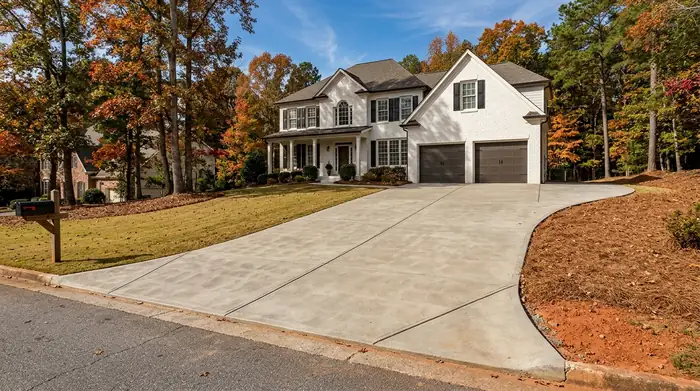
Service yard slab assessed where heavy vehicles have broken it up in Marietta, GA, in early morning light.

Step 2: Written Estimate and Permits

The estimate names the work in plain terms: square footage, slab thickness, reinforcement, joint layout, finish, and how much demolition comes out first. Where the scope calls for a permit, we prepare the drawings and file the application before anything gets torn up. Phasing goes in writing too, because an office with patients on the schedule cannot lose its whole parking area at once.

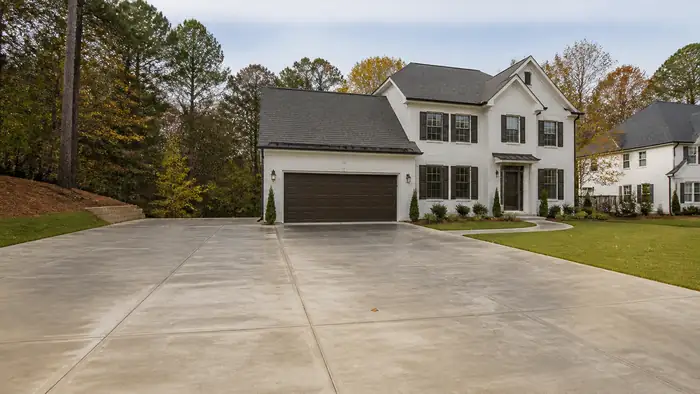
Section of parking lot saw-cut out with the base regraded in Marietta, GA, under bright midday cloud.

Step 3: Demolition and Base Prep

Old concrete comes out by saw cut and breaker, so the edge where new meets existing stays clean. Around Marietta Square, retail and restaurant frontage sits close to the work, and we stage haul-off and equipment access before the first cut. Then we grade and compact the base in lifts, proof rolling to find soft spots. Anything that pumps under a loaded wheel gets dug out and replaced with stone that compacts.

Heavy dock slab formed with a doubled rebar mat before the pour in Marietta, GA, in clear late-morning sun.

Step 4: Forming, Steel and the Pour

Forms go in on a string line with the fall set toward the drains, since standing water at a clinic entrance is a slip complaint waiting to happen. Steel is rebar on chairs through drive lanes and wire mesh where the load is foot traffic, tied so it holds its height in the slab. Concrete installation runs as one continuous placement per section where we can, with dowels at any cold joint.

New parking concrete cured and freshly striped into bays in Marietta, GA, in late afternoon light.

Step 5: Finishing, Curing and Final Walkthrough

Sidewalks get a broom finish run across the direction of travel for grip, and joints are cut early enough to decide where the slab cracks. We cure the surface instead of letting it dry out, which is what leaves the dusting and hairline map cracking you see on rushed work. At the walkthrough we run water over the concrete driveway and sidewalks with you and check that every threshold sits flush. Call for a free estimate.

How Much Does Commercial Concrete for Medical & Dental Offices Cost in Marietta?

Price on a commercial pour follows the site more than anything else. Two offices on the same block can land far apart on the same run of concrete sidewalk. Most of what drives it is visible from your own parking lot, and we walk the whole thing before we put a number on it.

What changes the priceWhich wayWhy
Old slab still in the groundcosts moreDemolition and haul-off happen before forms go in, and thick flatwork breaks up slowly.
Mixer access to the pourcosts lessA truck that reaches with its chute saves us buggy work and pump time.
Slab thickness the traffic calls forcosts moreA walkway is thinner than a drive aisle taking delivery vans and ambulance weight.
Rebar in place of wire meshcosts moreTying rebar on chairs takes longer, and anywhere wheels turn hard needs it.
Grade that already sheds watercosts lessFollowing existing fall means less cut and fill, and no new drain line.
Roots, buried lines, soft subgradecosts moreWe hand dig around anything live and compact stone wherever the ground gives.
Stamped, colored or exposed aggregate finishcosts moreThose finishes need extra hands inside a short window, plus sealing afterward.

Between two bids, compare slab thickness, reinforcement type and spacing, base depth, control joint layout, and whether demolition and haul-off sit inside the number. Written out the same way, the cheaper bid usually turns out to be a thinner slab.

Questions About Commercial Concrete for Medical & Dental Offices

How do you control dust and noise near patients in Marietta?

We cut with wet saws and shroud the blade, so most of the silica dust goes into a slurry instead of into the air. Demolition is the loud part, and we schedule it early or late rather than through appointment blocks. Doors and adjacent openings get sealed with poly. Between cuts, the work is quiet: forming, tying rebar, screeding.

What accessibility standards apply to a medical entrance in Marietta?

An accessible route to the entrance has to hold slope and cross slope within tolerance, and landings at the door must stay close to level. Ramps need proper run, handrails, and landings at the turns. Accessible parking spaces need aisles at the same grade as the stalls they serve. Plans and permits go through the City of Marietta, and the inspection checks what we poured against what was approved.

Can you work around a clinic's hours in metro Atlanta?

Yes. Most of our medical flatwork happens on evenings, weekends, or a Friday-to-Monday window, because that is when a car park or entrance can actually be closed. Concrete sets on its own schedule, so we plan the pour backward from when you need the surface open. Commuter traffic near the Square shapes our delivery times too.

What surfaces suit a Marietta medical car park?

Concrete holds up under repeated turning loads better than asphalt, especially in drive aisles and at the drop-off, where wheels scrub the same spots daily. Slabs get wire mesh or rebar depending on thickness and traffic. Broom finish gives traction when wet. Exposed aggregate or colored concrete works at the entrance apron if you want the approach to read differently from the lot.

How do you keep ambulance and drop-off access open at a Marietta clinic?

We phase it. The drop-off lane and the fire lane never close at the same time as the main entrance, so there is always one clear route for a stretcher or a wheelchair. Barricades and cones mark the temporary path, and we walk it with your office manager before the first cut. Emergency access is the one thing we do not stage around.

Can you keep a Marietta medical practice open while you work?

Yes, in nearly every case. We split the site into sections and pour one at a time, which stretches the calendar but keeps the doors open. Fresh concrete needs to stay untouched for a stretch, so a temporary walkway carries foot traffic while that section cures. Tell us which entrances your patients actually use, and we form around them.

Get a Free Estimate

Get Free Estimates

We warranty all of our work because we believe in what we do.

Tap to call +1 470-666-7021