+1 470-666-7021
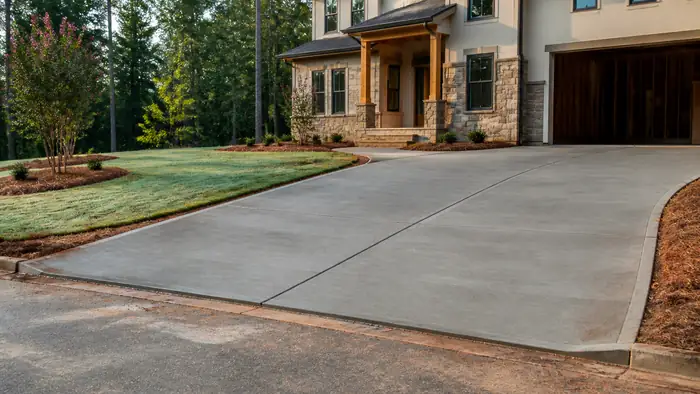
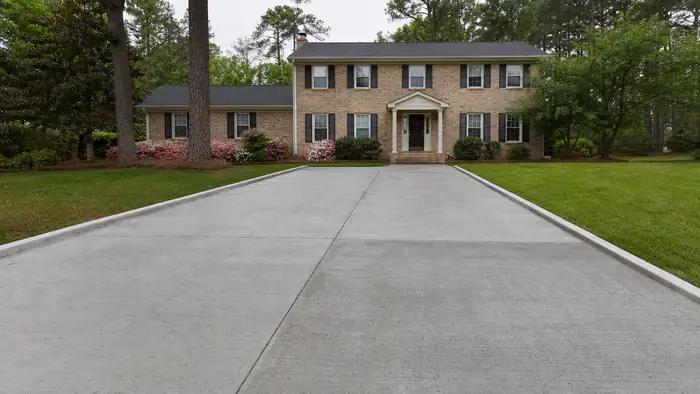
Concrete walkway and entry paving at a suburban office building in Marietta, GA, in early morning light.

Commercial Concrete for Offices & Corporate Properties in Marietta, GA

We are a concrete contractor working on office parks, corporate campuses and commercial property around Marietta. That means the flatwork a building sits inside: parking areas, walkways between buildings, loading approaches, entry landings, and the concrete sidewalk that carries somebody from a parked car to a door. Some of it is plain gray slab, poured to take weight and stay flat. Some of it is stamped concrete at an entrance, where the surface is part of how the property reads. Exposed aggregate and colored concrete come up in the same conversation. Both are ordinary work here.

Office property runs on a schedule the concrete has to fit inside. Tenants arrive early, deliveries land through the morning, and the commuter corridors toward Atlanta fill and empty twice a day. Near Marietta Square, retail and restaurant frontage keeps people on foot past a work zone all day long. A parking field that is fine to close on a Saturday is not fine to close on a Tuesday. That is the real constraint on commercial concrete, and it shapes the sequence more than anything else.

Concrete on a commercial site takes more abuse than concrete at a house. Box trucks turn on it. The same six feet of walkway carries a few hundred people every weekday morning. So thickness, reinforcement and joint layout get set for that traffic rather than copied off a residential driveway spec. We do this work in Marietta and out through Smyrna and the rest of metro Atlanta, on new construction and on lots that have been patched for years. Call for a free estimate.

Call +1 470-666-7021

Licensed, Bonded, and Insured · A combined 15 years of experience

Get Free Estimates

We warranty all of our work because we believe in what we do.

Our Commercial Concrete for Offices & Corporate Properties Work in Marietta

Commercial concrete on an office property is mostly flatwork that people walk on and drive over every day. Parking bays, entrance aprons, service pads, dumpster pads, and the concrete sidewalk that ties them together. None of it is decorative the way a patio is. It carries delivery trucks, it moves water away from the building, and it has to stay level under shoes, hand trucks and luggage carts. That is the job.

Most of what we install on corporate sites starts at the pavement and ends at the door. Sidewalks running the length of a frontage, ramps and landings at each entrance, curbing, pads for generators and transformers, stair treads. A concrete contractor working an occupied building is also working around tenants and their customers, so pours get broken into sections and at least one clear route into the lobby stays open.

Stamped concrete shows up on office properties more than people expect. Courtyards, plaza areas, the strip between a storefront and the curb around Marietta Square, where retail and restaurant frontage puts the walking public right up against the building. Colored concrete and exposed aggregate do similar work. They break up a wide gray field, mark the line between drive lane and walkway, and hold up under café chairs and table legs.

Underneath every slab is the part nobody looks at. Compacted subgrade, thickness matched to the load above it, rebar or wire mesh depending on what the pour has to carry, and control joints cut on a spacing that tells the concrete where to crack. A drive lane taking box trucks is not built like a walkway. We size reinforcement to actual traffic instead of running one detail across the whole lot.

Failures here are usually predictable. Water standing at a low spot because slope ran the wrong way. A trip edge where an old walk meets a newer one poured to a different height. Cracks wandering across a panel because joints went in late or too far apart. Old sections next to patches next to patches, each a different thickness. Some of that gets cut out and replaced in panels. Some of it means the whole run comes out.

We cover Marietta and the surrounding metro Atlanta area, including Atlanta, Smyrna, Kennesaw and Roswell, on the same terms everywhere we go. Commuter corridors run toward Atlanta through all of it, which shapes when concrete installation makes sense on a property that has to keep operating. Call for a free estimate on commercial concrete work, and bring whatever you know about the existing slab.

What to Expect on a Commercial Concrete for Offices & Corporate Properties Job

Cracked commercial parking bay marked out for replacement in Marietta, GA, in clear late-morning sun.

Step 1: Site Evaluation

We walk the property and look at what is already there: slab thickness at broken edges, how water leaves the lot, where trucks and delivery vehicles turn, and which sections carry the most foot traffic. Cracking usually tells us something about the base underneath rather than the concrete itself. We measure the areas, note existing joint layout, and check whether tenants or customers need a working path through the site during construction.

Commercial parking field surveyed for a written concrete estimate in Marietta, GA, in late afternoon light.

Step 2: Written Estimate and Permits

You get the scope in writing: square footage, slab thickness, reinforcement (rebar or wire mesh), finish, joint spacing, and how the work is phased around your business hours. Permits get handled before anyone breaks ground, and we schedule around whatever approvals the property needs. If drawings or a site plan exist, send them along, since it saves guesswork on setbacks and existing utility runs.

Loading dock apron broken out with the subgrade compacted in Marietta, GA, in clear late-morning sun.

Step 3: Demolition and Base Prep

Old concrete comes out in sections, hauled off rather than buried on site. Then the real work starts. We excavate to grade, cut out soft spots, and bring in graded aggregate base compacted in lifts. Most failed flatwork we replace failed because this step was rushed. Grade gets set so water runs off the slab instead of standing on it, and we keep the subgrade protected until the pour.

Long parking lot strips formed and reinforced ready to pour in Marietta, GA, under bright midday cloud.

Step 4: Forming, Steel and the Pour

Forms are set to line and grade, staked solid so nothing bellies out under the weight of wet concrete. Sidewalks and light-duty walks generally get wire mesh; a concrete driveway or a drive lane taking truck traffic gets rebar on chairs, tied and held at mid-slab depth. Concrete installation runs continuously across each section so we do not build a cold joint into the middle of a pour.

Broom texture drawn across a new commercial entrance pad in Marietta, GA, in clear late-morning sun.

Step 5: Finishing, Curing and Final Walkthrough

Finish depends on what the surface does. Broom finish for traction on sidewalks and driveways, exposed aggregate or stamped and colored concrete where the frontage is part of how the property presents itself. Control joints get cut early, at spacing matched to slab thickness, so the concrete cracks where we put the line. Curing compound goes on, barricades stay up, and we walk the finished work with you before we pull equipment off the site.

How Much Does Commercial Concrete for Offices & Corporate Properties Cost in Marietta?

Two office lots of the same square footage can price out very differently, and the reasons are usually visible before anyone writes a bid. Most of it comes down to what is already in the ground, what a mixer truck can reach, and how much thickness and steel the traffic over that slab calls for. Walk the property and you can find most of these yourself.

What changes the priceWhich wayWhy
Old slab or asphalt still in placecosts moreIt gets broken out and hauled off before we grade or form anything
Mixer truck can back within a few feet of the pourcosts lessChuting straight off the truck beats pumping or barrowing concrete across a lot
Delivery trucks and fire lane traffic crossing the slabcosts moreTruck routes call for a thicker slab and a rebar grid rather than wire mesh
Utilities, irrigation lines or old footings under the surfacecosts moreHand digging and working around them slows the excavation down
Ground that already drains away from the buildingcosts lessLess regrading, fewer drains, and the finished slope sits close to what is there
Stamped or colored finish instead of a broom finishcosts moreStamping, release, color and sealer add labor and another day on the flatwork
Frontage that has to stay open during business hourscosts moreWe pour in sections or off hours, which is common near the retail around Marietta Square
Subgrade that moves or pumps under a loaded truckcosts moreIt gets undercut and replaced with compacted stone before concrete goes down

Between bids, compare the things that are easy to quietly leave out: slab thickness, whether reinforcement is rebar or wire mesh and at what spacing, joint layout, and who hauls the old material away. A bid naming those can be compared to another. One that says concrete installation and a number cannot.

Questions About Commercial Concrete for Offices & Corporate Properties

How do you phase the work so a Marietta office stays open?

Yes, we phase it. We split the pour into sections and keep a clear route from the parking area to every entrance while one section cures. Barricades and signage go up before demolition starts, not after. On a property with several buildings, we usually run one drive lane or one walk at a time so tenants and delivery drivers always have a way through the site.

Can you work outside business hours at a Marietta office?

Yes. Nights and weekends are common on commercial concrete near the Square, where retail and restaurant frontage stays busy through the day and the commuter corridors toward Atlanta fill the streets around it. Off-hours work costs more in labor, and it needs the property manager's sign-off on noise and lighting. Tell us your quiet hours early and we build the schedule around them.

Do you carry the insurance a Marietta property manager will ask for?

Property managers set that requirement in their vendor packet, and it varies from building to building. Send us yours before bidding and we will go through the limits, the endorsement language and the certificate holder details line by line, then confirm in writing what we can meet. If something in the packet does not match, you hear about it during bidding rather than the week work is supposed to begin.

Can you match existing hardscape across an office park in metro Atlanta?

Usually, within reason. We take samples from the existing flatwork, match the mix, the finish and the joint pattern, and pour test panels for approval before the main work. Colored concrete and stamped patterns are harder to match on aged slabs because the original has weathered for years. New concrete cures lighter and evens out over time. We tell you honestly how close a match will be.

What notice do you need for Marietta office work?

It depends on scope and permits. Work in the right of way or anything touching a public concrete sidewalk goes through the City of Marietta, and that review sets the earliest possible start date. Simple interior-lot repairs move faster. Call us with the scope, the property address and any deadline you are working against, and we will tell you what the calendar actually looks like.

How do you handle accessibility compliance at an office in Marietta?

We build ramps, landings and accessible routes to the running slope, cross slope and landing dimensions the code requires, and we shoot grades with a laser before the pour rather than trusting the old surface. Existing sidewalks often drift out of tolerance as they settle. Where a repair triggers compliance work on adjacent flatwork, we identify it during the walkthrough and include it in the scope.

Get a Free Estimate

Get Free Estimates

We warranty all of our work because we believe in what we do.

Tap to call +1 470-666-7021