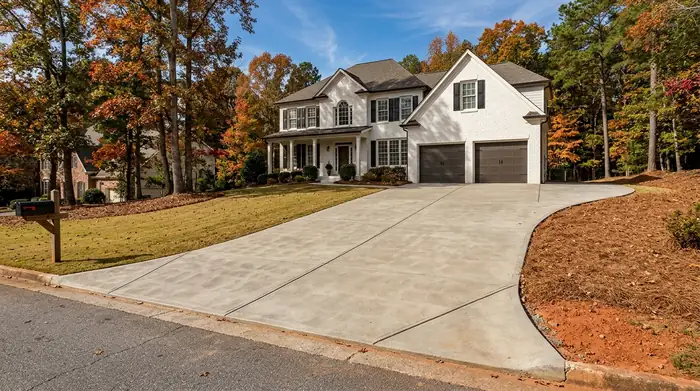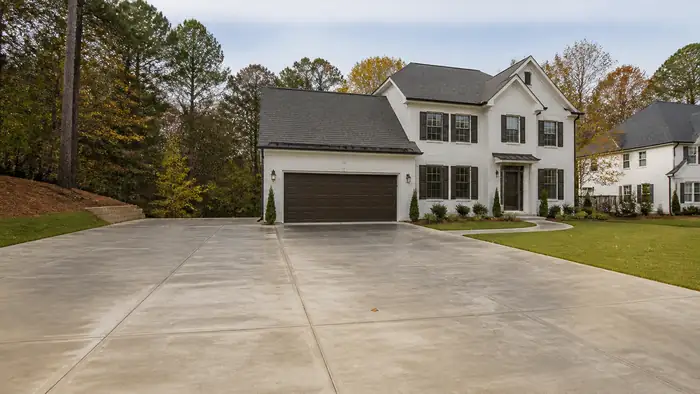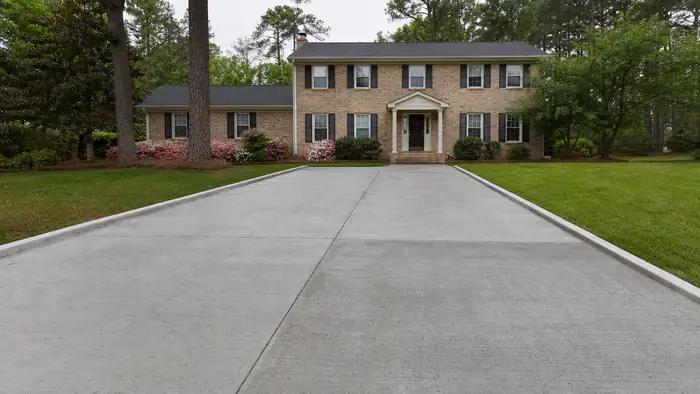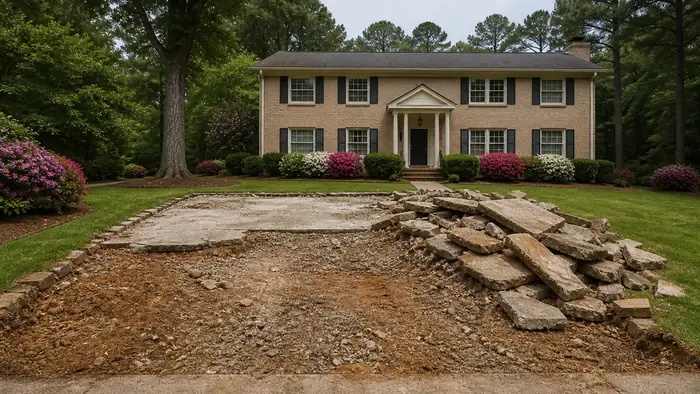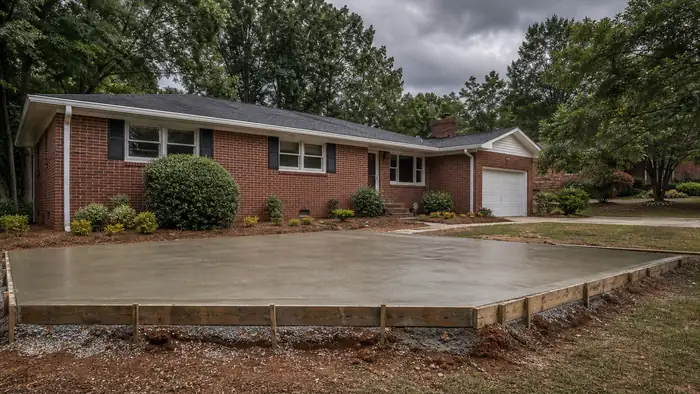
We pour and repair foundations for homes and small commercial buildings in Marietta, and we do it as a concrete contractor rather than a specialist who subs the flatwork out to somebody else. That matters, because the same crew that sets a footing also pours the driveway, the sidewalk, and the patio it feeds into. Marietta Square is the historic downtown core, with retail and restaurant frontage running along it, and the housing spread out from there covers a wide range of ages. A slab under an old house asks different questions than a slab under a new one.
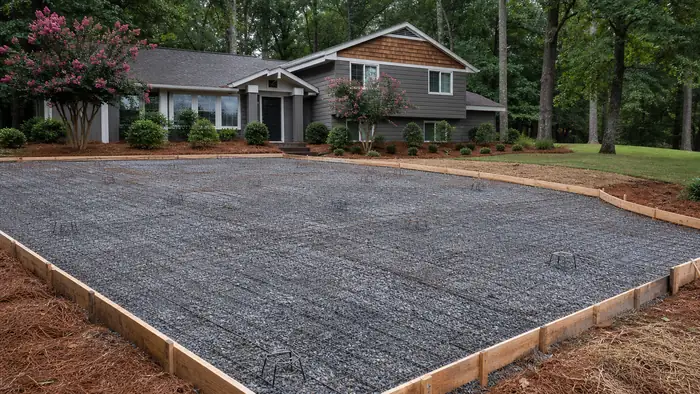
Every job opens with a look at the ground. We want to know what the slab will sit on, where water leaves the site, and what load the building above it carries, because those three answers set footing depth, rebar size and spacing, and whether wire mesh belongs in the pour at all. Commercial work near the Square runs on a tighter clock, since commuter corridors run toward Atlanta and frontage cannot sit closed for long. We plan around that.
Foundations fail in a small number of ways, and almost all of them trace back to preparation. A slab poured over loose fill settles. Steel set too high or too low does nothing for the concrete around it. Water that has nowhere to go finds the weakest joint and works on it. Cracks are the symptom people call about, but the crack is rarely the whole problem, and patching it without reading the cause buys you a year at best.
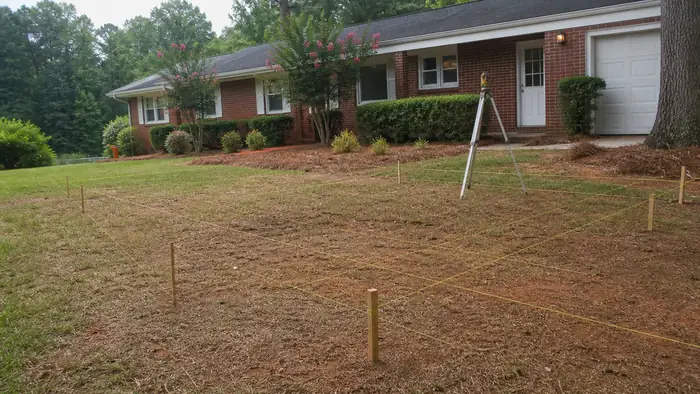
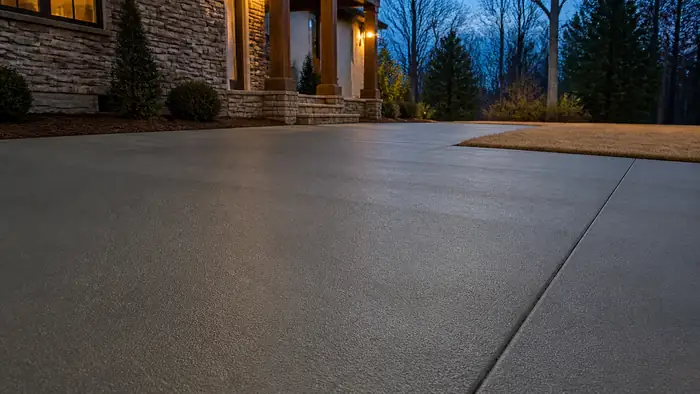
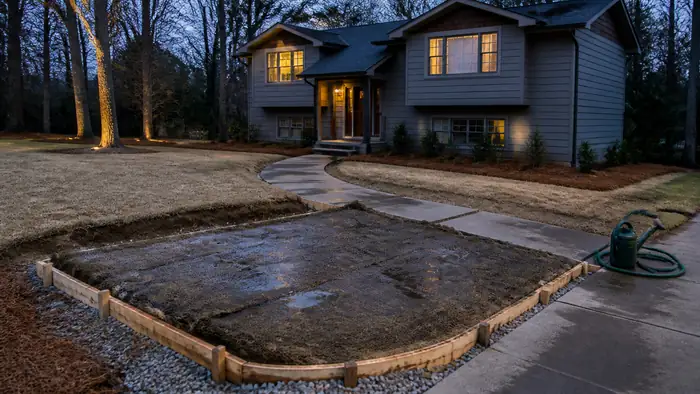
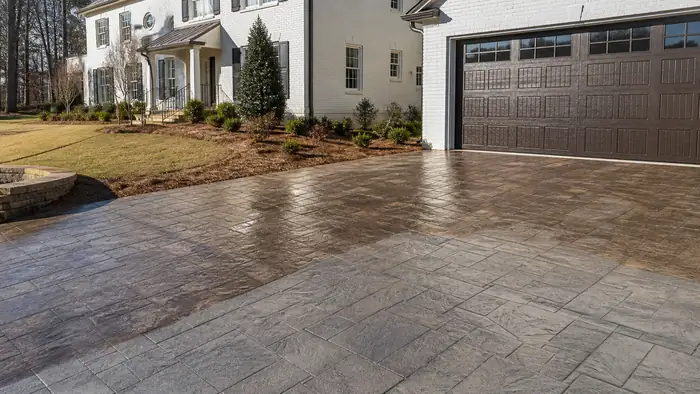
Getting it right takes more work in the preparation than in the pour. Grading, compaction, forms that hold a straight line, and steel tied where the load calls for it: that is where the hours go, and it is the part nobody sees once the concrete is finished and troweled. We hold to the same standard on decorative work, so a stamped concrete patio or a colored slab sits on a base built like a structural pour. Call for a free estimate.