+1 470-666-7021
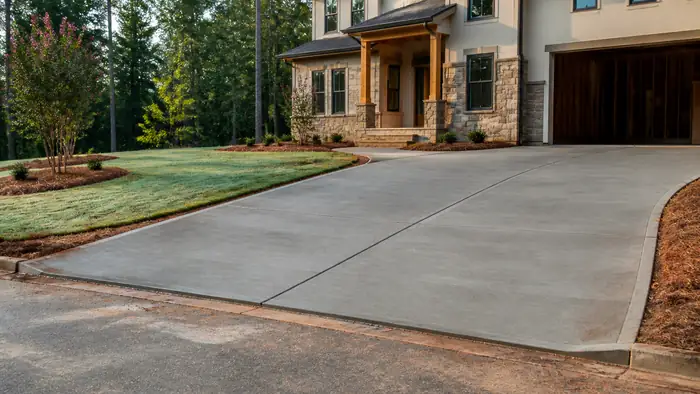
Wide view of finished concrete flatwork across the front of a home at a stacked-stone and stucco home in Marietta, GA, under bright midday cloud.

Garage & Shed Floors in Marietta, GA

A garage floor is a slab that lives a harder life than most concrete on a property. It carries vehicle weight in four small patches, hot tires, whatever gets tracked in off the commuter runs, dropped tools, and spills nobody wipes up. Shed floors work differently: lighter loads, but sitting close to grade, often on ground nobody ever compacted. We pour both. As a concrete contractor working here, that is ordinary, steady work, and we treat it that way. Nothing exotic about it.

Every slab we pour starts with what sits under it. We check the subgrade and get it compacted, set thickness and reinforcing to the load the floor will actually carry, and place rebar or wire mesh where it does some good. Where a permit applies, we pull it through the City of Marietta and build to what an inspector expects to find. The pour itself takes a few hours. The preparation is most of the job. That order matters more than anything we do with a trowel.

Failures usually trace back to a short list. Concrete poured over loose fill settles, and the crack runs in a line you can follow across the floor with your eye. Reinforcing left out, or laid flat on the ground instead of held up in the pour, does nothing at all once the concrete is down. Joints cut late, or cut too shallow, let the slab crack where it wants rather than where we put the line. None of it shows in the first year.

Getting it right is not complicated. It is mostly work that disappears the moment the floor is finished: compacted base, honest thickness, steel held at the right height, joints cut on time, and a finish chosen for how the floor gets used. Broom finish where you want traction. A harder trowel where you want to sweep it clean. Colored or stamped concrete when the slab is part of a space you actually spend time in, a shop or a finished garage. All of that happens before anyone looks at the floor.

We pour floors in Marietta and in Smyrna, on houses of every age this county seat has collected. Detached garages behind older homes near the Square, attached slabs in newer subdivisions, sheds and workshops set back on the lot. Often the garage floor is one piece of a bigger job: a driveway, the sidewalk running to a side door, a patio off the back. Call for a free estimate. Tell us what the floor does now and what you want it to do.

Call +1 470-666-7021

Licensed, Bonded, and Insured ยท A combined 15 years of experience

Get Free Estimates

We warranty all of our work because we believe in what we do.

Our Garage & Shed Floors Work in Marietta

Epoxy-coated garage floor with speckled grey and charcoal flakes in Marietta, GA, after a rain shower.

Garage floor coating

Coating goes on last, over a slab that is dry, sound, and opened up. We diamond grind or shot blast the surface, fill spalls and cracks, then roll epoxy or polyaspartic, the same prep a commercial concrete floor gets. Most failures trace back to that step: coating over a sealed floor, or over a slab still pushing moisture up from below. Hot tire pickup shows up the same way. The grinder is where a garage floor coating is won.

New concrete garage floor slab troweled smooth in an unfinished garage in Marietta, GA, after a rain shower.

Concrete floor installation

Installation starts under the slab. We cut and compact the base, set a vapor barrier where the building calls for it, tie rebar or lay wire mesh, then pour and slope the flatwork toward the door so water leaves on its own. Control joints get cut early, before shrinkage picks its own cracks. A shed floor gets what a concrete sidewalk or a stamped concrete patio gets from us as a concrete contractor: same mix, same curing, no rushed finish.

What to Expect on a Garage & Shed Floors Job

String lines and grade stakes laid out across a yard before a pour at a red-brick ranch home in Marietta, GA, in early morning light.

Step 1: Site Evaluation

We start at the slab you have now, or the dirt where it will go. We check how water moves across the pad, where the door threshold sits, and whether the existing floor has heaved, cracked or sunk at one corner. Old garages in Marietta often sit on fill that was never compacted well. We measure the opening, look at the framing above, and note anything that changes how we pour.

Worn back patio and steps of the kind a written estimate prices at a red-brick ranch home in Marietta, GA, under an overcast sky.

Step 2: Written Estimate and Permits

You get the scope in writing: slab thickness, reinforcement, finish, and how the new floor ties into an existing concrete driveway or apron. We handle the permit paperwork where a shed slab or a garage floor requires one. Detached buildings and additions have different requirements than a replacement pour in the same footprint, and we sort that out before anyone breaks ground.

Broken-out concrete removed and the base rebuilt before a new pour at a charcoal farmhouse-modern home in Marietta, GA, in late afternoon light.

Step 3: Demolition and Base Prep

Breaking out an old floor is the loud part. We saw the perimeter, break the slab into pieces we can haul, and cut the concrete driveway back to a clean joint if the two are bonded. Then comes grading: a compacted graded aggregate base, usually four inches, run over with a plate compactor in lifts. Soft base is what cracks slabs later, so we do not rush it.

Patio forms squared up with reinforcing mesh on chairs at a red-brick ranch home in Marietta, GA, in clear late-morning sun.

Step 4: Forming, Steel and the Pour

Forms go in straight and level, pinned so they cannot bow when the concrete pushes against them. Most garage floors get four inches of concrete over wire mesh, or rebar on chairs where vehicles are heavier. We set the slope toward the door so water leaves. Concrete installation runs fast once the truck arrives, so the crew is placed and the tools are ready before it backs in.

Control joints cut into a new slab the day after the pour at a buff-brick ranch home in Marietta, GA, under bright midday cloud.

Step 5: Finishing, Curing and Final Walkthrough

Finishing is timing. We float, wait for the bleed water to leave, then trowel to a hard broom or a smooth power trowel finish depending on what the floor has to do. Control joints get cut early so the slab cracks where we tell it to. We cure it, keep traffic off, and walk the floor with you when it is ready.

Curing matters more than people expect. Concrete gains strength for weeks, and a floor loaded too early shows it in the surface. We tell you when to drive on it, when to park on it, and how the new pour will look next to older driveways and sidewalks, which never match exactly.

How Much Does Garage & Shed Floors Cost in Marietta?

Most of the number sits in three places: what has to come out before we pour, how much concrete and steel the slab calls for, and how close a truck can get to the opening. Everything else is detail. Here is what actually moves the price on a garage or shed floor, and each line is something you can walk outside and check yourself.

What changes the priceWhich wayWhy
An old slab already in the groundcosts moreIt gets broken out, loaded and hauled off before any new flatwork begins. Old concrete with wire mesh through it breaks slower and hauls heavier.
A bare, level pad with nothing on itcosts lessLittle to strip and nothing to haul. We grade, set base, form and pour.
Truck can back to the door and pour off the chutecosts lessConcrete runs straight from the drum into the forms. No wheelbarrow chain, no pump, fewer hands on site.
Shed behind a fence, a gate, or a long side yardcosts moreEvery yard of concrete moves by hand or through a pump line, which adds labor to a pour that has to be placed and finished on the clock.
Slab thickness and reinforcement the use calls forcosts more with heavier dutyA floor that parks vehicles or carries a lift needs more depth, rebar on chairs and thickened edges. A shed floor holding a mower and shelving is lighter.
Ground that falls toward the opening or holds watercosts moreWe have to build the pad up, set slope away from the door, or run a drain so the floor stays dry.
Roots, stumps, buried debris or soft spots in the subgradecosts moreAnything that will settle gets dug out and replaced with compacted base, because a slab is only as good as what sits under it.
Stamped, colored or exposed aggregate instead of a broom finishcosts moreAdded steps at the pour and after it: release, texture, cure and seal.

Comparing bids, read the slab spec before the total. Thickness, rebar or wire mesh, bar spacing, and what base goes underneath. Then find out who is hauling the old concrete off and who is leaving it stacked in your yard. Ask whether forming, the apron tie in and cleanup are inside the number or outside it. We price garage and shed floors on the same terms in Marietta, Smyrna, Kennesaw, Roswell and Atlanta, and across metro Atlanta.

Questions About Garage & Shed Floors

How long before I can drive on a new Marietta garage floor?

Yes, there is a wait, and it matters. Foot traffic is usually fine after a few days, but a vehicle puts far more load on a slab than a person does, so we ask you to stay off it longer. Concrete keeps gaining strength for weeks after the pour. We tell you the date we want you driving on it before we leave, and we would rather you wait than crack a new floor.

Do you do workshop and shed floors around Marietta too?

Yes. Detached workshops, sheds, garden buildings and equipment bays all get the same flatwork we put in an attached garage: prepared base, wire mesh or rebar sized to the load, a slab poured and finished flat. Older properties around here often have outbuildings sitting on dirt or broken pavers. We can pour a proper slab under them, or pour a new one and set the building back on it.

Can you level a sloping garage floor in a Marietta home?

Usually, yes. First we look at why it slopes. Some garage floors were poured with deliberate fall toward the door for drainage, and taking that out is not always the right call. Others have settled, and that is a different fix. Depending on what we find, we grind high spots, pour a topping over the existing slab, or take the floor out and start again on a rebuilt base.

What coating holds up on a garage floor in Georgia humidity?

Moisture is what kills garage coatings, and it usually comes up through the slab rather than down from the air. We test for that before recommending anything. A coating applied over a slab that is still pushing moisture will lift, no matter what the label says. Where the slab is dry and properly prepared by grinding, not acid etching, a polyaspartic or good epoxy system holds up well.

Why does my Marietta garage floor dust, and can it be fixed?

Dusting means the top surface of the slab is weak and breaking down into powder under your tires. It comes from a bad finish: too much water in the mix, finishing while bleed water was still on the surface, or the slab drying too fast without curing. Yes, it can be fixed. A densifier hardens the surface on most floors. Badly dusted slabs need grinding first.

Can you pour a new garage floor over the old one in Marietta?

Sometimes. A bonded overlay works when the existing slab is sound, still bonded to its base, and you have the headroom for the added thickness at the door. Pouring over a cracked or settling slab just moves the problem up a couple of inches. We take a hard look at the old concrete first and tell you honestly which one you are dealing with.

Get a Free Estimate

Get Free Estimates

We warranty all of our work because we believe in what we do.

Tap to call +1 470-666-7021