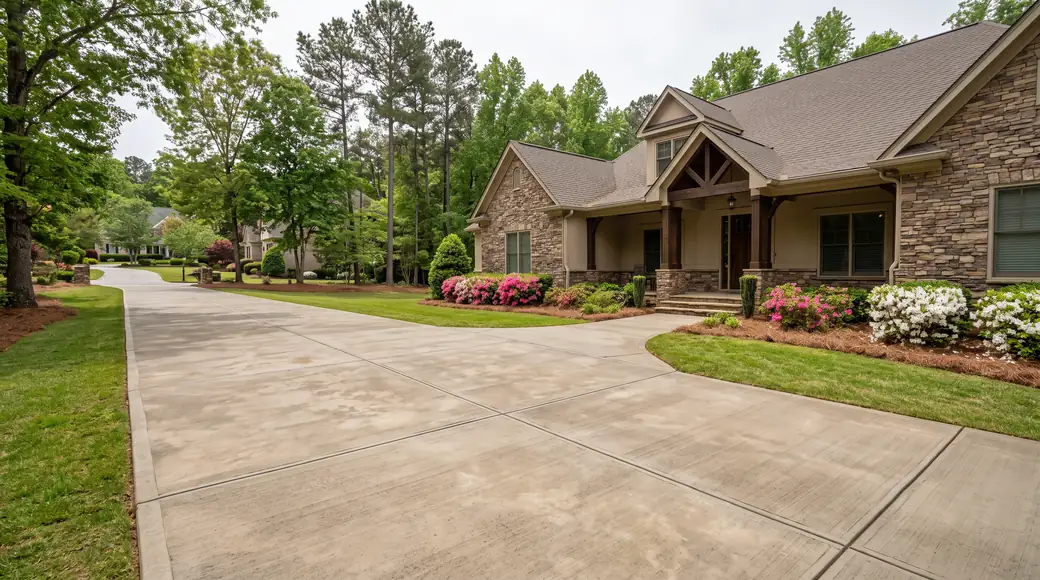
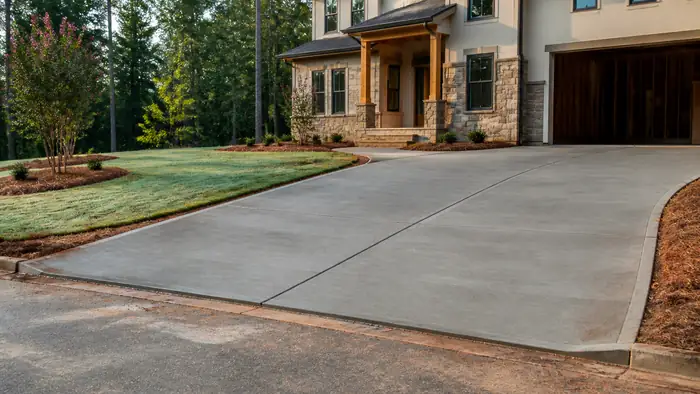
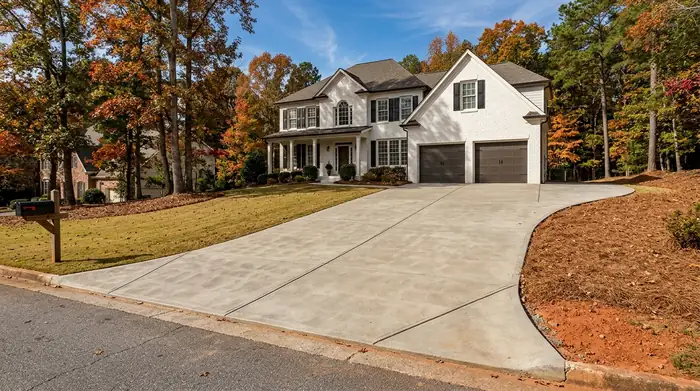
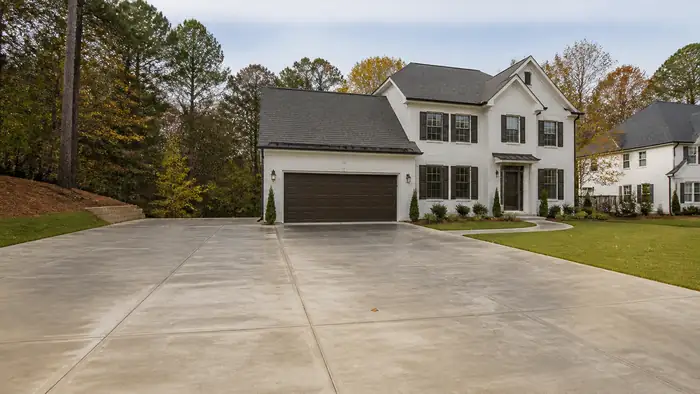
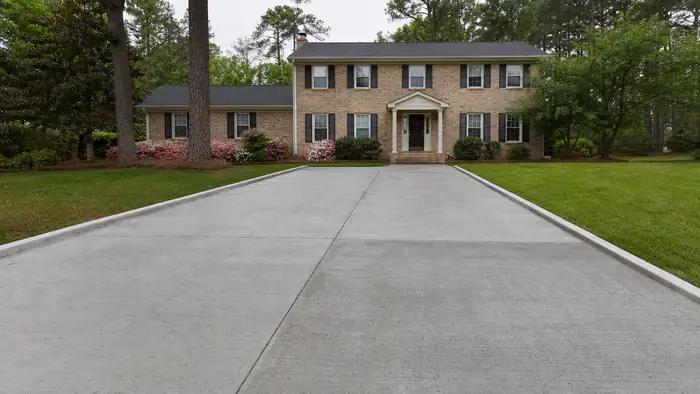
Commercial concrete is the ground a business stands on: the slab under a shop floor, the parking area out front, the sidewalk and curb a customer crosses to reach the door, the pad a dumpster or condenser sits on. We pour and finish that work for properties across Marietta, from the retail and restaurant frontage around Marietta Square to the buildings along the commuter corridors running toward Atlanta. It carries more weight and more traffic than a driveway ever will, and we build it for that.
Every job starts with the ground itself. Cobb County is hilly, with 199 feet of relief within a few miles, and the grade changes from one lot to the next. So we grade and test each site before anything else happens. The dominant soil here is Gwinnett soil, which drains well, but it varies across the county, so we test yours instead of assuming. Then come forms, subbase, reinforcement sized to the load, and the pour. We handle the permit.
Most commercial concrete that fails was set up to fail before the truck arrived. A thin subbase under a loading area. Rebar lying on the dirt instead of held up in the slab. A parking surface with no fall, so water sits on it. Marietta gets about 59 inches of rain a year, and all of it has to go somewhere. Water that stays on or under a slab finds the weak spot. Cracks come first, then settling at the joints, then a trip hazard at the entrance.
Getting it right costs attention up front. That means the right thickness for the traffic the surface will carry, control joints cut where the slab wants to crack, drainage worked out before the forms go down, and a curing schedule the job is allowed to keep. None of it is exotic. It is simply the part that gets skipped when a bid is squeezed too hard. Call us for a free estimate on your property.