+1 470-666-7021
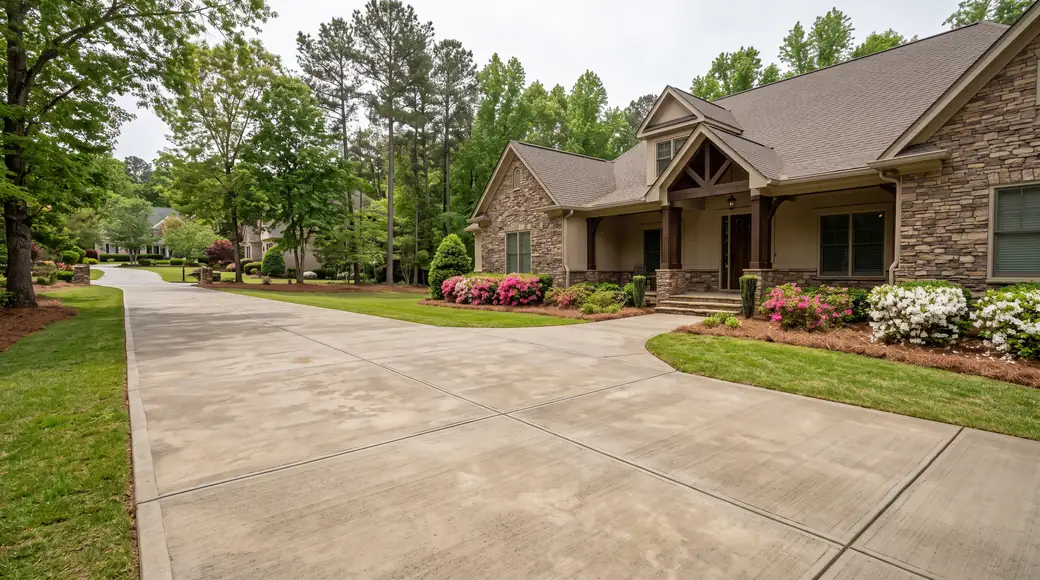
Wide view of finished concrete flatwork across the front of a home at a stacked-stone and stucco home in Marietta, GA, under bright midday cloud.

Concrete Expansion Joint Installation in Marietta, GA

Concrete moves. A slab grows a little in warm weather, shrinks back when it cools, and shifts as the ground under it settles. An expansion joint gives that movement a place to go, so the pressure lands on a planned gap instead of cracking across your driveway, patio or walkway. We set and seal those joints on residential and commercial property across Marietta, on new pours and on older slabs that need relief.

Half the homes in Marietta went up before 1986, so a lot of the concrete beside them has been moving for decades. Old joint filler dries out, shrinks and pulls loose. Then water gets in (about 59 inches of rain falls here in a typical year), softens the base underneath, and slab edges start to drop or heave. Cobb County is hilly, and on a sloped lot runoff finds that gap sooner. Call us for a free estimate.

Call +1 470-666-7021

Get Free Estimates

What Is Included in Concrete Expansion Joint Installation

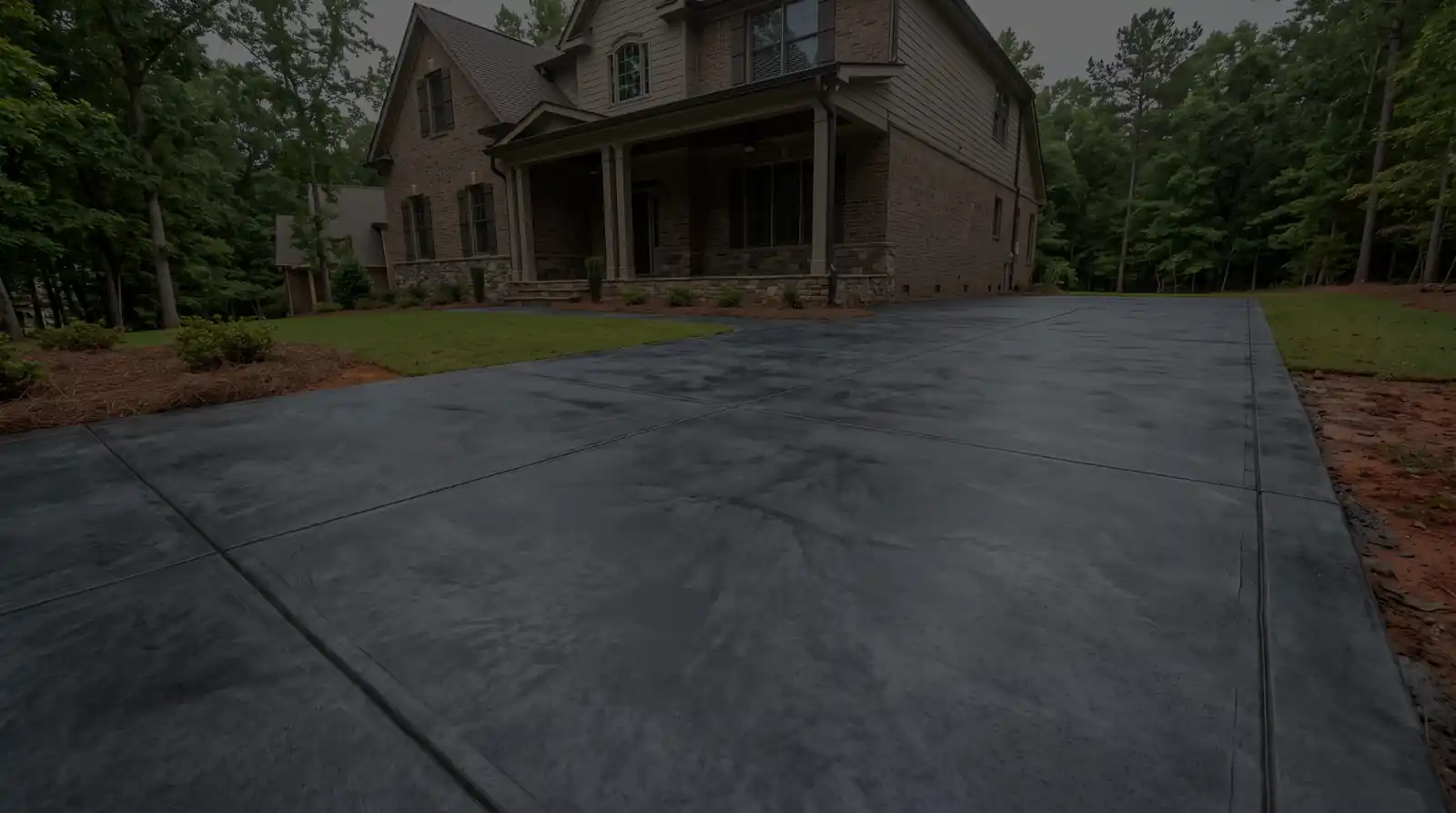
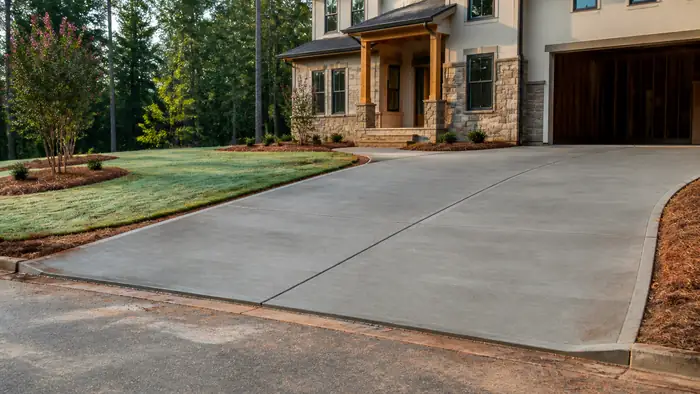
concrete slab installation completed by a local contractor at a stacked-stone and stucco home in Marietta, GA, in early morning light.

Concrete Slab Installation Cost

What a slab costs depends on its size, its thickness, the steel inside it and how much work the ground needs first. A slab under a shed can be thinner than one carrying a truck, and the heavier one takes more concrete, more rebar and more joints. Cobb County is hilly, so some lots need cut and fill before forms go down. We price every project after walking the property and checking the grade. The estimate is free.
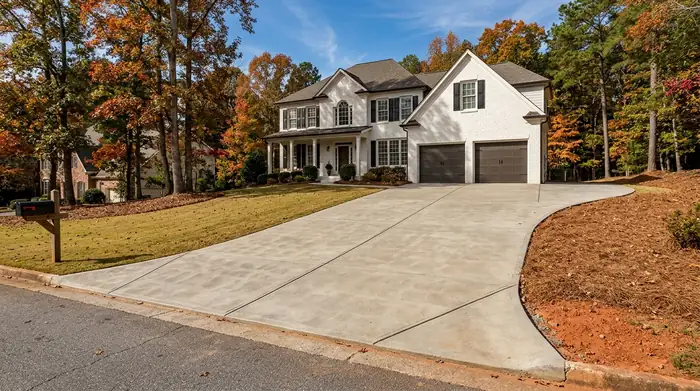
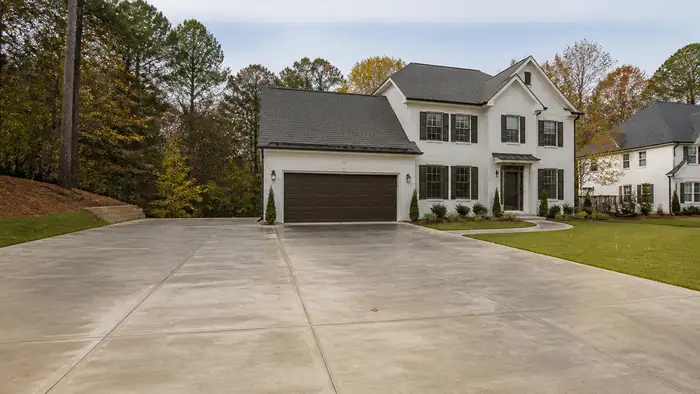
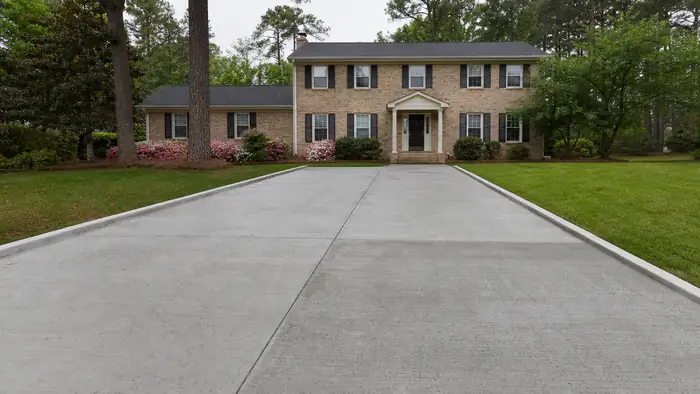
concrete driveway installation completed by a local contractor at a brick-and-siding two-story home in Marietta, GA, in open shade.

Concrete Driveway Installation

A driveway starts with the base. We strip the topsoil, lay crushed stone and compact it so the slab sits on something firm. Rebar or wire mesh goes in on chairs, which keeps it in the middle of the pour instead of lying on the dirt. Control joints get cut at planned spacing, and expansion joints go wherever the driveway meets the garage slab, a sidewalk or the street apron. With about 59" of rain a year, we finish with a broom texture for grip.

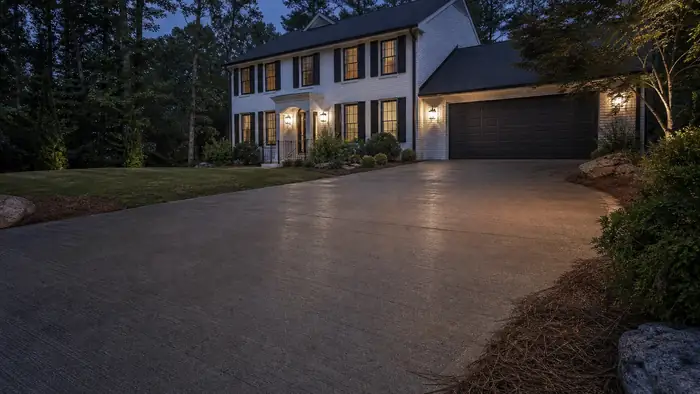
concrete flooring installation completed by a local contractor at a painted-white-brick two-story home in Marietta, GA, under bright midday cloud.

Concrete Flooring Installation

Interior floors for garages, basements and workshops go down over a vapor barrier so ground moisture stays out of the slab. We set isolation joints around columns, floor drains and foundation walls. A floor locked tight against the walls cracks as it shrinks. Surfaces can be left smooth-troweled, sealed, stained or polished, depending on how the room gets used. Garage floors usually get a light texture. A finished basement floor gets a tighter trowel and a sealer that takes flooring well.

concrete slab repair completed by a local contractor at a tan-brick colonial in Marietta, GA, under an overcast sky.

Concrete Slab Repair

Cracks, sunken sections and heaved edges usually trace back to a joint that was missing, spaced too far apart or filled with something rigid. The median house in Marietta was built in 1986, so plenty of driveways and patios here have had decades of expansion and contraction working on them. We cut out failed joint material, clean the gap and install new backer rod with flexible sealant. Where a section has settled, we check the base first. Patching over a washed-out base only hides the problem.

What Makes Marietta Professional Concrete's Concrete Work Different

We treat every slab as its own problem. Cobb County carries 199 feet of local relief within a few miles, and the ground under one driveway can behave differently from the ground two houses down. So we grade and test each site before we decide where a joint goes, how deep it cuts, or how the reinforcement runs across it. No template does that for you.

The median home here was built in 1986, so new work often sits beside concrete that has had decades to move. We read how that older slab shifted before we cut anything next to it. With about 59 inches of rain a year, a joint also has to shed water rather than hold it, so we seal and pitch for that. Call for a free estimate.

Our Concrete Process, Step by Step

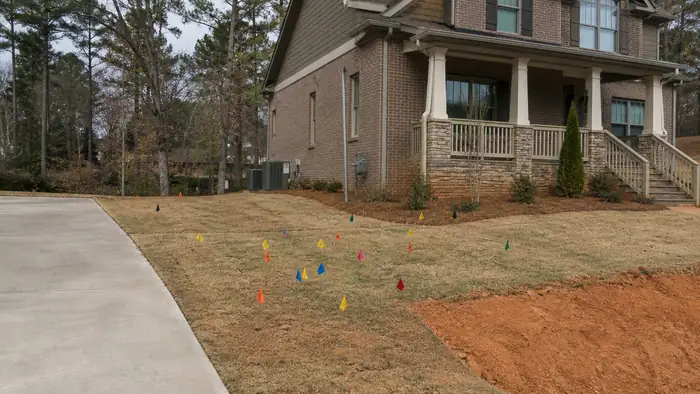
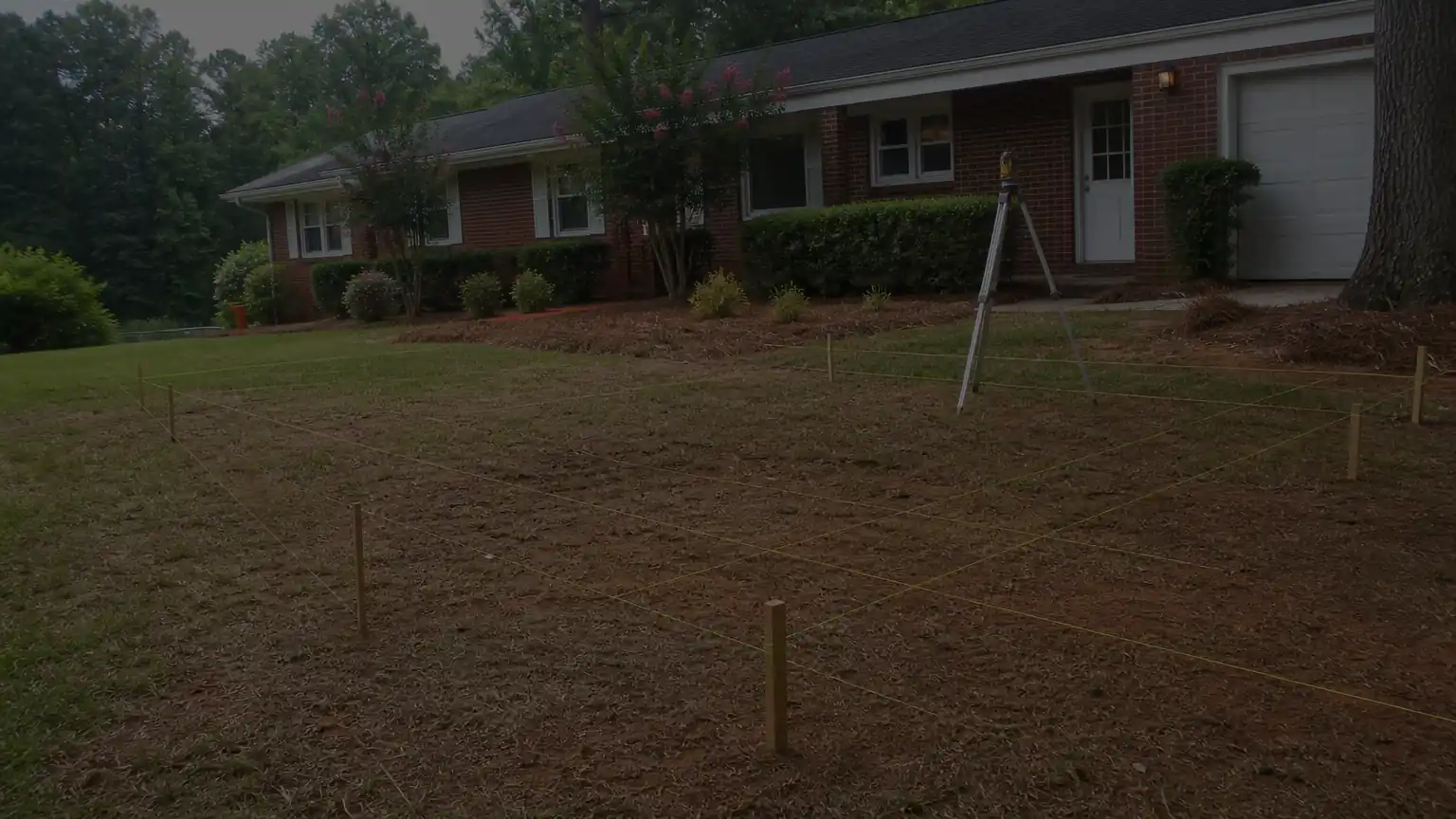
Utility flags mark buried lines before digging starts. at a brick-and-siding two-story home in Marietta, GA, under a hazy afternoon sky.

Step 1: Site Assessment

We start by walking the property and looking at what the new concrete will touch: the house foundation, the garage slab, steps, existing walks. Those contact points are where expansion joints matter most, so we mark every one. We also check where water runs across the site and where it pools after a storm. Cobb County is hilly and the ground changes from block to block, so we test the soil on your site rather than assume anything about it.

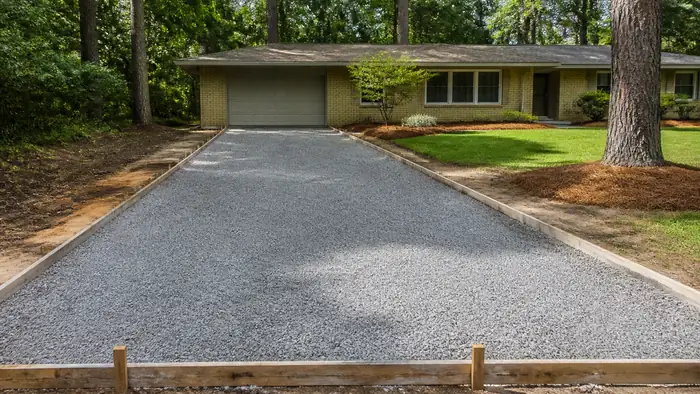
Crushed stone base is raked level inside driveway forms. at a buff-brick ranch home in Marietta, GA, in full afternoon sun.

Step 2: Site Preparation

Grading comes next. We strip out sod, topsoil and anything organic, then set a slope that carries water away from the house. The subgrade is compacted in lifts with a plate compactor, followed by a crushed stone base that gets compacted again. Soft spots are dug out and replaced, not covered over. Most cracked slabs fail here rather than at the surface: the base settles unevenly, the concrete loses its support, and it breaks where nothing is holding it up.

A worker ties rebar into a grid before a residential pour. at a tan-brick colonial in Marietta, GA, in raking morning side light.

Step 3: Forming & Reinforcement

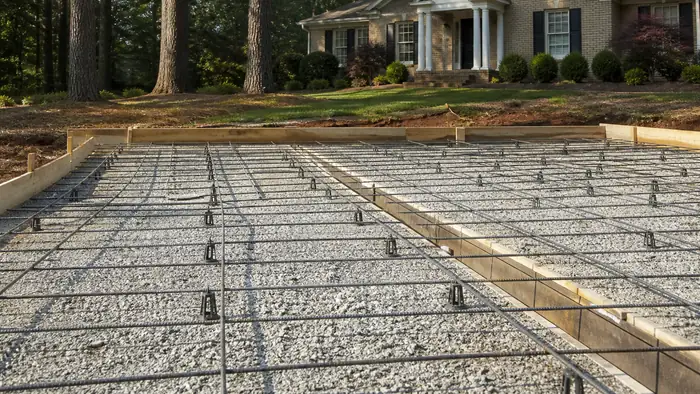
Forms go up in straight lumber, staked and checked with a string line so the finished edge is true. Before the pour, we set expansion joint material wherever new concrete meets something fixed: half-inch fiber board or closed-cell foam against the foundation, the garage apron and any existing walks. Inside the forms, rebar or welded wire goes on chairs so the steel sits in the middle of the slab. Reinforcement lying flat on the gravel does almost nothing.

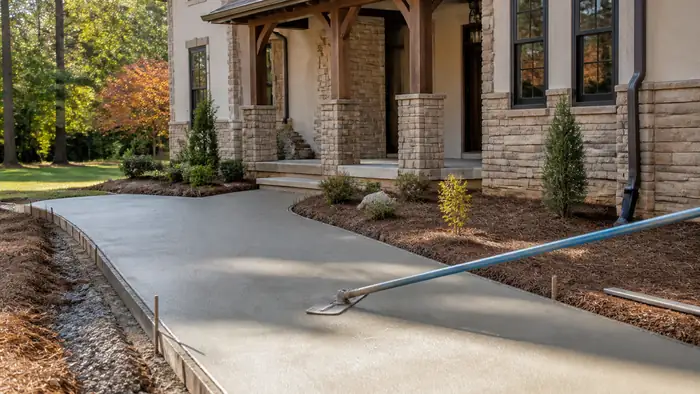
A bull float smooths a residential walkway surface after screeding. at a stacked-stone and stucco home in Marietta, GA, in full afternoon sun.

Step 4: Pouring

Ready-mix arrives at a slump we specify for the job, and we place it fast, working from the far end back toward the truck. Driveways usually run four to five inches thick, patios and walks four. We rake it out, strike it level with a screed, then bull float to push the stone down and bring cream to the surface. Adding water on site so it flows easier is the common shortcut that weakens a slab. We don't do it.

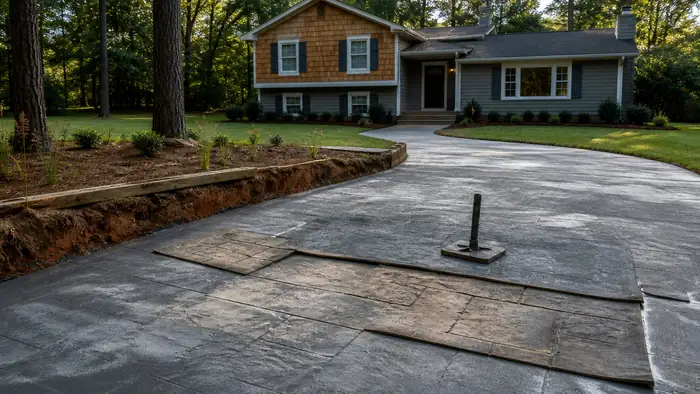
Stamping mats are pressed into a patio surface to imprint a pattern. at a grey split-level home in Marietta, GA, in early morning light.

Step 5: Finishing

Timing is most of finishing. Once the bleed water leaves the surface, we edge the perimeter and tool in control joints, spaced so a four-inch slab gets one every eight to twelve feet. Driveways and walks get a broom finish for grip. Stamped and decorative surfaces are textured and colored at this stage, while the concrete is still workable. Overworking the top, or finishing with water still on it, is how you end up with scaling and dusting a few years later.

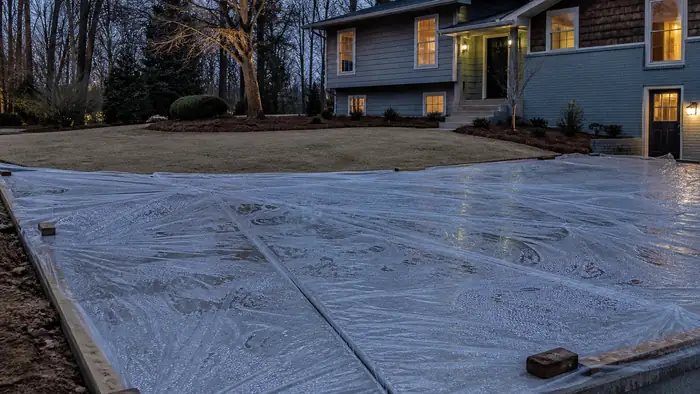
Plastic sheeting covers a curing driveway slab. at a grey split-level home in Marietta, GA, at blue hour.

Step 6: Curing

Concrete keeps gaining strength for weeks, and the first several days decide a lot of it. We apply a curing compound or cover the slab so moisture stays in rather than flashing off on a hot afternoon. Where joints are saw cut instead of tooled, we cut them within the first day, before shrinkage cracks pick their own spots. Foot traffic can usually go on after a day or two. Cars should stay off a new driveway for about a week.

A sprayer applies sealer across a driveway. at a painted-white-brick two-story home in Marietta, GA, at blue hour.

Step 7: Sealing

After the slab has cured, we seal the joints. Foam backer rod goes into the gap at a consistent depth, then a flexible polyurethane or self-leveling sealant on top, so water and grit stay out while the concrete moves. The surface gets a penetrating silane-siloxane sealer, or an acrylic on stamped and colored work to hold the finish. Marietta sees about 59 inches of rain a year, and open joints let that water under the slab to wash out the base.

The Concrete Options Available in Marietta

Most expansion joint work here falls into three kinds. Isolation joints separate a slab from anything it should not be tied to, like a house foundation, a garage floor or a column, and we fill them with a compressible board. Control joints are cut or tooled into the surface so the slab cracks where we decide. On stamped and decorative patios, we set joints along the pattern lines so they read as part of the design.

Sealant is the second choice. Self-leveling polyurethane suits flat driveways, while a non-sag grade holds its shape on sloped walks, and Cobb County has plenty of those. With about 59 inches of rain a year, an open joint lets water get under the slab. So we reseal worn joints as well as cutting new ones. Where an older slab still has its original fiber filler, we pull whatever has broken down before anything new goes in.

Questions About Concrete Expansion Joint Installation

Will concrete expansion joint installations reduce cracking and shifting from temperature changes and soil movement in Marietta?

Yes, with one distinction worth knowing. An expansion joint gives a slab room to grow and shrink against a house, a curb or a neighboring slab, so the movement goes into the joint instead of breaking the surface. Marietta averages daily highs around 72°F and lows around 53°F, and concrete moves with that swing. A joint will not fix settling from a poor base, though. That is why every site gets tested first.

What concrete expansion joint types work best for driveways, patios, and sidewalks in Marietta?

For driveways, we set a premolded filler where the slab meets the garage, the street or the house, then cap it with a flexible sealant. Patios usually need isolation joints at the foundation and around posts, plus sawcut control joints across the open field of the slab. Sidewalks get a filler strip at each end and wherever they cross a driveway. With about 59 inches of rain a year here, the sealant on top matters as much as the filler below it.

How do I know when a concrete expansion joint needs to be installed or replaced in Marietta?

Look at the joint itself. Filler that has rotted, crumbled or pulled away leaves a gap that holds water and debris. Grass growing out of it is another sign. Cracks running parallel to a wall or a slab edge often mean the concrete had nowhere to go. The median home in Marietta was built in 1986, and plenty of driveways from that era still carry their original filler. If yours does, it is worth a close look.

What specific areas and neighborhoods do you serve outside of Marietta?

We work around Marietta and out into metro Atlanta, and the service is the same wherever the property sits. A driveway in Kennesaw gets the same base prep, the same materials and the same joint layout as one a few streets from Marietta Square. The full list of towns we cover is elsewhere on this page. If your address sits near the edge of that area, include it when you call for a free estimate.

What's the difference between acid stain and water-based stain?

Acid stain reacts chemically with the lime in the concrete, so the color becomes part of the surface rather than sitting on it. The result is mottled and variegated, in earthy browns, tans and soft greens, and no two slabs come out alike. Water-based stain fills the pores instead. It offers a much wider color range and a more even, predictable finish. Both need a sealer on top, and both look best on clean, sound concrete.

Does Marietta Professional Concrete build retaining walls for hillside properties?

Yes. Cobb County is hilly, with 199 feet of local relief within a few miles, and plenty of yards need a wall to hold a slope, a driveway cut or a level patio. We build poured concrete retaining walls with steel reinforcement, drainage behind the wall and weep holes to let water out. The ground changes from block to block, so every site is graded and tested on its own before we set a form. We handle the permit where one is required.

Get a Free Estimate

Get Free Estimates

Tap to call +1 470-666-7021