+1 470-666-7021
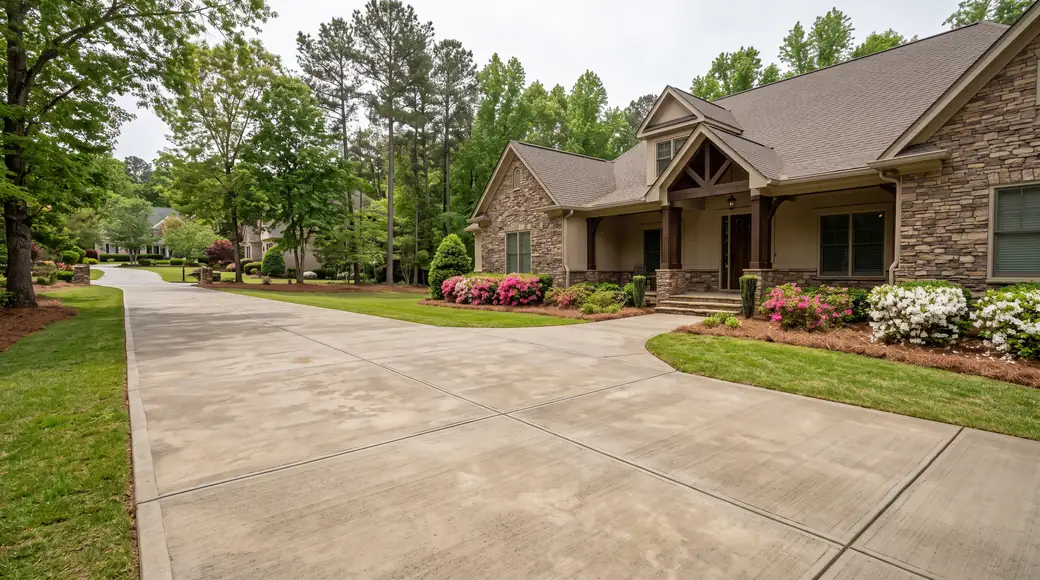
Wide view of finished concrete flatwork across the front of a home at a stacked-stone and stucco home in Marietta, GA, under bright midday cloud.

Cement Installation in Marietta, GA

Cement installation is the work of setting a new slab where one is needed, or replacing one that has cracked, sunk or pulled away from the house. We pour driveways, patios, walkways and garage floors for residential properties across Marietta, and we take commercial work too. The median home here was built in 1986, so many of the driveways and surfaces we replace have been carrying cars and weather for decades.

Before anything is formed, we grade the site and test the ground. Cobb County is hilly and its soil varies from one part of the county to another, so we treat every property on its own terms instead of assuming the last job tells us anything about this one. We set the reinforcement, handle the permit, and plan drainage around the roughly 59 inches of rain the area gets in a year. Then we pour. Call for a free estimate.

Call +1 470-666-7021

Get Free Estimates

What Is Included in Cement Installation

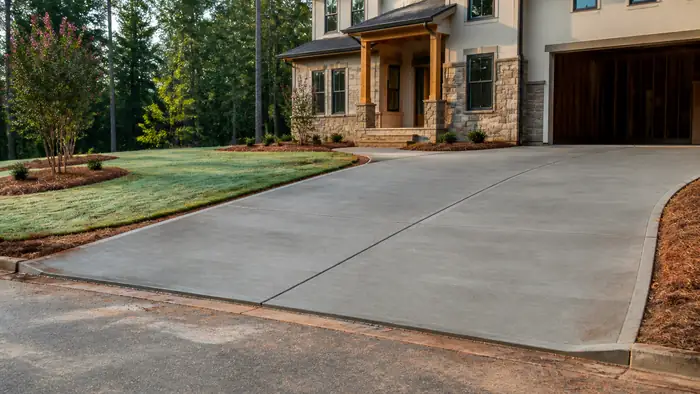
concrete slab installation completed by a local contractor at a stacked-stone and stucco home in Marietta, GA, in early morning light.

Concrete Slab Installation Cost

The price of a slab comes down to what sits under it and what it has to carry. Excavation, grading, a compacted gravel base, forms, rebar or wire mesh, the concrete itself, finishing and curing all go into the number. Sloped lots take more preparation, and much of Cobb County is hilly, so grading is often the biggest variable. We walk the property, test the site, and put every line item in writing before anything is poured.
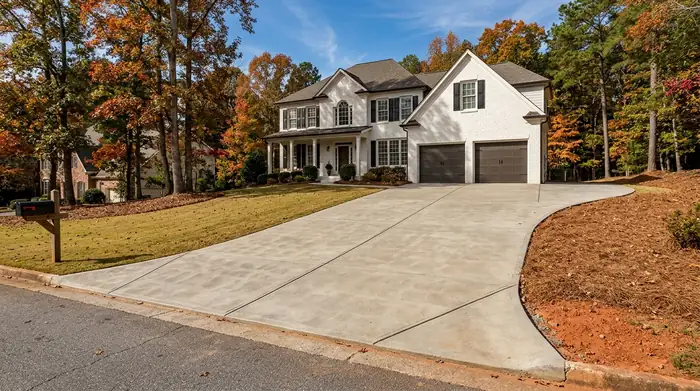
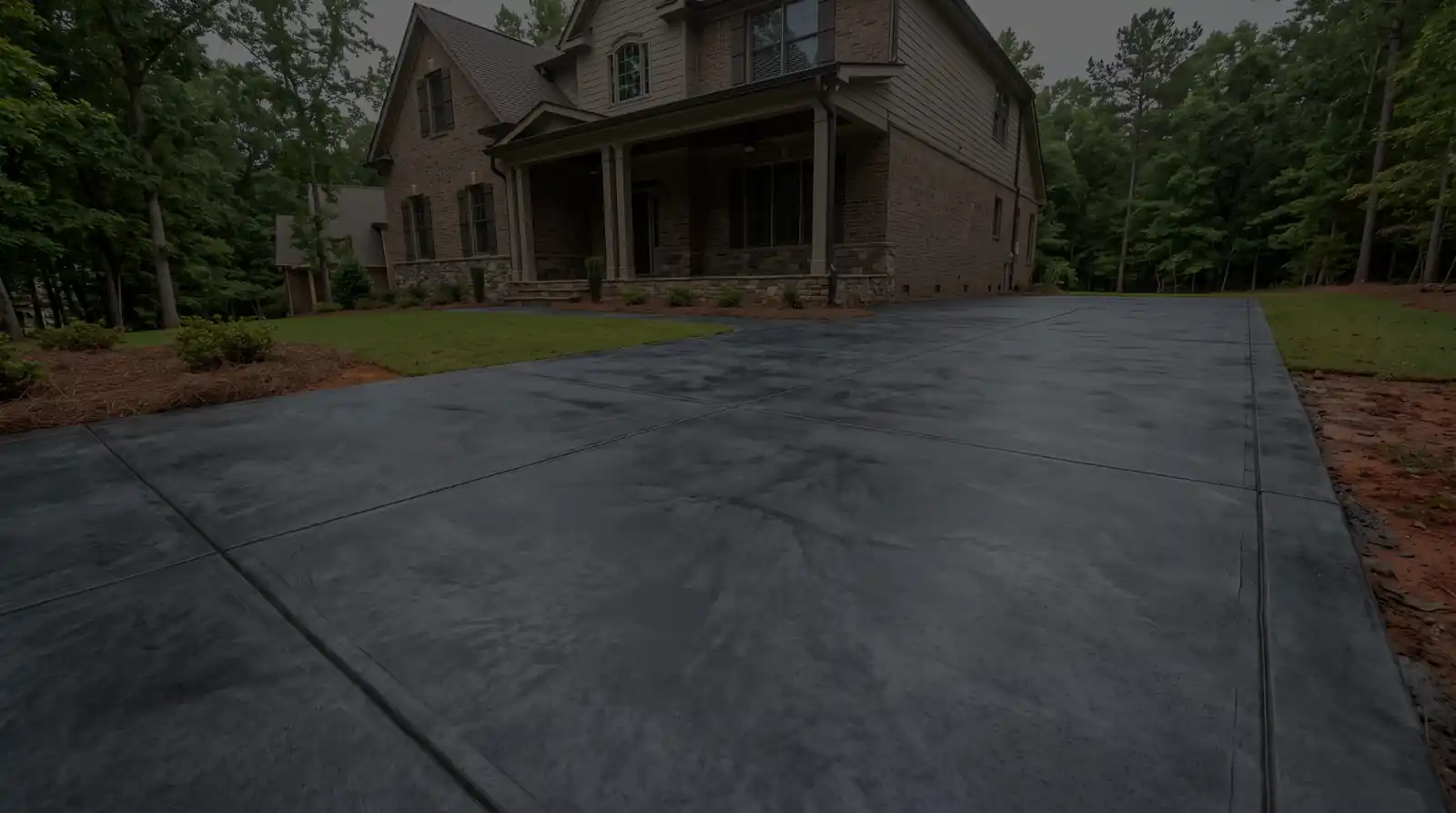
concrete driveway installation completed by a local contractor at a brick-and-siding two-story home in Marietta, GA, in open shade.

Concrete Driveway Installation

A driveway starts with breaking out the old surface and hauling it off. We cut the grade so water runs away from the garage, compact a gravel base, and set rebar on chairs so it stays in the middle of the slab instead of lying in the dirt. Control joints go in at spacing matched to the slab width, and a broom finish gives tires and shoes grip. With about 59 inches of rain a year here, drainage gets planned first.

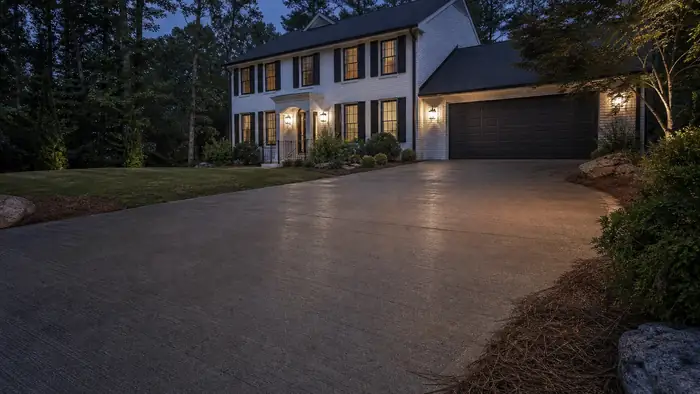
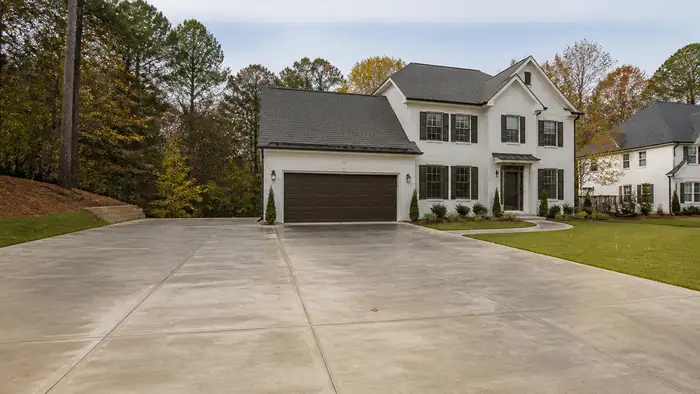
concrete flooring installation completed by a local contractor at a painted-white-brick two-story home in Marietta, GA, under bright midday cloud.

Concrete Flooring Installation

Garage floors, basements, workshops and commercial spaces each ask something different of a floor. Indoors, we lay a vapor barrier under the slab so ground moisture does not wick up into flooring or stored goods. Reinforcement goes in, the pour is power-troweled smooth, and the surface can be left plain, sealed, stained or polished. The median house in Marietta was built in 1986, so many garage and basement slabs have decades of service behind them, and replacing one follows the same steps as a new pour.

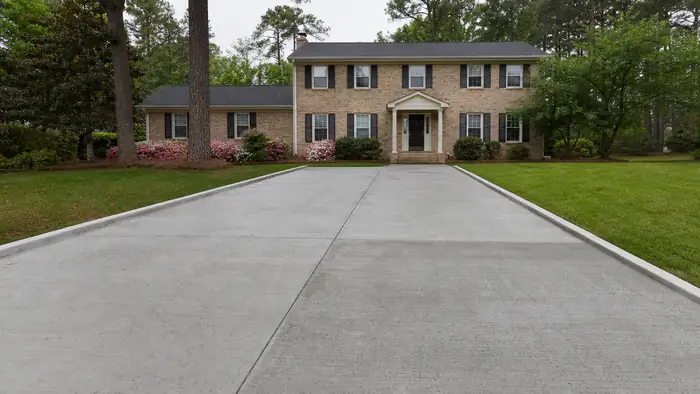
concrete slab repair completed by a local contractor at a tan-brick colonial in Marietta, GA, under an overcast sky.

Concrete Slab Repair

Not every cracked slab needs replacing. Hairline shrinkage cracks are normal and can be routed and sealed. A slab that has sunk, heaved, or split with one side higher than the other is a different problem, usually a washed-out or poorly compacted base. We find the cause before choosing the fix: sealing cracks, patching a spalled surface, lifting a settled section, or cutting out the failed panel and pouring a new one doweled into the old. Patching over a base problem just moves the crack.

What Makes Marietta Professional Concrete's Concrete Work Different

We don't pour from a template. Cobb County is hilly, with 199 feet of local relief within a few miles, and the ground changes from one block to the next. Gwinnett soil, which drains well, is the dominant type here, but it varies across the county. So we grade and test every site on its own before any forms go down.

Marietta sees about 59 inches of rain a year, and on a sloped lot that water has to go somewhere other than under the slab. We set pitch, joints and reinforcement for that. With the median home here built in 1986, new concrete often meets steps, walks and foundations that have been in place for decades, so we match grades and edges to what stays.

Our Concrete Process, Step by Step

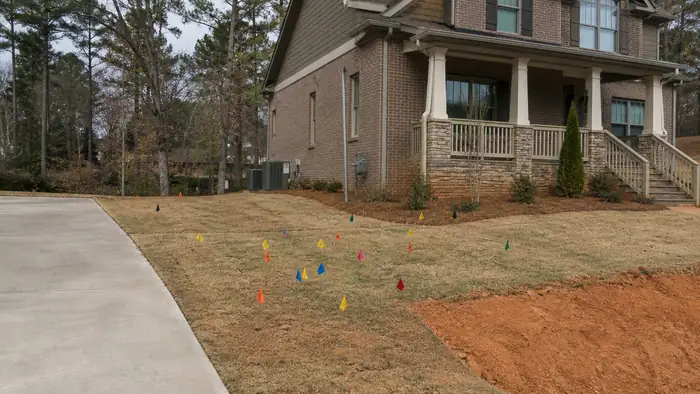
Utility flags mark buried lines before digging starts. at a brick-and-siding two-story home in Marietta, GA, under a hazy afternoon sky.

Step 1: Site Assessment

We start by walking the property with you and measuring where the slab will go. Cobb County is hilly, with 199 ft of local relief within a few miles, and the grade changes from one block to the next, so we shoot elevations on your lot instead of guessing. We test the soil on site, watch where water runs off the roof and yard, and look for roots and old concrete. If the job needs a permit, we handle the permit.

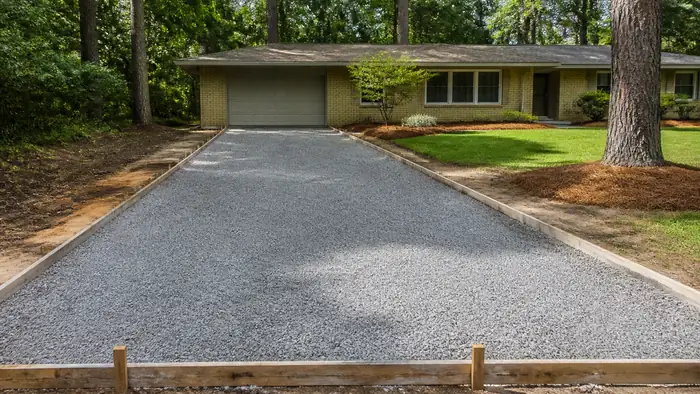
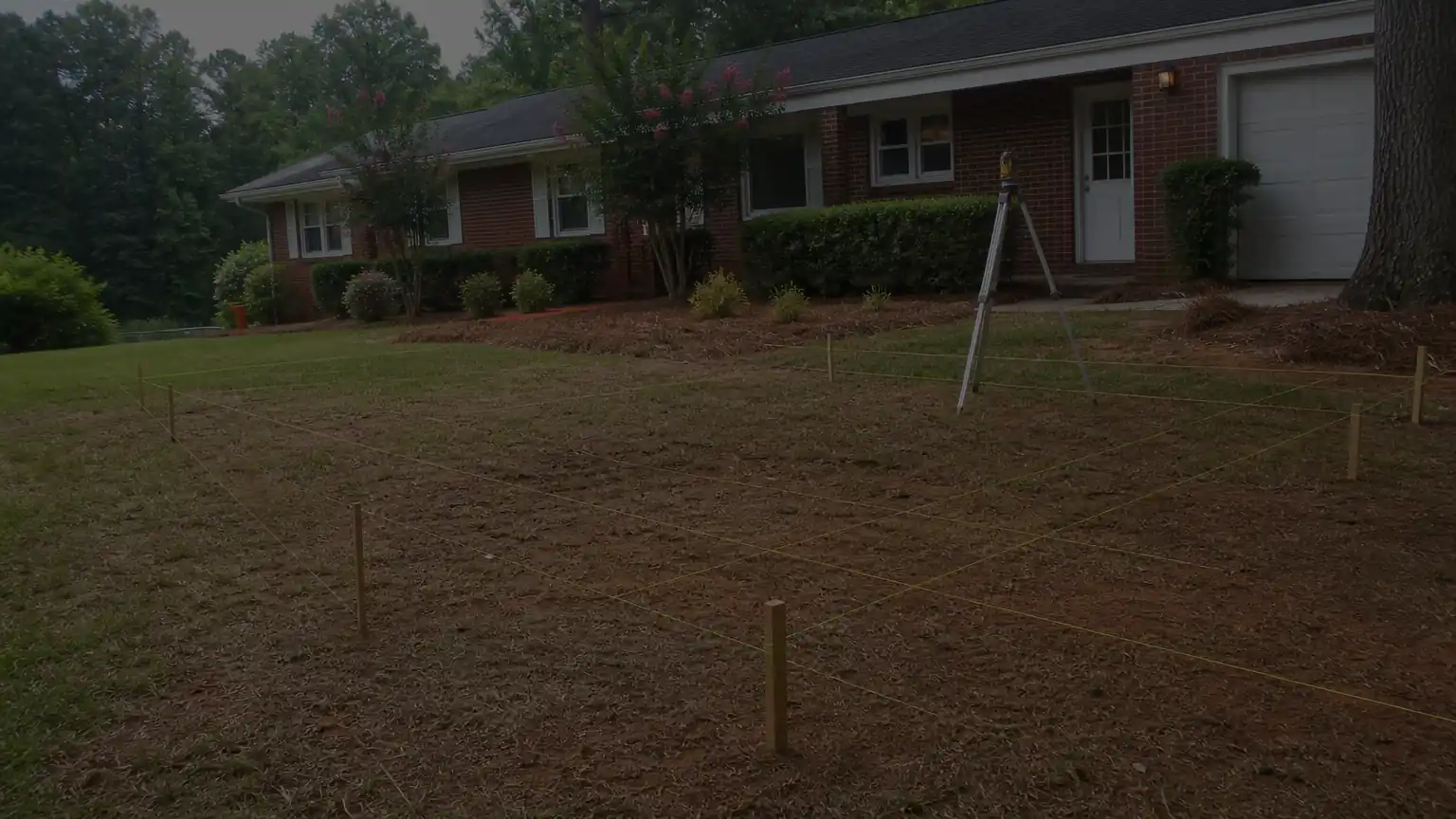
Crushed stone base is raked level inside driveway forms. at a buff-brick ranch home in Marietta, GA, in full afternoon sun.

Step 2: Site Preparation

Most failed driveways failed below the surface, not in the concrete. We dig out sod, topsoil and anything soft until we reach firm ground, then bring in crushed stone base and compact it in lifts with a plate compactor. The base is graded with a slight fall away from the house. With about 59" of rain a year here, water sitting under a slab or against a foundation causes more trouble than almost anything else on a residential job.

A worker ties rebar into a grid before a residential pour. at a tan-brick colonial in Marietta, GA, in raking morning side light.

Step 3: Forming & Reinforcement

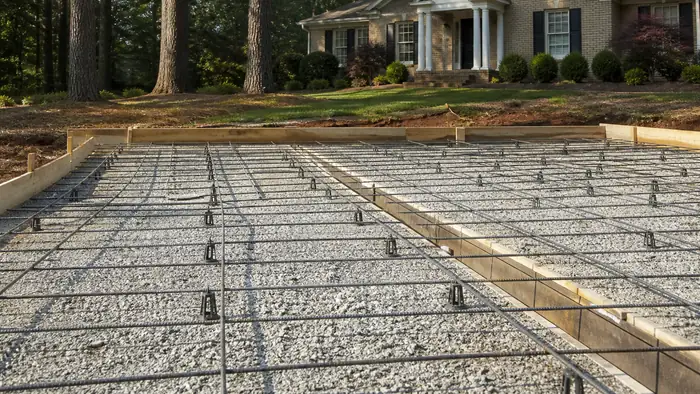
Forms are straight lumber staked on the outside and set to string lines, so the finished edge lands where it should and the pitch is built in before any concrete arrives. Inside the forms we place steel reinforcement: rebar on chairs for driveways and anything carrying a vehicle, wire mesh or fiber for lighter patios and walkways. Chairs matter. Mesh left lying on the base ends up at the bottom of the slab, where it does almost nothing structural.

A bull float smooths a residential walkway surface after screeding. at a stacked-stone and stucco home in Marietta, GA, in full afternoon sun.

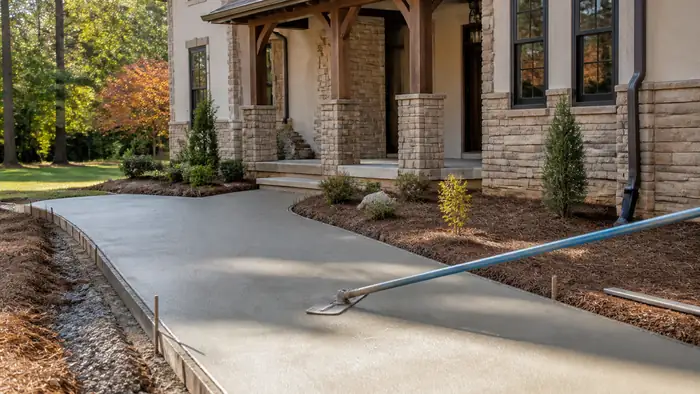
Step 4: Pouring

Concrete arrives by ready-mix truck, ordered to the mix the project calls for, and we check the load before it goes down. The pour runs continuously so there are no cold joints. We move it with rakes and come-alongs, pack it tight into the corners, and screed it off the forms to a flat, true surface. Adding water at the truck makes concrete easier to spread and weaker once it sets, so we don't do it.

Stamping mats are pressed into a patio surface to imprint a pattern. at a grey split-level home in Marietta, GA, in early morning light.

Step 5: Finishing

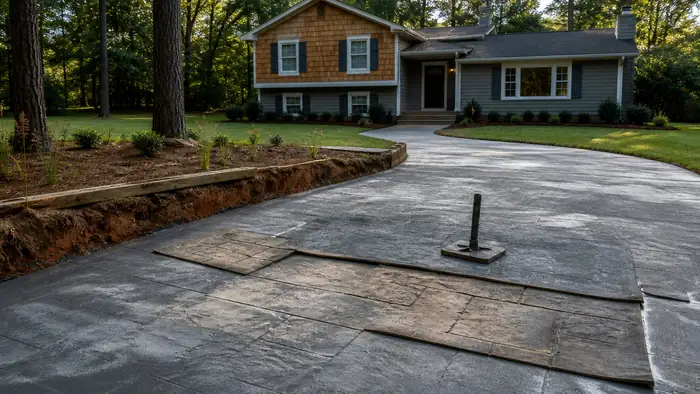
Timing decides how a slab wears. After screeding we bull float to push down the aggregate and bring up the cream, then wait for the bleed water to leave before touching it again. Working that water back into the top is what causes flaking later. Edges get an edging tool, control joints get cut or tooled so cracks form in straight lines where we choose, and the top gets a broom finish for grip. Stamped and decorative finishes are pressed in at this stage.

Plastic sheeting covers a curing driveway slab. at a grey split-level home in Marietta, GA, at blue hour.

Step 6: Curing

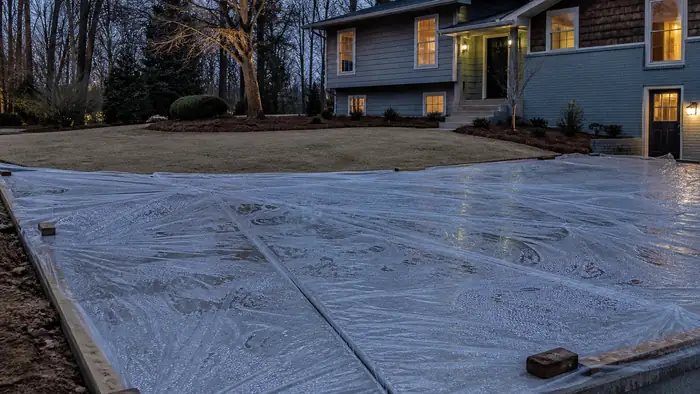
Fresh concrete gains strength slowly, and only while it holds moisture. We keep the slab damp or spray on a curing compound so the surface doesn't dry faster than the core, which is how you get shrinkage cracks and a dusty, weak top. Foot traffic can come first. Cars wait considerably longer, and exactly how long depends on the mix and the weather during the pour. Parking on a new driveway too early is one of the most common ways a good slab gets damaged.

A sprayer applies sealer across a driveway. at a painted-white-brick two-story home in Marietta, GA, at blue hour.

Step 7: Sealing

Once the slab has cured, a penetrating or film-forming sealer goes on to keep out water, oil and stains. Stamped and colored concrete needs it most, since the sealer protects the color and brings out the pattern. Plain broom-finished surfaces benefit too, mostly through less staining. We apply it on a dry day, on a clean surface, in thin coats. Heavy coats trap moisture and turn white or cloudy, which is the usual complaint with sealer put down in a hurry.

The Concrete Options Available in Marietta

Residential concrete in Marietta comes down to a few main options. Plain broom-finished concrete suits driveways and walkways, where grip matters more than looks. Stamped and decorative concrete takes a pattern and a color, and it fits patios and pool surrounds well. Exposed aggregate shows the stone in the mix. Structural slabs for garages, sheds and additions carry steel reinforcement sized to the load they will hold.

Which one fits depends on the site as much as the look. With about 59 inches of rain a year, a finish that sheds water and a slab pitched to drain matter more than the pattern on top. The median home here was built in 1986, so a new driveway often has to tie into older steps, walks and garage floors. Cobb County is hilly, too, and a steep driveway needs a finish that holds traction.

Questions About Cement Installation

What commercial cement installation services do you offer in Marietta?

We pour and finish commercial slabs, sidewalks, curbs, dumpster pads, loading areas and parking surfaces for storefronts, offices and small buildings. Around Marietta Square, a lot of that work means replacing tired frontage without closing a business, so we stage the pour in sections and keep a way in for customers. We also build structural footings and foundation slabs for additions and new construction. If it is flat, reinforced and carries traffic, it is usually ours.

How thick should a cement slab be for a residential garage in Marietta, GA?

It depends on what parks on it. A garage that holds two cars needs less than one that holds a work truck, a trailer or a lift, and we thicken the edges and any spot that takes a concentrated load. The ground matters as much as the concrete. We test the base, compact it and set the reinforcement before settling on a final thickness, so the right answer for your garage comes from the site, not a chart.

What types of cement finishes work best for outdoor commercial surfaces in Marietta?

A broom finish is the workhorse. It gives foot traffic grip on a wet day, and outside a business that matters more than looks. Exposed aggregate suits plazas and walkways that need texture and a little character. Stamped and decorative concrete work well at a storefront entry or a restaurant patio, as long as we finish them with a slip-resistant sealer. Smooth trowel finishes belong indoors, where nobody is walking on them in the rain.

How do you ensure cement quality, strength, and code compliance on commercial projects in Marietta?

Quality starts before the truck arrives. We grade and test every site, compact the base, and place reinforcement to the drawings, then check it all before anything gets poured. The mix is ordered to the strength the project calls for, and we keep the delivery tickets. We handle the permit and schedule each inspection it requires, so nothing gets covered before it has been signed off. Curing gets the same attention as the pour.

How much does a cubic yard of cement typically cost in Marietta?

Strictly speaking, what comes off the truck is concrete, and cement is one ingredient in it. The material is also only one line on the bill. Site prep, grading, forms, reinforcement, the finish you choose, how easy the site is to reach and the size of the pour usually move the total more than the concrete does. A per-yard figure tells you very little about your job. Call for a free estimate on the project you actually have.

Is cement installation in Marietta, GA affected by the local climate or soil conditions?

Yes. Cobb County gets about 59 inches of rain a year, so we plan pours around the weather and slope every surface to shed water. The dominant soil is Gwinnett, which drains well, but it changes across the county, and the hills reach 199 feet of relief within a few miles. That is why we test and grade each property on its own before any concrete goes down. Snow averages about an inch a year; water is what we build for.

Get a Free Estimate

Get Free Estimates

Tap to call +1 470-666-7021