+1 470-666-7021
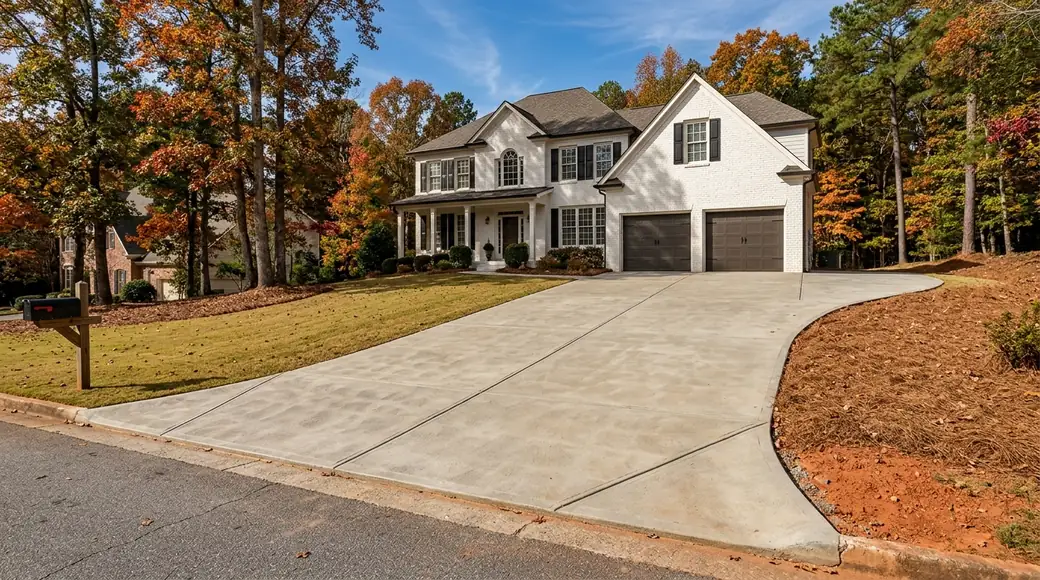
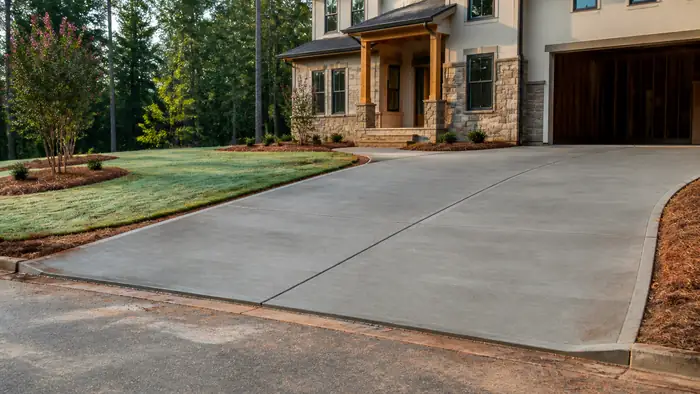
concrete driveway installation completed by a local contractor at a brick-and-siding two-story home in Marietta, GA, in open shade.

Concrete Driveway Installation in Marietta, GA

A driveway takes more punishment than any other slab on a residential property. It carries the weight of every car, sheds the water that runs off the roof and down the lawn, and sits in full view of the street. In Marietta, where the median home was built in 1986, a driveway may well be as old as the house behind it. We tear out tired concrete and pour new driveways sized for the load they carry, the water they move and the ground beneath them.

Most of the job happens before the concrete truck arrives. Cobb County is hilly, with 199 feet of local relief within a few miles, and the slope can change from one block to the next. So we grade and test every site on its own before any work starts. The soil is mostly well-drained Gwinnett soil, though it varies across the county, and we check it rather than assume it. Base depth, forms and reinforcement are then set to suit what we find.

When a driveway fails, the cause is usually plain. Water pools where the grade was guessed at, a thin base settles, or a slab poured without enough reinforcement cracks at the edges under a loaded truck. Marietta sees about 59 inches of rain a year, so drainage is never an afterthought on our projects. Doing it right takes more care at the start and leaves far less chance of tearing the whole thing out again later. Call for a free estimate on your driveway.

Call +1 470-666-7021

Get Free Estimates

What Is Included in Concrete Driveway Installation

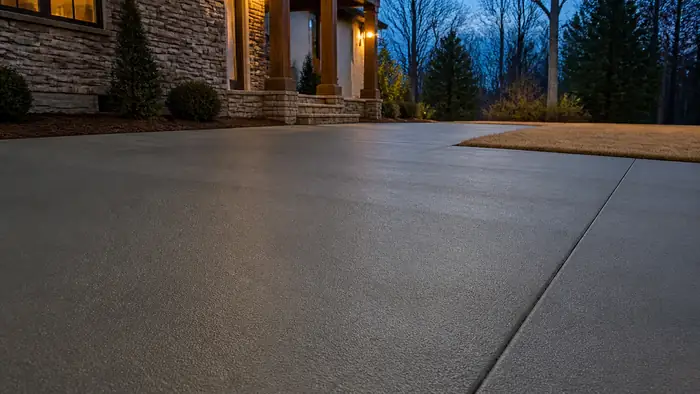
concrete slab installation completed by a local contractor at a stacked-stone and stucco home in Marietta, GA, in early morning light.

Concrete Slab Installation Cost

The price of a slab depends on what sits under it and what goes into it. Square footage matters, but so do tear-out of old concrete, how much grading the lot needs, and how thick the pour has to be. Rebar costs more than wire mesh. A broom finish costs less than stamped or colored work. Cobb County is hilly, and a sloped lot can mean more forms, fill and base stone. Estimates are free, and they are priced from your site, not a chart.
Concrete Driveway Installation

A driveway is a slab that carries a car's weight every morning and every evening. We break out and haul off the old surface, grade the subbase, and compact crushed stone before any concrete arrives. Reinforcement sits on chairs so it ends up mid-slab instead of on the dirt. Control joints are cut to match the slab's width. The surface gets a broom finish for traction in about 59 inches of rain a year, with stamped and decorative finishes as options.

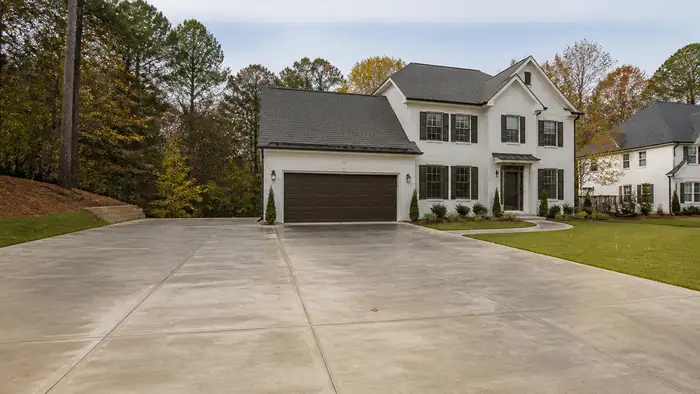
concrete flooring installation completed by a local contractor at a painted-white-brick two-story home in Marietta, GA, under bright midday cloud.

Concrete Flooring Installation

Interior concrete floors go into garages, basements, workshops and additions. We lay a vapor barrier under the slab so ground moisture does not wick up and ruin the flooring that goes on top later. The pour gets a steel-trowel finish for a hard, dense surface that sweeps clean. It can be sealed, polished, or left ready for tile or epoxy. Saw cuts go in early, while the concrete is still green, so cracks follow the joints instead of wandering across the room.

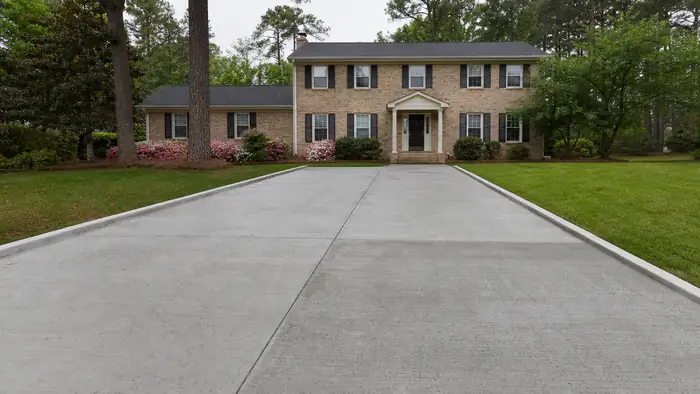
concrete slab repair completed by a local contractor at a tan-brick colonial in Marietta, GA, under an overcast sky.

Concrete Slab Repair

The median home in Marietta was built in 1986, so plenty of driveways and patios here have had decades to settle and crack. We find out why a slab failed before we fix it: washed-out base, tree roots, a downspout dumping water at the edge, or no reinforcement at all. Hairline shrinkage cracks can be routed and sealed. Sunken sections can often be lifted. When the base underneath is gone, a patch on top only hides the problem, and replacing that section is the honest fix.

What Makes Marietta Professional Concrete's Concrete Work Different

We don't bring one plan to every property. Cobb County is hilly, with about 199 feet of local relief within a few miles, and the ground changes from one block to the next. So every site gets graded and tested on its own before we set a form. Gwinnett soil, which drains well, is the most common type here, but it isn't the only one, and we don't assume it. Water matters too. Marietta sees about 59 inches of rain a year, so we pitch each driveway to move that water off the surface and away from the house. That work happens before any concrete arrives.

The median house in Marietta dates to 1986, so plenty of our driveway work starts with breaking out an older slab rather than pouring on bare ground. That changes the job. We look at why the old one cracked or settled before we decide what goes under the new one, and we size the reinforcement to the load it has to carry, whether that is a daily commuter car or a work truck parked at the top of a steep grade. Decorative and stamped finishes get the same base as a plain broom finish. We'd rather tell you what the ground needs than what sounds good. If your driveway is due, call us for a free estimate.

Our Concrete Process, Step by Step

A contractor checks slope and drainage before work begins. at a red-brick ranch home in Marietta, GA, under a hazy afternoon sky.

Step 1: Site Assessment

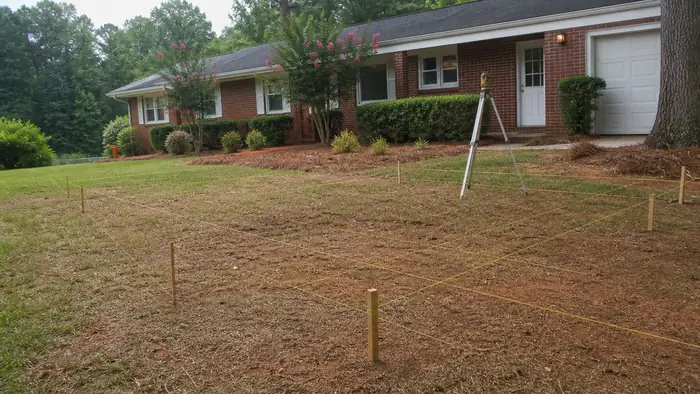
We start by walking the property with a tape and a level. The ground here is hilly, with 199 ft of local relief within a few miles, and the grade can change from one side of a lot to the other. We check where water runs off the roof and across the yard, where the old driveway has cracked or settled, and whether tree roots sit under the path. Soil gets tested on your site, not assumed.

An old patio slab is broken up and hauled away. at a tan-brick colonial in Marietta, GA, under a hazy afternoon sky.

Step 2: Site Preparation

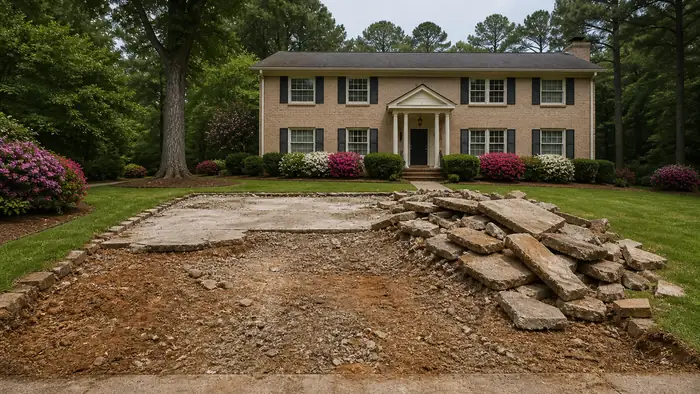
Old concrete comes out first, broken up and hauled off. Then we dig out topsoil and anything organic, because roots and loose fill rot or shift and leave a void under the slab. The dominant soil in the area drains well, but it varies, so we grade to what your test shows. A gravel base goes down in lifts, each one compacted. Slope gets set so water runs off the driveway instead of pooling at the garage.

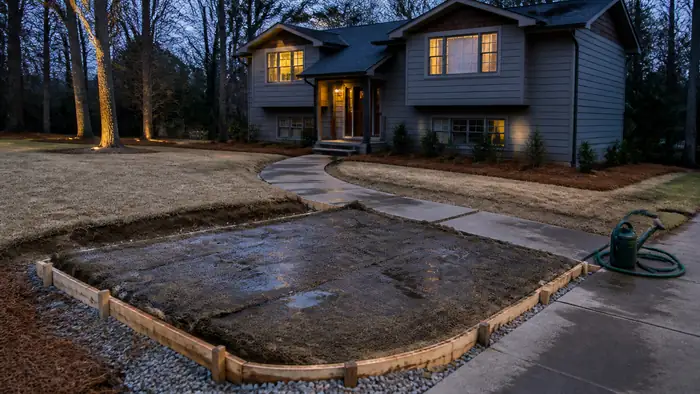
Wire mesh is unrolled across a driveway base before pouring. at a grey split-level home in Marietta, GA, after a rain shower.

Step 3: Forming & Reinforcement

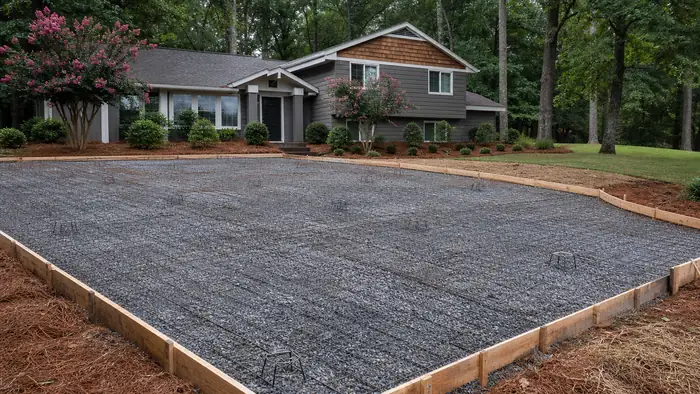
Forms are straight lumber, staked every few feet and set to string lines so the edges run true and the pitch holds. Curves get bendable form board. Inside the forms we lay steel rebar on chairs so it sits in the middle of the slab, where it does its work, rather than on the gravel, where it does nothing. Where the driveway meets the garage or the street, expansion joint material lets the slab move without cracking against them.

A screed board levels fresh concrete on a small patio. at a red-brick ranch home in Marietta, GA, under a darkening storm sky.

Step 4: Pouring

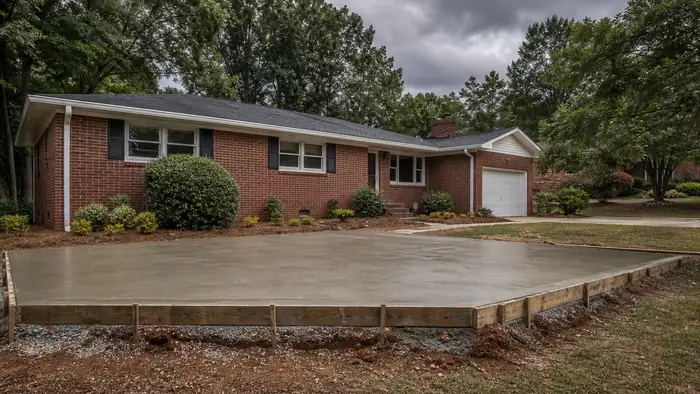
Pour day depends on the weather. With about 59" of rain a year, we watch the forecast and move the date rather than place concrete ahead of a storm. The truck backs in as close as the site allows, and we pull the mix into every corner of the forms with rakes and come-alongs. Adding water at the chute makes concrete easier to spread and weaker once it sets. We order the right mix and leave it alone.

A hand trowel smooths a small patio surface to a hard finish. at a stacked-stone and stucco home in Marietta, GA, at blue hour.

Step 5: Finishing

A screed board pulled across the forms levels the surface, then a bull float pushes the stone down and brings the cream up. Timing matters most here. Work the surface while bleed water is still sitting on it and the top layer turns weak and flakes off later. Once it firms up, we cut control joints deep enough to steer cracking into straight lines. Then comes a broom finish for grip on a slope, or the stamped pattern you chose.

Damp burlap covers a small slab section during curing. at a grey split-level home in Marietta, GA, at blue hour.

Step 6: Curing

Concrete does not dry; it cures, and it needs moisture to do that. For the first several days we keep the slab damp or cover it with a curing compound, so the surface does not lose water faster than the inside. A slab that dries too fast shows fine cracks across the top and wears poorly for years. Foot traffic can come back after a few days. Cars wait longer, and we tell you when the driveway is ready to park on.

A roller applies sealer to a stamped patio surface. at a painted-white-brick two-story home in Marietta, GA, under low winter sun.

Step 7: Sealing

After the slab has fully cured, a sealer goes on to slow down water, oil and stains. It matters more on stamped and colored work, where the sealer keeps color from fading and gives the pattern its finished look. We roll it on thin, because a heavy coat traps moisture and turns cloudy or slick underfoot. Snow is light here, about 1" a year, but rain is steady, so resealing every few years keeps the surface sound.

The Concrete Options Available in Marietta

A broom finish on a plain gray slab is what most driveways get, and for good reason. Dragging a stiff broom across the fresh surface leaves fine ridges that give tires and shoes something to grip. Marietta sees about 59 inches of rain a year, and plenty of lots here slope toward the street, so that texture earns its keep. It also wears evenly, ages quietly, and is simple to extend if you add a walkway or widen the apron later.

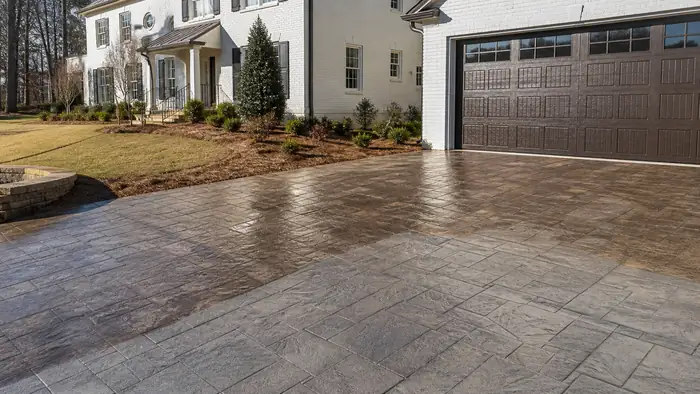
Stamped concrete is the step up for homeowners who want the driveway to carry some of the look of the house. While the slab is still workable, we press a pattern into it (slate, cobblestone, brick) and add color so it reads as stone or pavers. Exposed aggregate is another decorative choice: we wash back the top layer to show the stone in the mix. Some people split the difference, with a broom-finished driving lane and a stamped border where it shows from the street.

Upkeep is where the options part ways. Stamped and colored surfaces need resealing every few years to hold their color, and a sealed stamped slab can turn slick on a steep grade in the rain, so we are careful about where we suggest it. Underneath, nothing changes. Base preparation and reinforcement are the same whichever finish goes on top. If you cannot decide, ask to see samples of each when you call for a free estimate. Seeing them in daylight settles it faster than photos.

Get a Free Estimate

Get Free Estimates

Tap to call +1 470-666-7021