+1 470-666-7021
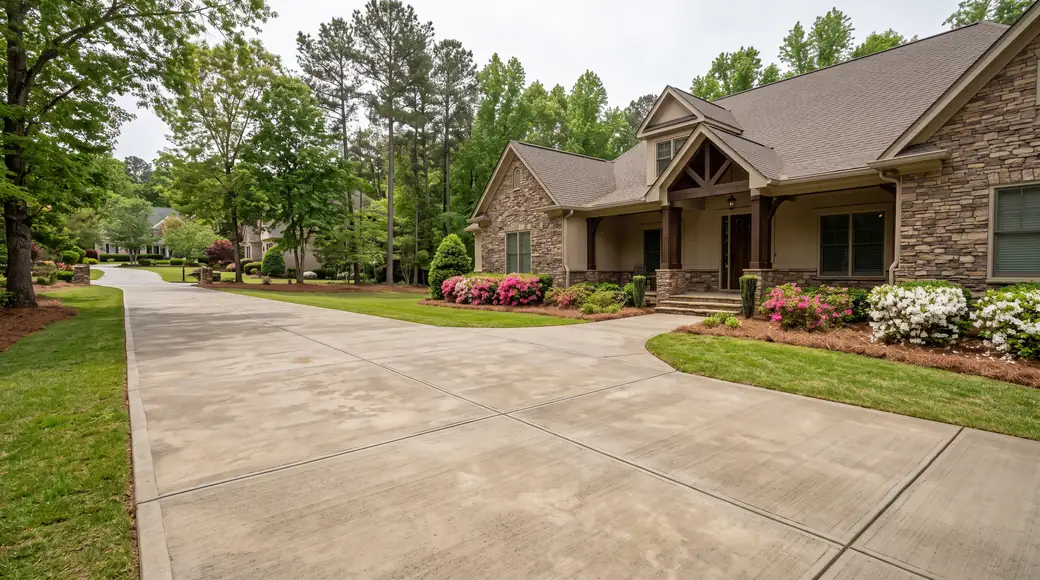
Wide view of finished concrete flatwork across the front of a home at a stacked-stone and stucco home in Marietta, GA, under bright midday cloud.

Concrete Demolition And Removal in Marietta, GA

Concrete demolition and removal is the work of breaking out a slab that has done its time and hauling every piece of it off your property. In Marietta that is usually a driveway, patio or walkway poured along with the house, and the median home here was built in 1986. Some of those surfaces are still sound. Others have cracked, sunk or lifted past the point where patching makes sense, and the honest fix is to take them out and start clean.

We begin by marking what stays and what goes, then saw a straight line so the concrete you are keeping, the foundation and the lawn are left alone. The slab is broken into pieces a crew can handle, the reinforcement is cut free, and all of it is loaded and hauled away. Cobb County is hilly, so on a sloped lot we plan where the broken material sits and how trucks get in and out without tearing up the yard. We handle the permit when the job needs one.

Most trouble comes from rushing the part nobody sees. Pull a slab without checking what runs beneath it and you can crack a buried line, undercut a step, or leave a base that lets the next pour down. With about 59 inches of rain a year, water finds any low spot left behind. So once the old concrete is gone, we look at the ground again. Soil varies across the county, and every site is tested on its own before anything new goes in.

Call +1 470-666-7021

Get Free Estimates

What Is Included in Concrete Demolition And Removal

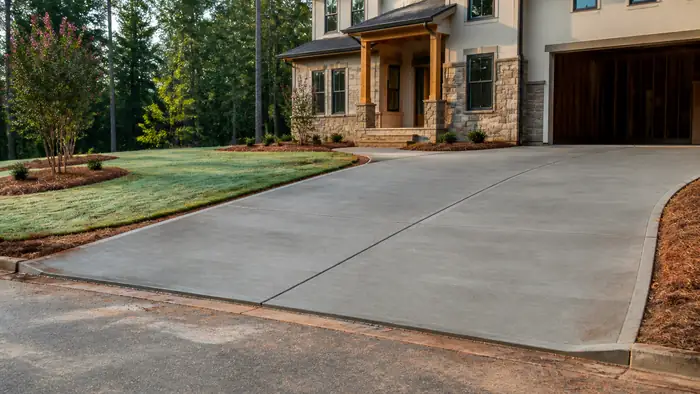
concrete slab installation completed by a local contractor at a stacked-stone and stucco home in Marietta, GA, in early morning light.

Concrete Slab Installation Cost

What a slab costs depends mostly on what sits under it and what has to come out first. Breaking up an old slab, hauling the rubble off the property and regrading the base all belong to the same job as the new pour. A patio slab and a pad that carries a truck take different thickness, reinforcement and concrete volume. Tight access, a steep yard or a long wheelbarrow run adds labor. We price after walking the site. Call for a free estimate.
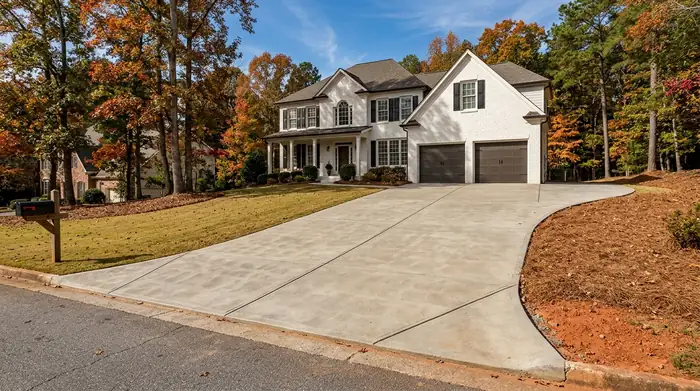
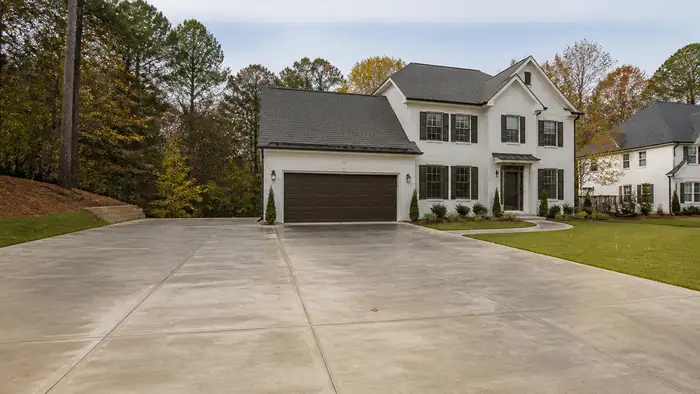
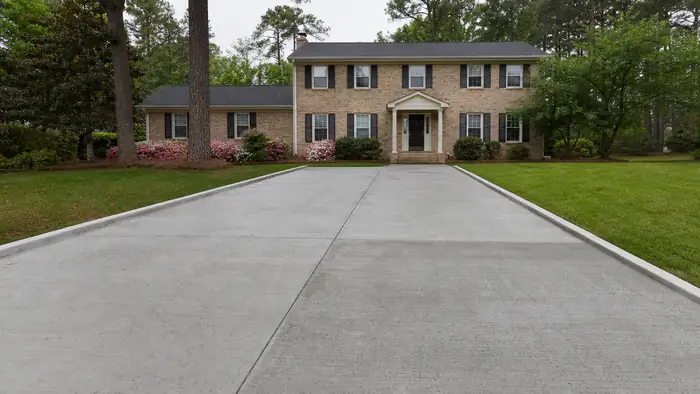
concrete driveway installation completed by a local contractor at a brick-and-siding two-story home in Marietta, GA, in open shade.

Concrete Driveway Installation

A driveway carries weight every day, so we build it for that load. The old drive gets broken up and hauled away first. Then we compact a gravel base and set rebar or wire mesh on chairs, so the steel sits in the middle of the slab instead of lying on the bottom. Control joints get cut early to steer cracking. Cobb County is hilly, and on a steep drive we leave a broom finish that tires can grip in the rain.

concrete flooring installation completed by a local contractor at a painted-white-brick two-story home in Marietta, GA, under bright midday cloud.

Concrete Flooring Installation

Old garage, basement and shop floors come out with saw cuts and a breaker, with the dust kept inside the work area as far as the room allows. Under the new slab goes a compacted base and a vapor barrier, because moisture wicking up through concrete is what lifts tile and vinyl glued down later. We trowel the surface smooth for a garage or a sealed floor. The usual failure is joints cut too late, which lets the slab crack where it chooses.

concrete slab repair completed by a local contractor at a tan-brick colonial in Marietta, GA, under an overcast sky.

Concrete Slab Repair

Not every cracked slab has to go. Hairline shrinkage cracks can be cleaned and sealed. A slab that has sunk, heaved or broken into pieces is a different job. We saw-cut the damaged section on clean lines, break it out and recompact the base, then drill dowels into the sound concrete so the patch is tied to the slab around it. With the median home here built in 1986, plenty of slabs have had decades to settle. New concrete will not match old in color.

What Makes Marietta Professional Concrete's Concrete Work Different

Many of the slabs we break out in Marietta were poured around the time the typical house here went up, in 1986 or close to it. Decades of settling, patching and root pressure leave them cracked in ways you cannot see from the top, and they often carry reinforcement nobody has a drawing for. We treat removal as the first stage of the next job, not a separate chore. Before a breaker touches the surface, we saw-cut clean lines wherever old concrete meets something staying put: a garage floor, a walkway, a foundation wall. What we leave behind is a square-edged opening over undisturbed ground, ready for whatever the property needs next.

Hills are where removal usually goes wrong. Cobb County has about 199 feet of local relief within a few miles, so a driveway can sit on a slope that sends water and loose soil somewhere it should not go once the old slab is gone. With roughly 59 inches of rain a year, an open excavation does not stay dry for long. Every site gets graded and tested on its own, because the soil changes from one block to the next, and we keep the exposed ground stable until new concrete goes in. That part rarely shows in a photo of the finished job, but it decides how long the new one lasts. We handle the permit, too. Call for a free estimate.

Our Concrete Process, Step by Step

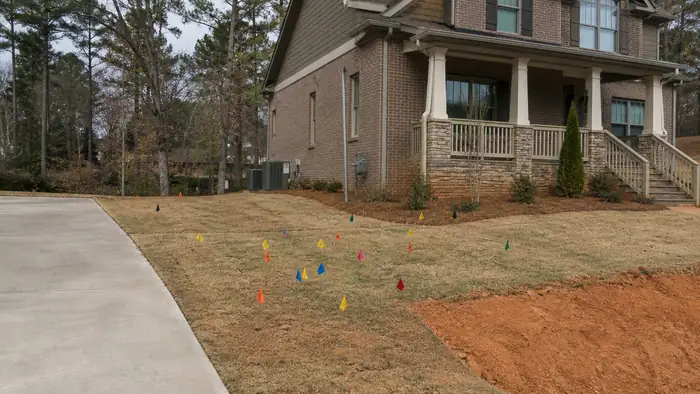
Utility flags mark buried lines before digging starts. at a brick-and-siding two-story home in Marietta, GA, under a hazy afternoon sky.

Step 1: Site Assessment

We walk the property first and look at what is there: the old slab, why it failed, where water runs when it rains, and what sits underneath. Cobb County is hilly, and the grade can change from one block to the next. Gwinnett soil, which drains well, is the dominant type here, but it varies across the county, so every site gets tested on its own. What we find decides the base, the reinforcement and the drainage plan. If the job needs a permit, we handle the permit.

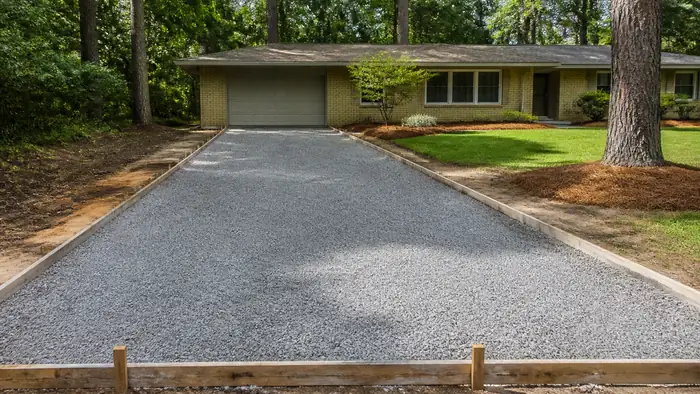
Crushed stone base is raked level inside driveway forms. at a buff-brick ranch home in Marietta, GA, in full afternoon sun.

Step 2: Site Preparation

Old concrete comes out in manageable pieces, and the rubble gets hauled off the property. Then comes the part nobody sees, which is the ground. We dig out soft spots, set the grade so water runs away from the house, and lay a gravel base compacted in lifts rather than dumped and rolled once. A slab that cracks across the middle usually failed from underneath. A poor base is the common cause, and no finish on top will hide it for long.

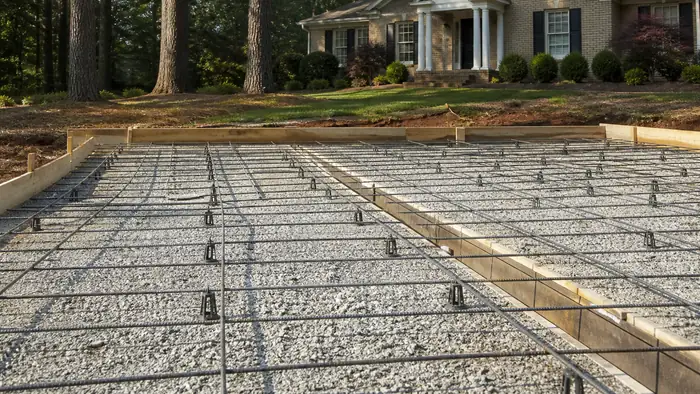
A worker ties rebar into a grid before a residential pour. at a tan-brick colonial in Marietta, GA, in raking morning side light.

Step 3: Forming & Reinforcement

Forms go in next, staked and set to string lines so the finished surface carries a steady slope for drainage. On a sloped lot that pitch matters more than it looks. Inside the forms we place rebar or welded wire mesh on chairs, so the steel sits in the middle of the slab instead of lying in the gravel, where it does nothing. Driveways get heavier reinforcement than patios. Edges get extra attention too, because that is where tires and loads land.

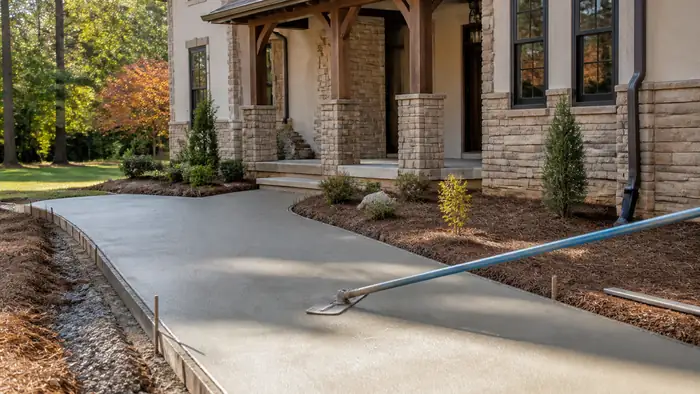
A bull float smooths a residential walkway surface after screeding. at a stacked-stone and stucco home in Marietta, GA, in full afternoon sun.

Step 4: Pouring

Pour day depends on the weather. With about 59 inches of rain a year here, we watch the forecast and move the date rather than race a storm. The concrete arrives ready-mixed, and the crew places it from the far end back, so nobody drags a load across fresh material. Adding water at the truck makes concrete easier to spread and weaker once it sets. We don't do it. The mix goes in as delivered and gets worked to push out trapped air.

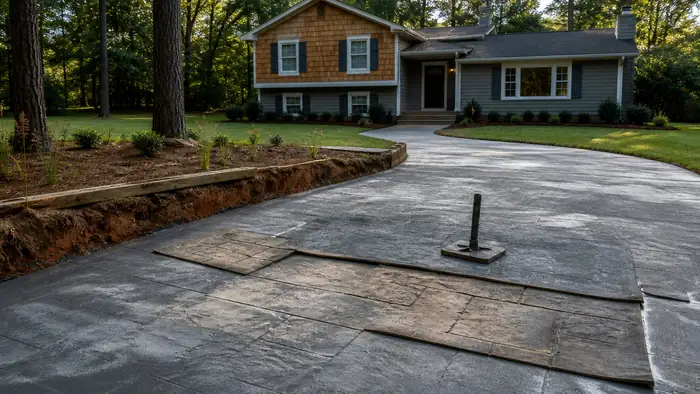
Stamping mats are pressed into a patio surface to imprint a pattern. at a grey split-level home in Marietta, GA, in early morning light.

Step 5: Finishing

A screed strikes the concrete flat to the forms, and a bull float brings the cream to the top. Then we wait. Working the surface while bleed water still sits on it leaves a weak skin that flakes off later. Edges get rounded with an edger, and control joints are cut so that when the slab cracks, it cracks in a straight line where we planned it. Driveways usually get a broom finish for grip; stamped and decorative patterns go in at this stage as well.

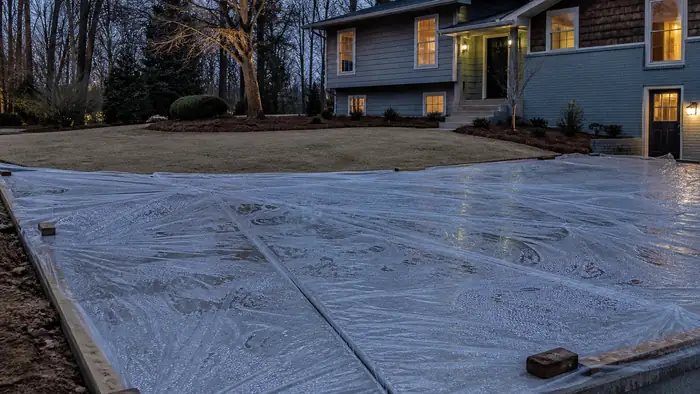
Plastic sheeting covers a curing driveway slab. at a grey split-level home in Marietta, GA, at blue hour.

Step 6: Curing

Concrete does not dry. It cures, and it needs water to do that. If the surface loses moisture too fast, it shrinks, crazes and turns dusty, so after finishing we keep the slab damp or apply a curing compound. Hot, windy afternoons pull water out fastest, and those pours get watched the closest. Foot traffic can come first. Cars have to wait longer, since a slab keeps gaining strength for weeks after the pour, and driving on it early is how edges break off.

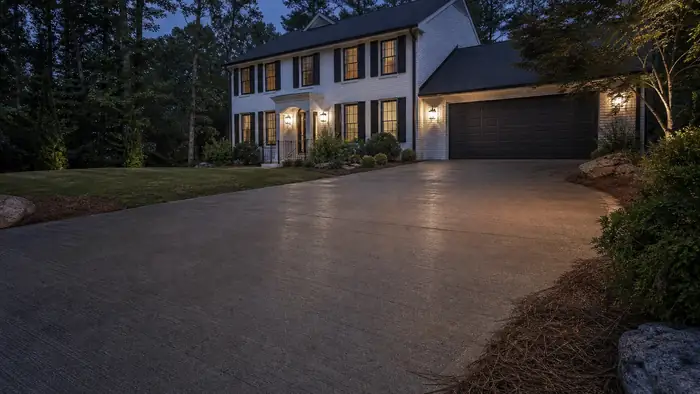
A sprayer applies sealer across a driveway. at a painted-white-brick two-story home in Marietta, GA, at blue hour.

Step 7: Sealing

Sealer goes on once the slab has cured enough to take it. A penetrating or film-forming sealer slows water, oil and stains from soaking into the surface. With about 1 inch of snow a year and around 59 inches of rain, water does more to a slab here than deicing salt ever will. Stamped and decorative concrete need sealer most, because it deepens the color and protects the pattern. When water stops beading on the surface, it is time to reseal.

The Concrete Options Available in Marietta

Once the old slab is out, the ground is open, and that is the easiest moment to change what goes back. The median home in Marietta was built in 1986, so the concrete we break out is often decades old. We replace it with plain broom-finished concrete, stamped concrete in a pattern and color, or exposed aggregate for a surface with more grip underfoot. Some owners keep the same footprint. Others widen a driveway or square off a patio while the forms are going in new.

Underneath, every option is built the same way: a compacted base, steel reinforcement, and forms set to the grade. Cobb County is hilly, and the ground changes from one lot to the next, so we check the pitch on every property before we pour. Water has to run off the surface and away from the house, which matters with about 59 inches of rain a year. Decorative finishes add time at the end, because stamping and coloring happen while the concrete is still workable.

Most replacement slabs that fail do it from below. Soft fill gets left in place, reinforcement ends up lying on the dirt instead of inside the concrete, or control joints go in late and the slab picks its own crack lines. None of that shows on the day of the pour. Getting it right means digging down to firm ground, raising the steel on chairs, and cutting joints on time. Stamped and colored surfaces also need a sealer to hold their look. Call for a free estimate on any of these options.

Get a Free Estimate

Get Free Estimates

Tap to call +1 470-666-7021