+1 470-666-7021
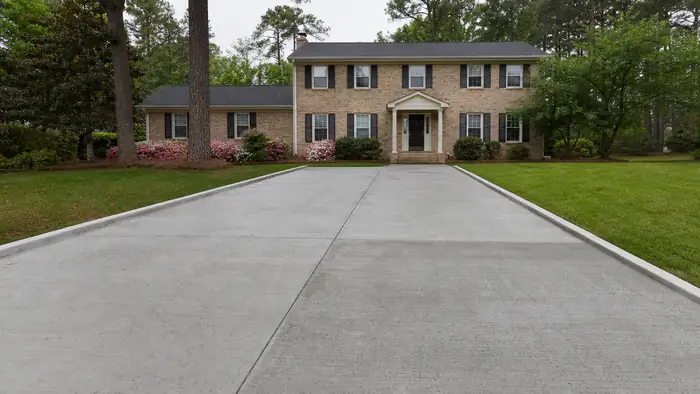
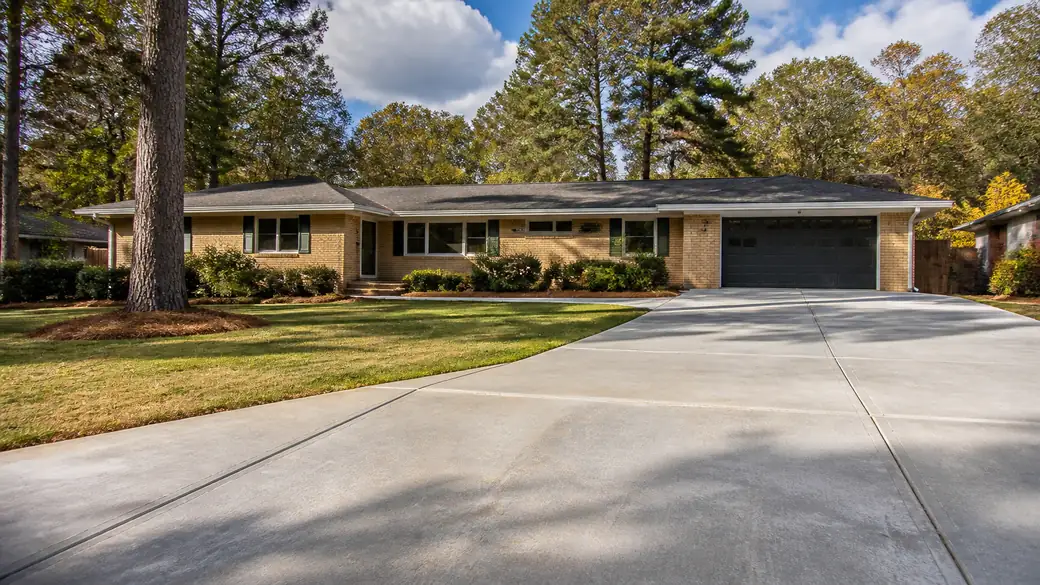
concrete driveway crack repair completed by a local contractor at a buff-brick ranch home in Marietta, GA, under broken cloud.

Concrete Driveway Crack Repair in Marietta, GA

A crack in a driveway is rarely just a line in the surface. Water finds it, and with about 59 inches of rain a year in Marietta, water finds it often. We repair driveway cracks by first working out why the slab moved: settlement under the base, a missing control joint, tree roots, or plain age. With the median home here built in 1986, many driveways have been carrying cars for decades.

Some cracks only need to be cleaned out, routed and sealed so the water stops getting underneath. Others mean the slab has lost support, and sealing the top alone just hides the problem for a while. Telling the two apart is the first thing we do. The ground around Marietta is hilly and changes from one lot to the next, so we check the grade and drainage on your property before recommending anything. Call us for a free estimate.

Call +1 470-666-7021

Get Free Estimates

What Is Included in Concrete Driveway Crack Repair

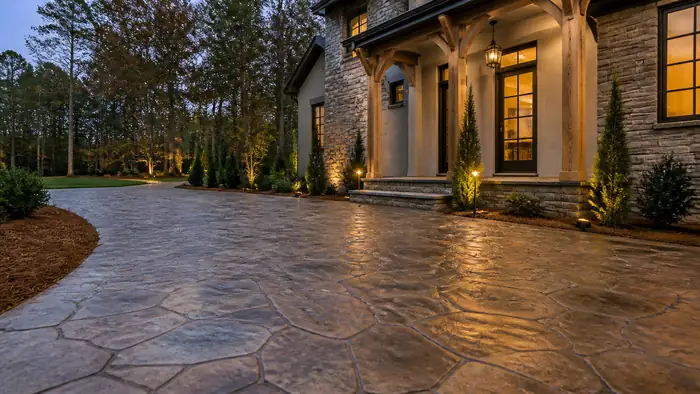
concrete slab installation completed by a local contractor at a stacked-stone and stucco home in Marietta, GA, in early morning light.

Concrete Slab Installation Cost

What a slab costs comes down to what sits under it and what goes into it. Thickness, the compacted gravel base, the reinforcement (wire mesh or rebar), how close the truck can get, and whether old concrete has to be broken out first all move the number. So does the finish. Much of the ground here is hilly and changes block to block, so a sloped lot means more grading and forming before we pour. We price each property after seeing it. Call for a free estimate.
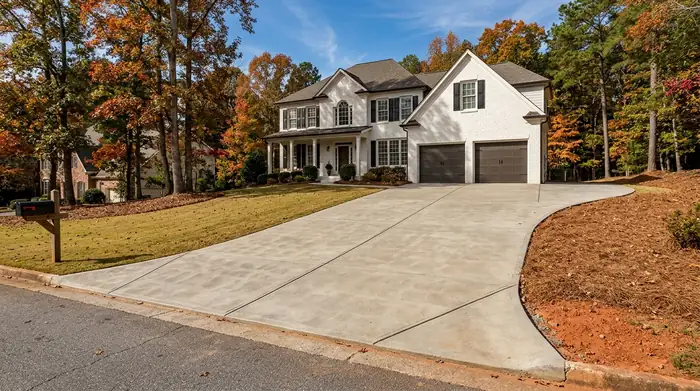
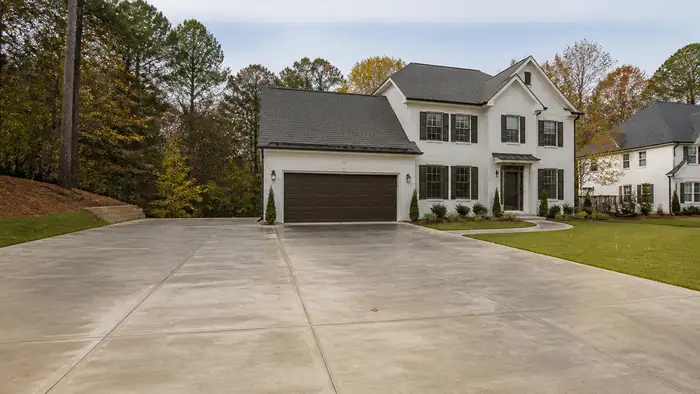
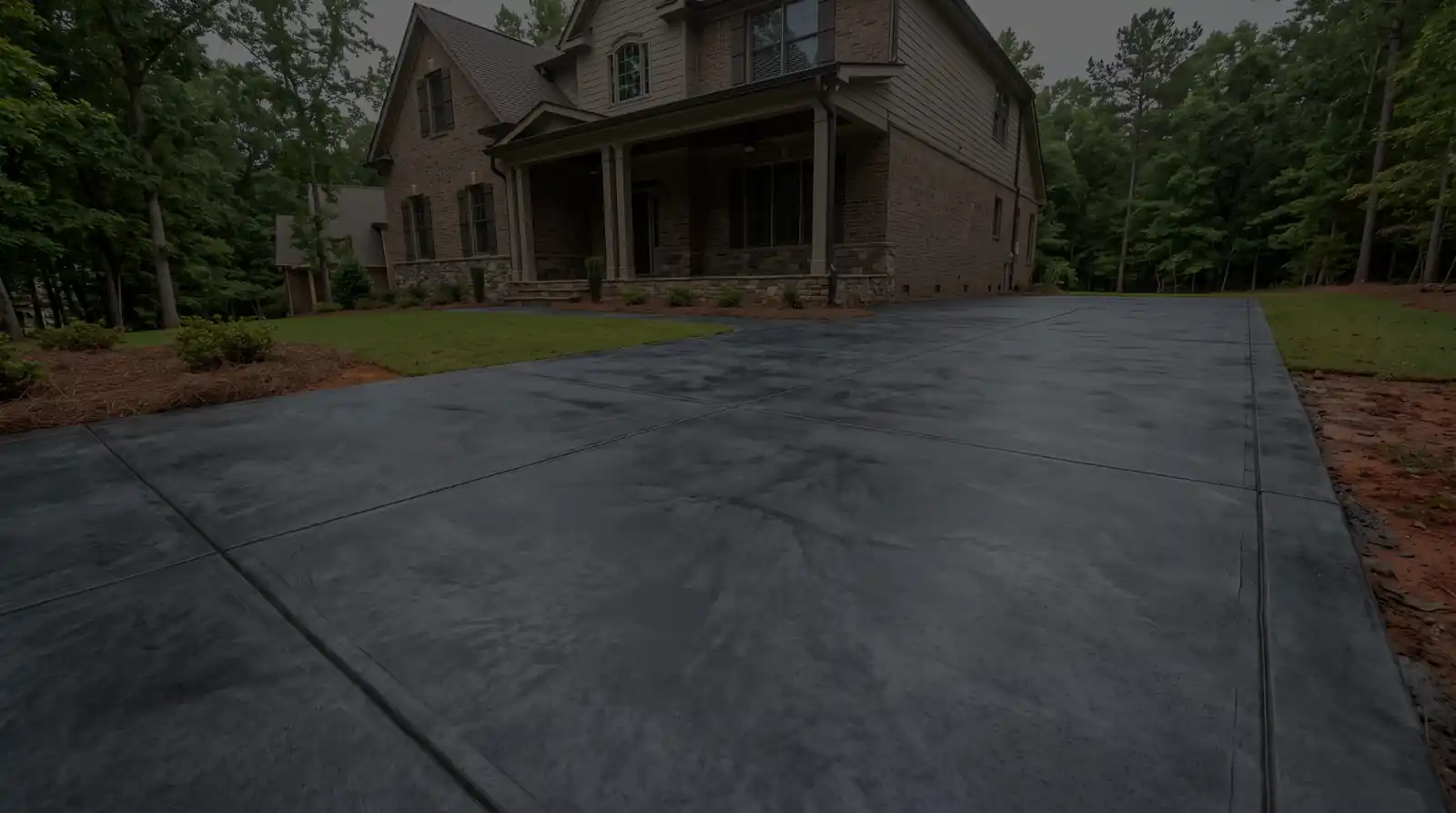
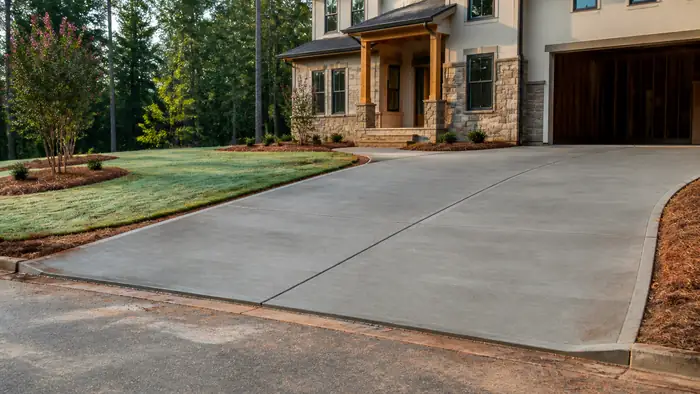
concrete driveway installation completed by a local contractor at a brick-and-siding two-story home in Marietta, GA, in open shade.

Concrete Driveway Installation

A driveway fails from the ground up, so that is where we start. We dig out soft material, compact the base, and set forms so water runs away from the garage and the house. With about 59 inches of rain a year, drainage is part of the structure. Rebar or mesh sits on chairs so it ends up inside the slab, not on the dirt. Control joints are cut so the concrete cracks where we choose. Broom finish is standard, and stamped work is available.

concrete flooring installation completed by a local contractor at a painted-white-brick two-story home in Marietta, GA, under bright midday cloud.

Concrete Flooring Installation

Garage floors, basements, workshops and commercial spaces need a flat, hard surface that takes traffic without dusting or cracking. Under interior slabs we lay a vapor barrier so ground moisture stays out of the room above. The surface is power troweled smooth, ready for sealer, coatings or tile. On commercial floors we plan joint layout around doorways, equipment and racking so the cuts land where they do no harm. We handle the permit when the project needs one.

concrete slab repair completed by a local contractor at a tan-brick colonial in Marietta, GA, under an overcast sky.

Concrete Slab Repair

Not every cracked slab needs to come out. The median home in Marietta was built in 1986, so plenty of driveways and patios here have had a long time to shrink, settle and wash out underneath. Hairline shrinkage cracks get routed and filled with flexible sealant. When one side of a crack has dropped, the base is usually the problem, and patching the top alone will not hold. For that we saw cut the bad section, dowel into the sound concrete and pour new.

What Makes Marietta Professional Concrete's Concrete Work Different

A crack in a driveway is a symptom, and we treat it that way. Before we fill anything, we look at why the slab moved. Cobb County is hilly, with 199 feet of local relief within a few miles, so grade and runoff shape how a lot of driveways behave. With about 59 inches of rain a year, water getting under the slab is always worth ruling out.

The median home here was built in 1986, so many driveways carry decades of use. We check the soil on each property rather than assuming. Gwinnett soil drains well, but conditions change across the county. Then we repair the surface to suit what we found. A patch that ignores the cause tends to crack again, and nobody wants to fix the same crack twice.

Our Concrete Process, Step by Step

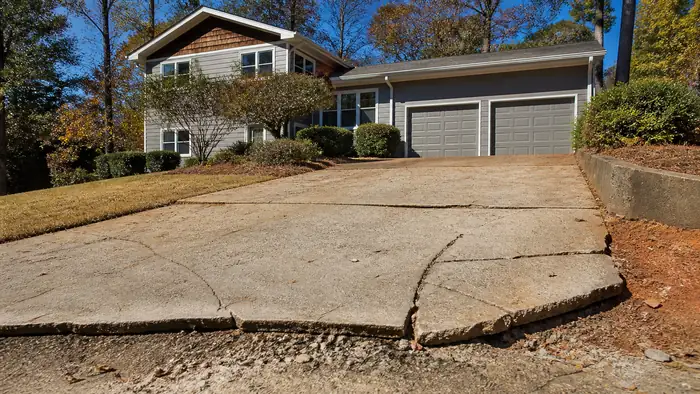
A worker examines an old driveway before replacement. at a grey split-level home in Marietta, GA, in clear late-morning sun.

Step 1: Site Assessment

We start by walking the whole driveway, not just the crack you called about. A hairline shrinkage crack, a crack with one side sitting higher than the other, and a slab that has dropped at the apron all point to different causes. We check the slope, watch where runoff goes (this area sees about 59 inches of rain a year), and probe the ground under the failed section. Then we tell you plainly whether it needs a repair or a new slab.

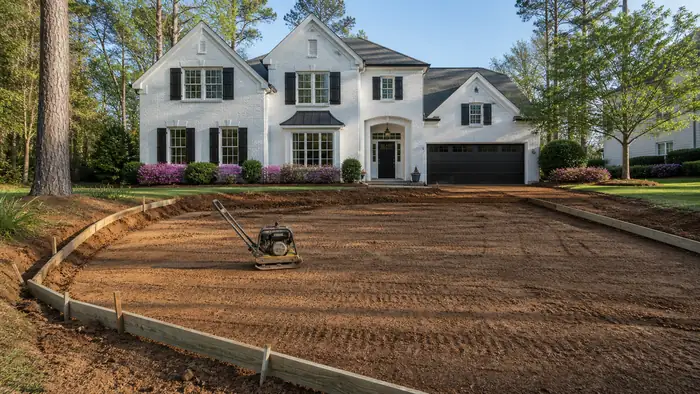
A plate compactor tamps down soil in a small excavated area. at a painted-white-brick two-story home in Marietta, GA, under low winter sun.

Step 2: Site Preparation

Most driveway failures start underneath. We saw-cut broken concrete out along clean lines, dig out soft or wet soil, and replace it with crushed stone compacted in thin lifts. The dominant soil around here is Gwinnett, a well-drained type, but it changes from lot to lot, so every site gets tested on its own. The terrain is hilly too, with 199 feet of relief within a few miles, so we grade each driveway to carry water off the slab rather than under it.

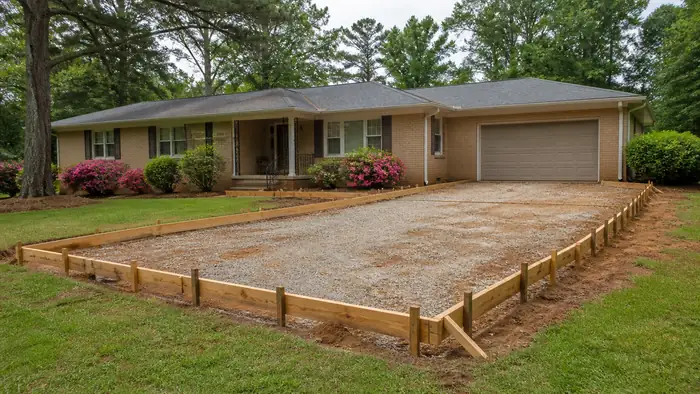
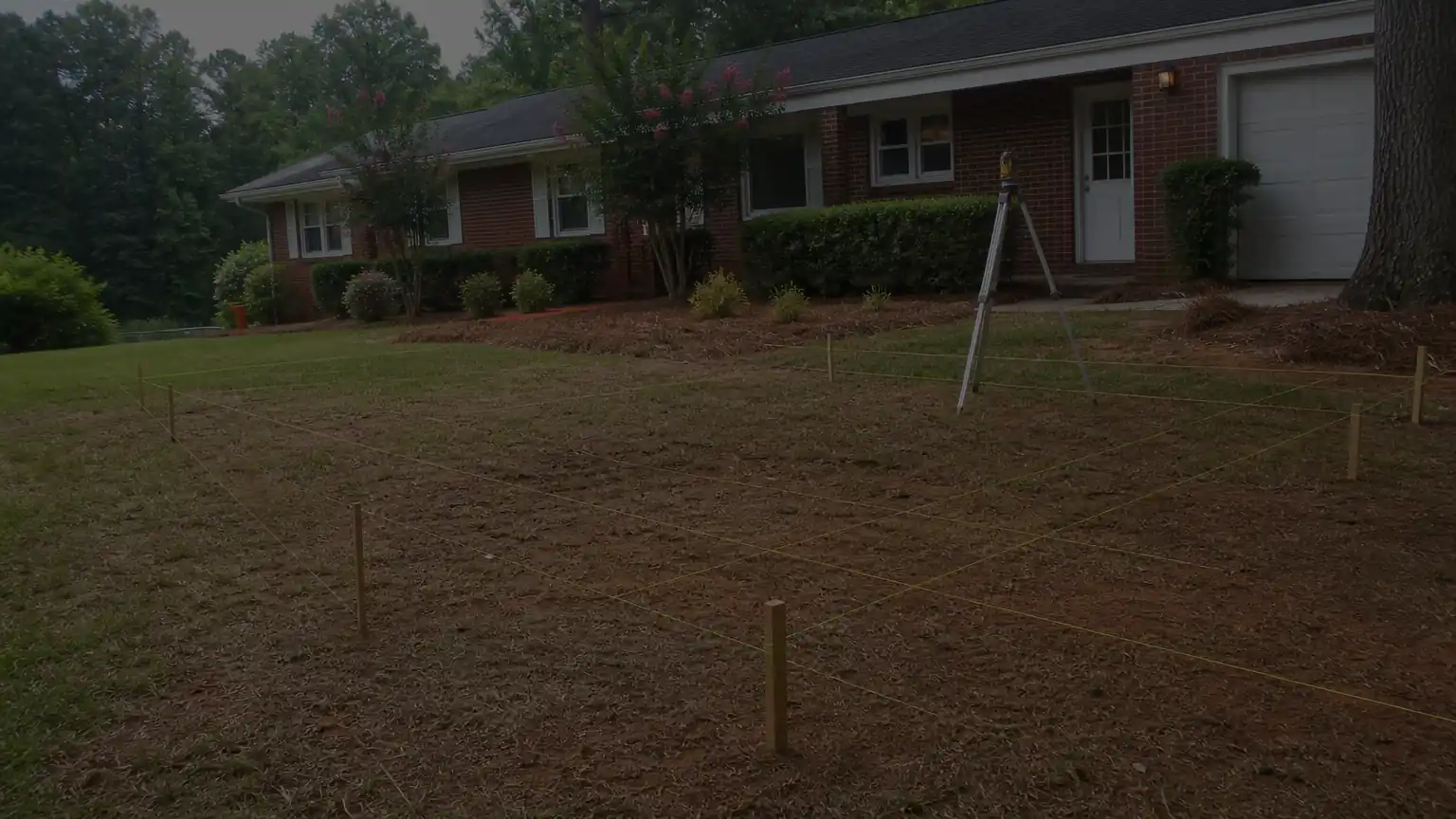
Wooden forms outline a patio slab before the pour. at a buff-brick ranch home in Marietta, GA, under bright midday cloud.

Step 3: Forming & Reinforcement

Forms go in straight and staked tight, set to the grade lines so the finished surface sheds water. For reinforcement we tie steel rebar on a grid and set it on chairs, so it sits in the middle of the slab where it actually carries load. Mesh left lying on the stone does nothing. Where a new section meets old concrete, we drill and epoxy dowels into the existing slab so the two move together instead of cracking along the seam.

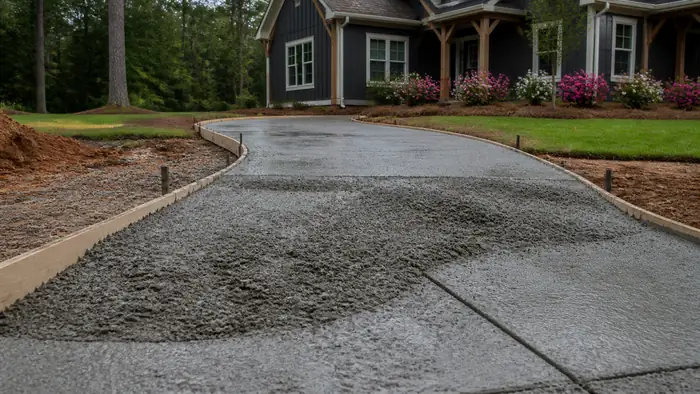
A ready-mix truck discharges concrete into a driveway form. at a charcoal farmhouse-modern home in Marietta, GA, under a darkening storm sky.

Step 4: Pouring

We order a mix suited to vehicle traffic and read the batch ticket when the truck pulls up. Adding water on site makes concrete easier to spread and weaker for the life of the slab, so our crew doesn't do it. The concrete goes in as one continuous pour, placed against the forms, worked in around the steel, and screeded flat to the grade lines. Hot, windy afternoons dry the top too fast, so we schedule pours for the cooler part of the day.

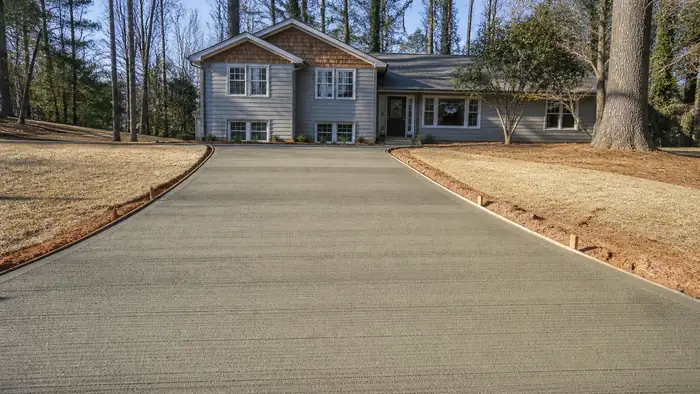
A broom drags across a driveway creating a slip-resistant texture. at a grey split-level home in Marietta, GA, in raking morning side light.

Step 5: Finishing

Timing matters more than anything here. We bull float, wait for the bleed water to leave the surface, then edge the slab and cut control joints so it cracks where we choose rather than where it wants. Troweling bleed water back into the top is how surfaces flake apart later. Driveways get a broom finish for grip on a wet slope. Stamped and decorative finishes are available, though a patch never blends perfectly with old concrete, and we say so up front.

A hand sprayer applies curing compound to a finished patio. at a buff-brick ranch home in Marietta, GA, in late afternoon light.

Step 6: Curing

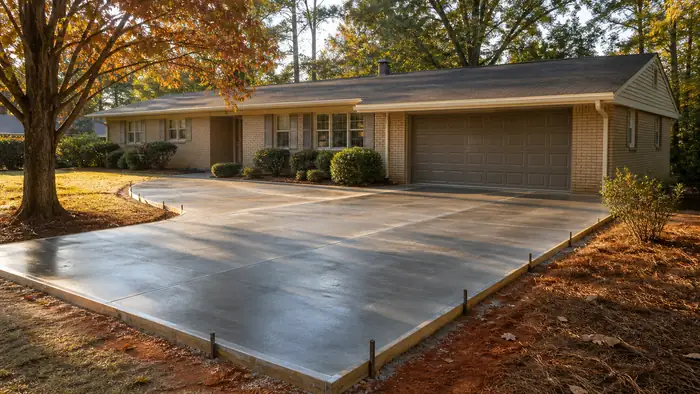
Concrete keeps gaining strength for weeks, and the first few days decide how strong it ends up. We keep the slab damp under curing blankets or spray on a curing compound so the surface does not dry out ahead of the core. Average highs and lows here run around 72°F and 53°F, but we plan around the forecast for the actual week of the pour, not the average. Foot traffic comes first, cars later, and we tell you when each is safe.

A finished stamped surface shows a glossy sealed sheen. at a stacked-stone and stucco home in Marietta, GA, at blue hour.

Step 7: Sealing

Once the concrete has fully cured, we apply a penetrating silane or siloxane sealer. It soaks into the surface rather than sitting on top, so it does not turn slick in the rain or peel off in sheets. What it does is slow water, oil and tire stains from working into the concrete. On crack repairs, the routed crack gets a flexible polyurethane sealant before anything else. When water stops beading on the surface, the driveway is due for another coat.

The Concrete Options Available in Marietta

For a cracked driveway there are a handful of ways to go, and the crack itself usually tells us which one fits. Hairline cracks get cleaned out and sealed with a flexible filler so water stays out. Wider cracks are routed, filled and leveled flush with the surface. When a section has sunk or heaved, we cut it out and pour a new slab with fresh reinforcement. Resurfacing covers a sound driveway that just looks tired.

The median home in Marietta was built in 1986, so plenty of the driveways we look at are the original pour. Age alone is no reason to tear one out. If the base is solid, a proper repair holds. If water has been getting under the slab, and with about 59 inches of rain a year it finds a way, patching only buys time. We show you which one you have. Replaced sections can take a stamped or decorative finish.

Questions About Concrete Driveway Crack Repair

How long does concrete driveway crack repair take in Marietta and when can I drive on it again?

Most crack repairs are finished in a single visit, once the crack is cleaned out and dry enough to take a filler. How soon you can drive on it depends on what went in. Flexible sealants and polyurethane fillers firm up quickly, while a cementitious patch or a replaced section needs longer to cure before it carries a car. Cool, damp weather slows every material down. We tell you before we leave when it is ready.

How can I tell whether a concrete wall crack in my Marietta property is structural or surface-level?

Width and movement tell you most of it. A thin, even crack that stays the same size over months is usually shrinkage in the surface. Watch for cracks that widen, run horizontally, step through block in a stair pattern, or leave one side sitting proud of the other. Sticking doors and water seeping through are warning signs too. Mark the ends of the crack in pencil and write the date beside them. If it grows past the marks, have it looked at.

Which concrete crack repair method is best for my Marietta driveway?

That depends on why it cracked and whether it is still moving. A stable hairline crack gets routed out and sealed with a flexible sealant that keeps water out while the slab expands and contracts. Wider cracks may take a polyurethane or cementitious filler. If sections have sunk or lifted, sealing only hides the problem. The real fix is leveling, or cutting out that section and pouring it back on a sound base with proper reinforcement. We look first, then recommend.

What causes concrete to crack or deteriorate in Marietta, GA?

Water and movement, mostly. The area gets about 59" of rain a year, and when runoff finds its way under a slab it can wash out the base and leave the concrete unsupported. Cobb County is hilly, though it varies from block to block, and a driveway on a slope sends water downhill fast. Tree roots, heavy trucks, thin pours and missing control joints add to it. With the median home here built in 1986, many slabs have simply had a long time to settle.

Will Marietta Professional Concrete take care of our city permits and inspections?

Yes. If the work on your driveway needs a permit, we handle the permit and are on site for any inspection it requires. Whether a job needs one comes down to its scope: sealing a crack is a different undertaking from tearing out and repouring a section. We tell you which applies before work starts, so the paperwork is settled and nothing on your property stalls halfway through the job.

What's the best foundation contractor in Marietta?

The best one is whoever finds out why your foundation moved before selling you a fix. We repair and pour slabs, walls and flatwork, and for foundation cracks we start by checking the grade, the drainage and the soil around the house, since each site differs. Ask any contractor you talk to what caused the damage and how their repair deals with that cause. If the answer is only about the crack, keep looking. Call us for a free estimate.

Get a Free Estimate

Get Free Estimates

Tap to call +1 470-666-7021