+1 470-666-7021
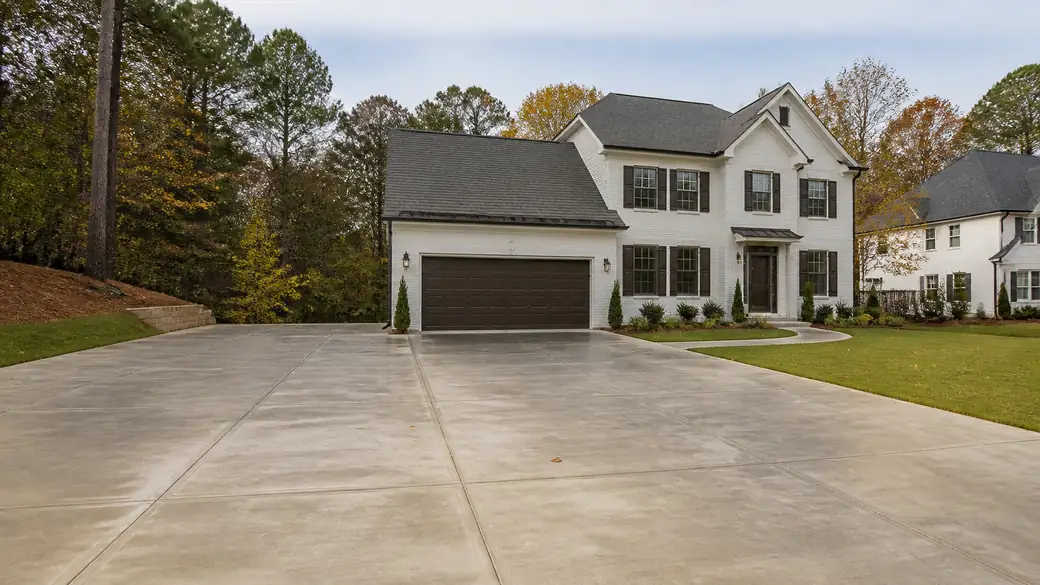
concrete flooring installation completed by a local contractor at a painted-white-brick two-story home in Marietta, GA, under bright midday cloud.

Concrete Flooring Installation in Marietta, GA

A concrete floor is a slab poured to carry weight and stay flat: a garage, a basement, a workshop, a shop floor a few streets off Marietta Square. We pour residential and commercial floors across Marietta, and the approach is the same at every property. Get the base right, put the reinforcement where the loads are, and finish the surface for how the room will actually be used. The median home here was built in 1986, so the job is often replacing an original slab rather than pouring on open ground. Either way, the floor you walk on is only as good as what sits under it.

Cobb County is hilly, and it changes from one block to the next, so we grade and test every site on its own before any concrete arrives. The soil is mostly well drained, but mostly is not every lot, and we check. From there we compact the base, lay a vapor barrier where the floor calls for it, set the reinforcement, and pour. Finishing is where most of the time goes: troweling the surface to the right texture, cutting control joints, and letting the slab cure properly before anyone puts weight on it. If you have a floor in mind, call for a free estimate.

Call +1 470-666-7021

Get Free Estimates

What Is Included in Concrete Flooring Installation

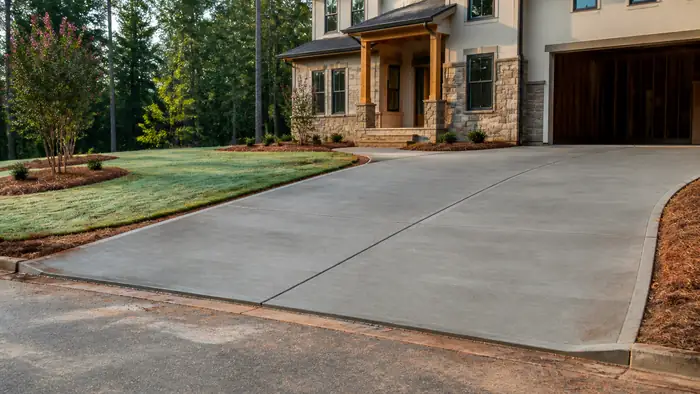
concrete slab installation completed by a local contractor at a stacked-stone and stucco home in Marietta, GA, in early morning light.

Concrete Slab Installation Cost

What moves the number on a slab is mostly the work that happens before the pour. A flat, firm site needs a compacted gravel base and forms. A sloped lot needs cut and fill, and with 199 feet of local relief within a few miles, Cobb County lots vary a lot. Thickness, reinforcement (wire mesh or rebar), truck access and tearing out old concrete all count. We price each slab after grading and testing that particular site.
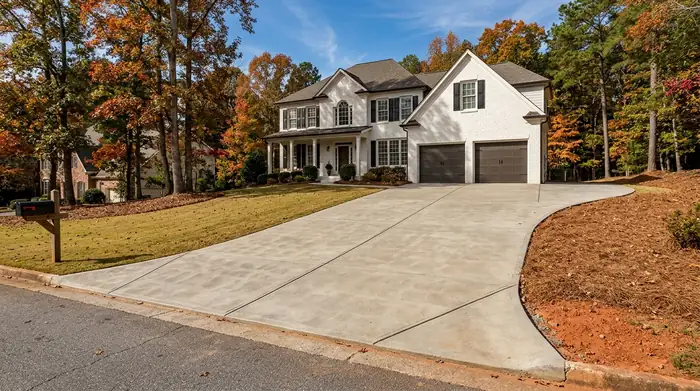
concrete driveway installation completed by a local contractor at a brick-and-siding two-story home in Marietta, GA, in open shade.

Concrete Driveway Installation

A driveway fails from underneath first. We dig out soft soil, lay and compact a crushed stone base, and set forms with enough pitch that water runs off the surface instead of sitting on it. That matters with about 59 inches of rain a year. Rebar or fiber reinforcement goes in, then control joints are cut so the cracks concrete always wants to make land in straight lines. Broom finish is standard. Stamped and decorative finishes are available.

Concrete Flooring Installation

Garage floors, basements and shop floors all start the same way: a level, compacted base and a vapor barrier under the slab, so ground moisture does not come up through the finish later. We place reinforcement, pour, screed and power trowel for a hard, dense surface. From there the floor can stay plain or be sealed, stained or polished. Curing is where floors go wrong most often, so we keep the slab damp and protected for days, not hours.

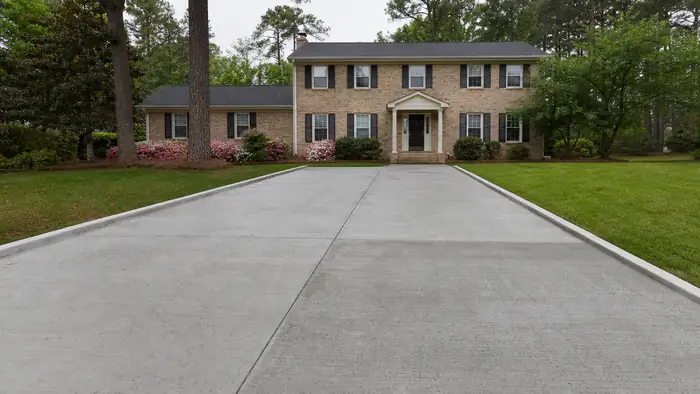
concrete slab repair completed by a local contractor at a tan-brick colonial in Marietta, GA, under an overcast sky.

Concrete Slab Repair

Before patching anything, we find out why it cracked. Settling usually traces back to a washed-out or poorly compacted base, and the median home here was built in 1986, so many slabs carry decades of movement. Hairline shrinkage cracks can be routed and sealed. Sunken sections can sometimes be lifted. Broken or heaving ones are cut out, the base is rebuilt, and new concrete is doweled into the old slab so the two move together.

What Makes Marietta Professional Concrete's Concrete Work Different

We start with the ground, not the pour. Cobb County is hilly, with 199 feet of local relief within a few miles, and the grade can change from block to block. Gwinnett soil is the dominant type here and it drains well, but it varies across the county, so we test every site on its own before any work starts. That tells us how much base to bring in, where water will want to go, and what reinforcement the slab needs. A floor poured on assumptions is a floor that cracks.

About 59 inches of rain falls here in a typical year, so we schedule pours around the weather and let each slab cure properly instead of rushing it. The median home in Marietta was built in 1986. An older property can mean an existing slab to break out, a floor that has settled, or a basement with a moisture history, and we look at all of that before we price new work. We handle the permit. We set forms, place the reinforcement, pour and finish, and we check the surface before anyone walks on it. Call for a free estimate.

The Concrete Options Available in Marietta

Most concrete floors come down to a handful of finishes. A steel-troweled slab is the plain one: hard, flat and smooth, ready for tile, carpet or nothing at all. Polished concrete starts from that same slab, ground in stages until the surface holds a shine without any coating on top. Stain puts color into the concrete itself, so it wears with the floor instead of peeling off like paint. Epoxy and sealed finishes suit garages, basements and commercial floors that see spills, tires and heavy traffic. Decorative scoring or a stamped pattern can break up a large open room, and both work on residential and commercial property.

Picking one starts with the room and what is already under it. A new pour lets us set the reinforcement, thickness and finish from the ground up. An existing floor is a different project. The median home in Marietta was built in 1986, and a slab that old may have settled, cracked or collected patches over the years. Polish and stain show every one of those marks, so an overlay is sometimes the better choice. Moisture matters as well. With about 59 inches of rain a year here, we check how each slab handles water before we seal it, then walk you through the options that fit.

How Much Does Concrete Flooring Installation Cost in Marietta?

The price of a concrete floor comes from the site more than the square footage. Two garages of the same size can land far apart once we see what sits under the old surface, how close a truck can park, and where the water goes when it rains. Most of what moves the number is something you can check on your own property.

What changes the priceWhich wayWhy
An old slab, tile or glued-down flooring that has to come out firstcosts moreBreaking out, hauling off and cleaning the base is labor and disposal before any new concrete goes down.
A truck that can back right up to the pourcosts lessWhen the chute reaches the forms, concrete goes straight in. A long wheelbarrow run or a pump adds crew time and equipment.
A steep approach from the street to the workcosts moreThe ground around Marietta is hilly, and a sloped site can mean extra grading, extra forming, or a pump to move material uphill.
A floor that will carry a vehicle lift, a shop or heavy equipmentcosts moreThat load calls for a thicker slab and heavier reinforcement, which means more material and more time setting steel.
Soft or uneven ground under the slabcosts moreWe test every site, and a weak subgrade has to be dug out, filled and compacted before the floor can sit on it.
Water that pools by the floor or seeps in after a stormcosts moreAbout 59 inches of rain falls here in a year. A floor that stays wet may need a vapor barrier, a drain, or pitch built into the surface.
A plain broom or trowel finishcosts lessPolished, stained or stamped decorative surfaces add steps and curing time after the pour.

When you compare bids, check that each one names the same slab thickness, the same reinforcement and the same base preparation. See whether removal, hauling and the permit are included or left out. A low number that skips the compaction is a different floor, not a cheaper one.

Questions About Concrete Flooring Installation

How much does commercial concrete flooring installation typically cost in Marietta?

It depends on the building more than the square footage. We price each commercial floor after seeing the space, because slab thickness, reinforcement, the finish you want and the condition of the subgrade all move the number. A restaurant dining room off Marietta Square and a service bay behind a strip center are different jobs. An estimate starts with walking the property, measuring, and writing it up line by line. Call for a free one.

What does warehouse concrete flooring cost in Marietta?

Warehouse floors are priced on load. Forklift traffic, rack legs and pallet jacks put point loads on a slab that a showroom never sees, so thickness, reinforcement and joint spacing get set to match how the building will be used. Subgrade preparation matters as much as the concrete itself, and every site is graded and tested on its own before we pour. Tell us what the floor will carry, and we price it from there.

What types of concrete flooring does Marietta Professional Concrete install for commercial properties?

We pour new structural slabs and finish them to suit the use: hard-troweled and sealed for back-of-house and storage, polished for retail floors that need to look clean under bright light, and stained or scored decorative surfaces for dining rooms and lobbies. On existing floors, we grind, repair and seal. Most commercial projects mix two or three of these finishes. We plan the layout so the transitions between them land where they make sense.

Is stained concrete a good flooring option for kitchens, living areas, and garages in Marietta?

Yes, with the right sealer for each room. In a kitchen, a stained slab shrugs off dropped pans and spills, though the sealer needs to resist grease and gets refreshed over time. Living areas are the easy case. Stain gives color and depth, and a rug takes the edge off the hardness. Garages see hot tires and oil, so we finish them with a tougher coating over the stain instead of a standard sealer.

What's the difference between acid stain and water-based stain?

Acid stain reacts with the lime in the concrete, so the color becomes part of the surface rather than sitting on top of it. The result is mottled and uneven in a good way, mostly browns, tans and muted greens, and no two floors come out alike. Water-based stain soaks into the pores without a reaction. It offers a much wider range of colors and lays down more evenly. Acid needs neutralizing and rinsing afterward. Both need a sealer.

Can you provide custom wire mesh sizes for specific projects?

Yes. We cut welded wire mesh to the shape of each slab and lap the sheets so the reinforcement runs continuous, then set it on chairs so it sits within the pour instead of on the ground. Gauge and spacing get matched to the project, because a patio and a loading area do not need the same thing. Where a slab calls for rebar instead of mesh, or both, we tell you why.

Get a Free Estimate

Get Free Estimates

Tap to call +1 470-666-7021