+1 470-666-7021
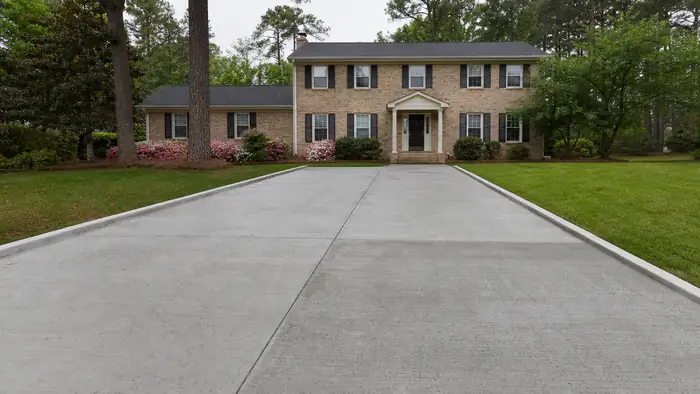
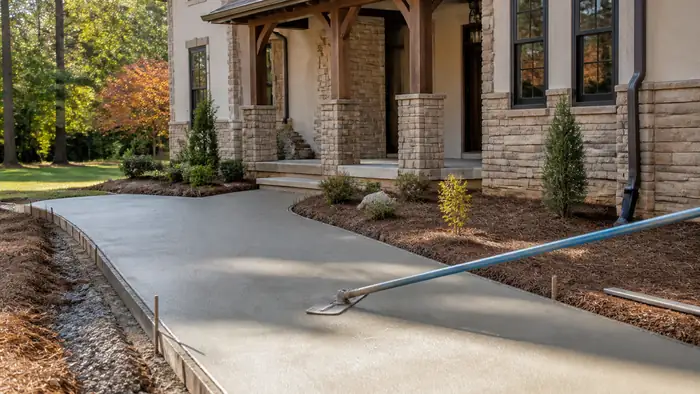
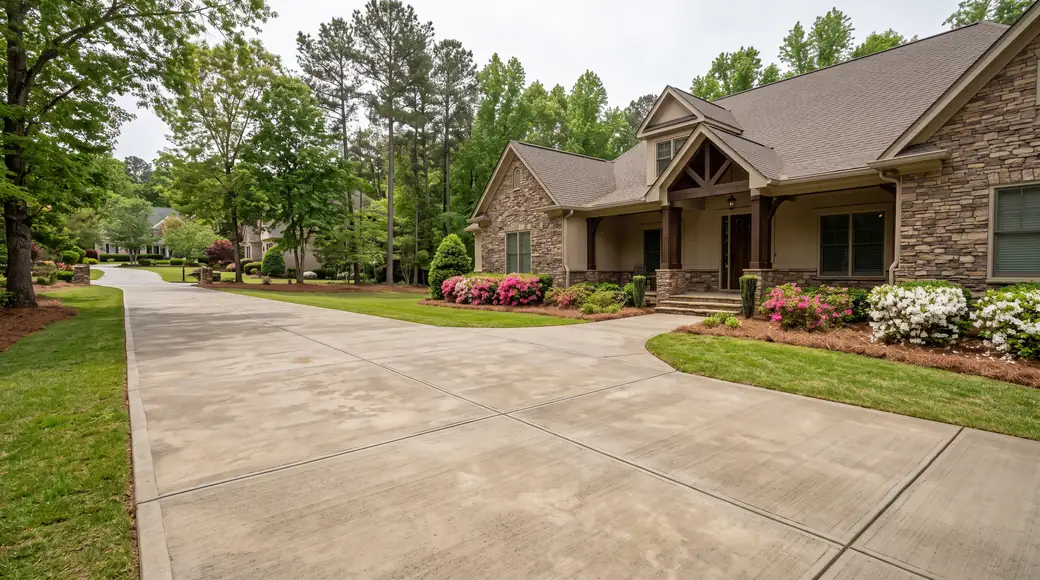
Wide view of finished concrete flatwork across the front of a home at a stacked-stone and stucco home in Marietta, GA, under bright midday cloud.

Concrete Repair Services in Marietta, GA

Concrete repair is the work of fixing a slab that has cracked, settled, spalled or pulled away from the house, without tearing out what can still be saved. Across Marietta, the median home was built in 1986, so plenty of driveways, patios and walkways here have been carrying cars, roots and weather for decades. Some need a patch. Some need a section cut out and replaced. We look at the surface, the base under it and the drainage around it before we tell you which one yours needs.

Every repair starts on site. Cobb County is hilly, though it varies from block to block, so we check how water moves across your property and test the ground under the damaged area before we pick a fix. Then we cut out loose or broken concrete, compact and correct the base, set reinforcement where the load calls for it, and pour to match the slab around it. We handle the permit when the job needs one.

Most repairs that fail were patched over a problem nobody fixed. Water is often the reason: Marietta gets about 59 inches of rain a year, and when it runs under a slab instead of away from it, the base washes out and the concrete follows. A thin skim coat over a sinking section looks fine for a season. Getting it right means fixing the drainage and the base first, then the surface. That is the repair we do, on homes and on the commercial frontage around Marietta Square. Call for a free estimate.

Call +1 470-666-7021

Get Free Estimates

What Is Included in Concrete Repair Services

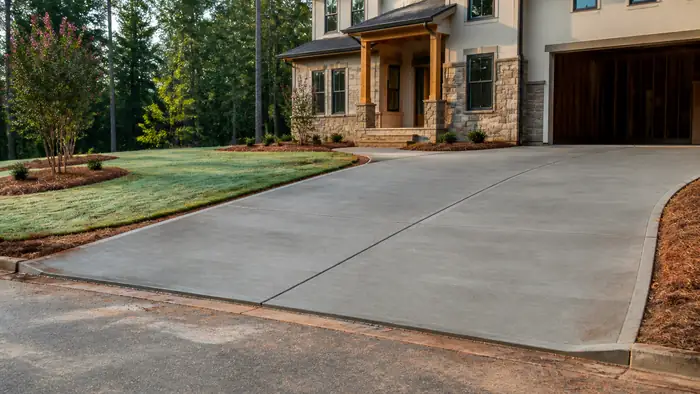
concrete slab installation completed by a local contractor at a stacked-stone and stucco home in Marietta, GA, in early morning light.

Concrete Slab Installation Cost

The price of a slab is set mostly by what sits under it and what goes on top. Excavation depth, how much fill a sloped lot needs to come level, the thickness the load calls for, and whether it takes wire mesh or tied rebar all move the figure. So do the finish and how close the truck can get. We grade and test every site before we write a number, because a quote written without that is a guess. Call for a free estimate.
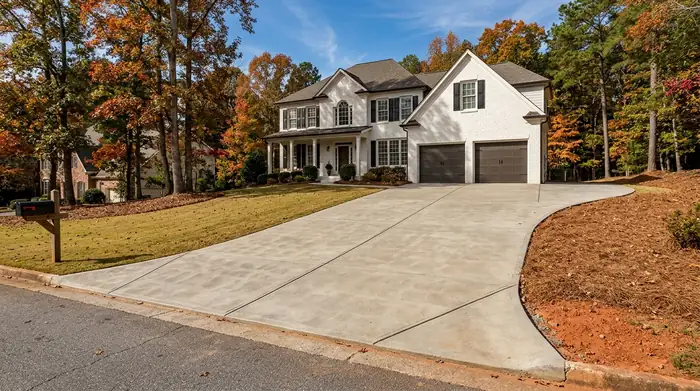
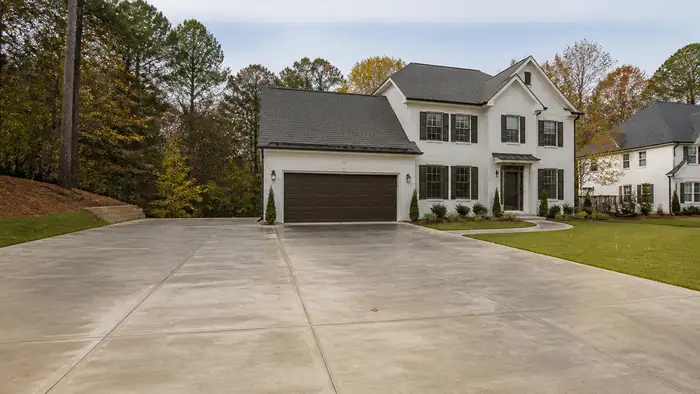
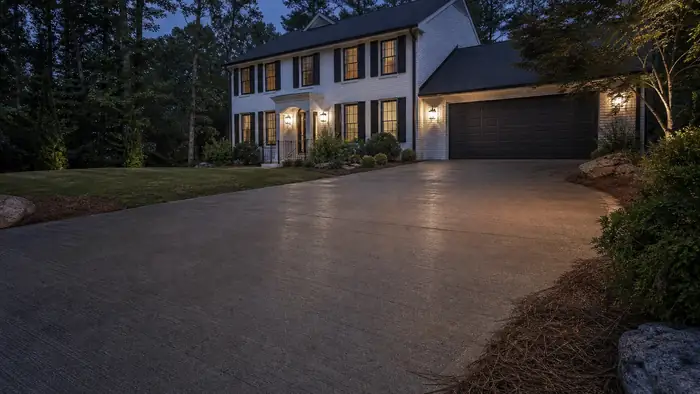
concrete driveway installation completed by a local contractor at a brick-and-siding two-story home in Marietta, GA, in open shade.

Concrete Driveway Installation

A driveway breaks first at the edges and the apron, so that is where we add thickness. We strip the old surface, compact a gravel base, and set forms that pitch water toward the yard, not the garage. With about 59" of rain a year, that pitch matters. Rebar sits on chairs so it ends up mid-slab instead of in the dirt. We finish it broom, exposed aggregate or stamped, and cut control joints before the slab picks its own cracks.

concrete flooring installation completed by a local contractor at a painted-white-brick two-story home in Marietta, GA, under bright midday cloud.

Concrete Flooring Installation

Garage, basement and shop floors are judged by how flat they are, so we screed and trowel them tighter than anything outdoors. A vapor barrier goes down over the compacted base to keep ground moisture from coming up through tile, wood or epoxy later. Wire mesh or fiber reinforcement holds shrinkage cracks tight. The surface can be left hard-troweled, sealed, polished, or prepared for a coating. We plan joint lines around walls, columns and drains so cracks, if they come, follow a straight cut.

concrete slab repair completed by a local contractor at a tan-brick colonial in Marietta, GA, under an overcast sky.

Concrete Slab Repair

The median home in Marietta dates to 1986, and slabs that age show it: settled sections, heaved joints, spalled surfaces, and cracks that keep widening. We find the cause first. Usually it is water getting under the slab or a base that was never properly compacted. Depending on what we find, we rout and seal cracks, patch spalls with a bonded repair mortar, lift sunken sections, or cut out the failed panel and pour a new one doweled into the old.

What Makes Marietta Professional Concrete's Concrete Work Different

We start a repair by finding out why the concrete failed, not by covering the crack. The median home here was built in 1986, so many of the driveways, patios and walkways we look at have been carrying load and shedding water for decades. A slab that has settled, heaved or split usually has a reason under it: a washed-out base, missing reinforcement, a downspout emptying against the edge. Cobb County is hilly, and the ground changes from one block to the next. So we test the soil and check the grade on every property before we quote the work. A patch over an unsolved problem just fails again.

Water does most of the damage we repair. The area sees about 59 inches of rain a year, and on a sloped lot that water finds every joint and low edge. That makes a repair here part concrete, part drainage. We cut failed sections back to sound material, rebuild the base, add reinforcement where the old slab had none, and pitch the surface so water runs off it. Sometimes a slab is still sound. When it is, we say so, and we fix the joint or the edge instead of pouring new. On stamped and decorative surfaces we match color and pattern as closely as the existing concrete allows, and we tell you plainly where a match will show.

Our Concrete Process, Step by Step

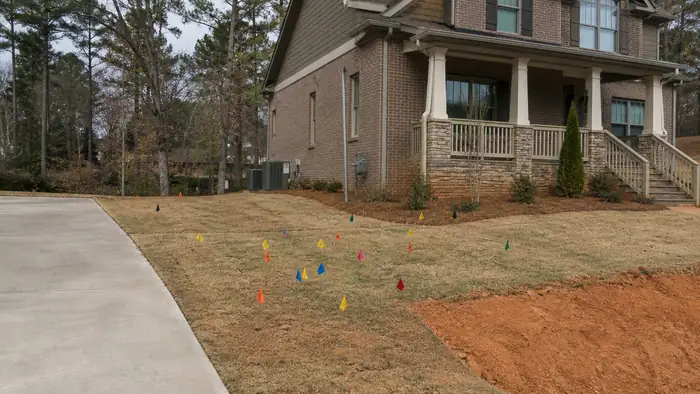
Utility flags mark buried lines before digging starts. at a brick-and-siding two-story home in Marietta, GA, under a hazy afternoon sky.

Step 1: Site Assessment

Before anything gets broken out, we find out why the slab failed. A crack running straight across a driveway is a different problem from an edge that has sunk or a section lifted by roots. We check how water leaves the property, probe where the base has settled, and look for structural movement. The median home here was built in 1986, so many of the slabs we see have decades of settling behind them. Then we tell you plainly whether it needs repair or replacement.

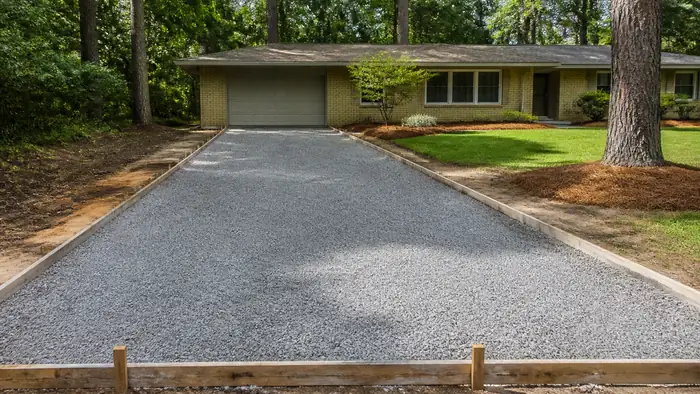
Crushed stone base is raked level inside driveway forms. at a buff-brick ranch home in Marietta, GA, in full afternoon sun.

Step 2: Site Preparation

Failed concrete comes out in sections, saw-cut clean so the new pour meets sound edges instead of a ragged break. Most repairs fail underneath, not on top. We dig out soft or washed-out base, bring in crushed stone, and compact it in lifts with a plate compactor. The dominant soil in Cobb County drains well, but it varies across the county, so we test what is under your slab instead of assuming. The grade gets set so water runs away from the house.

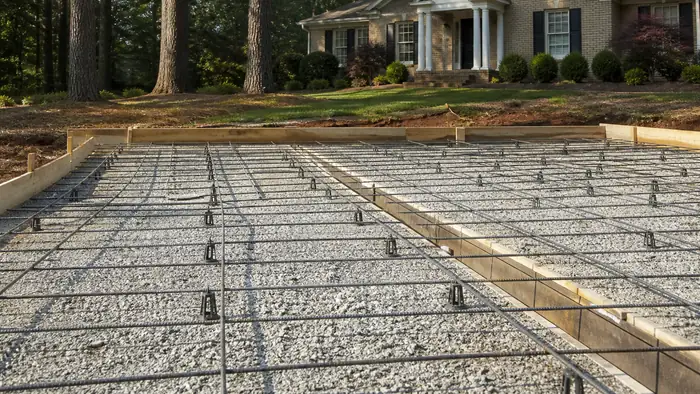
A worker ties rebar into a grid before a residential pour. at a tan-brick colonial in Marietta, GA, in raking morning side light.

Step 3: Forming & Reinforcement

Forms go in next: straight lumber staked tight for runs, flexible forms for curves along walks and patios. We set them to finished grade and check the pitch before any concrete arrives. Reinforcement depends on the load. Driveways get steel rebar set on chairs so it sits in the middle of the slab, not on the dirt. Lighter surfaces may take wire mesh or fiber. Where new meets old, we drill and epoxy dowels into the existing slab so both move together.

A bull float smooths a residential walkway surface after screeding. at a stacked-stone and stucco home in Marietta, GA, in full afternoon sun.

Step 4: Pouring

Mix strength is matched to the job, heavier for a driveway that takes a truck, lighter for a garden walk. Weather decides the day. With about 59 inches of rain a year here, we watch the forecast closely and do not pour into a storm, because rain on fresh concrete weakens the surface for good. Once the truck is on site we move quickly: concrete gets placed, raked into the corners, worked around the reinforcement, and screeded flat off the forms.

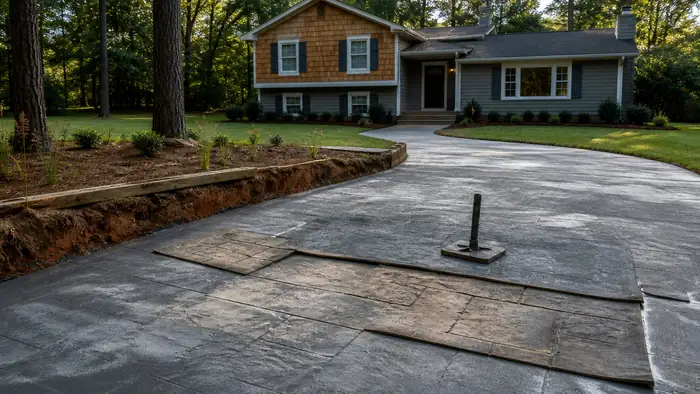
Stamping mats are pressed into a patio surface to imprint a pattern. at a grey split-level home in Marietta, GA, in early morning light.

Step 5: Finishing

Timing matters more here than anywhere else in the process. We bull float the surface, wait for the bleed water to leave, then work it with hand floats and edgers. Finishing too early traps water near the top, and that shows up later as flaking. Control joints get tooled or cut in so the slab cracks where we choose. Driveways and walks usually get a broom finish for grip in the wet, while stamped and decorative patterns are pressed in at this stage.

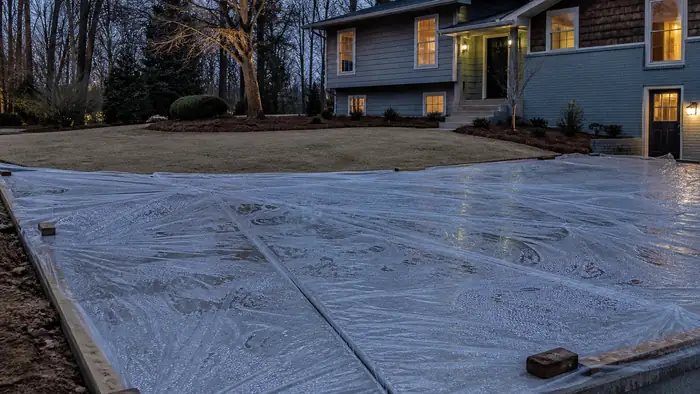
Plastic sheeting covers a curing driveway slab. at a grey split-level home in Marietta, GA, at blue hour.

Step 6: Curing

Concrete keeps gaining strength for weeks after it looks done, and the first few days decide how hard the surface ends up. We keep the slab damp or apply a curing compound so it does not dry from the top down, which is what causes surface cracking and dusting. Warm, windy days make this step matter more. Foot traffic can come back fairly soon. Vehicles wait longer, and we tell you when the driveway is actually ready to drive on.

A sprayer applies sealer across a driveway. at a painted-white-brick two-story home in Marietta, GA, at blue hour.

Step 7: Sealing

Sealer goes on once the concrete has cured enough to take it. A penetrating silane or siloxane sealer soaks into the surface and keeps water out without changing the look, which suits plain residential driveways. Acrylic sealers leave a light sheen and bring out the color in stamped and decorative work. Either one slows staining from oil, leaves and standing water. Sealer wears with traffic and sun, so plan to reapply it every few years to keep the concrete protected.

The Concrete Options Available in Marietta

Most repair work here ends in one of four surfaces: a plain broom finish, stamped concrete, exposed aggregate, or a decorative overlay on existing concrete. Broom finish is the working choice for driveways and walks because it grips in the wet. Stamped patterns suit patios and front entries where the look matters as much as the wear. Exposed aggregate hides stains and scuffs well. An overlay only makes sense when the slab underneath is structurally sound. If it is cracked through or settling, we replace the section instead.

The house often decides the option. With the median home in Marietta built in 1986, much of what we see is original concrete that has done its time: driveways poured with the house, patios added later, walks that have shifted a little each year. The ground here is hilly. A sloped driveway needs a finish that holds traction and reinforcement suited to the grade, while a flat patio gives you more freedom on texture and color. Every site is graded and tested on its own before we recommend anything.

Getting it right is mostly about water. The area sees about 59 inches of rain a year, so any new surface has to shed it away from the house and off the slab edges. That can mean correcting the pitch, adding control joints where the old pour had too few, or sealing a decorative finish that would otherwise soak up moisture. The option you pick matters less than the base under it. We price each project after we have seen it. Call for a free estimate.

Get a Free Estimate

Get Free Estimates

Tap to call +1 470-666-7021