+1 470-666-7021
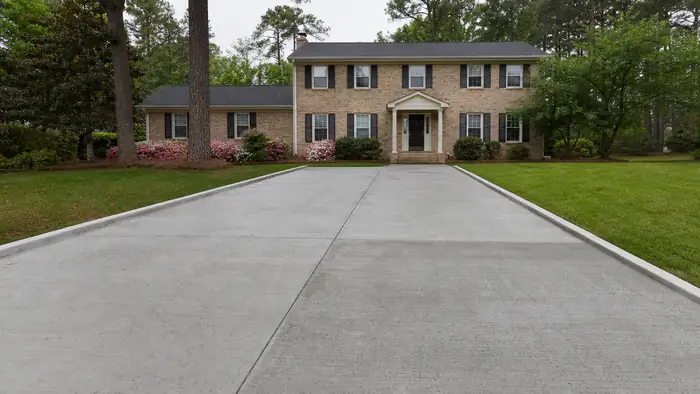
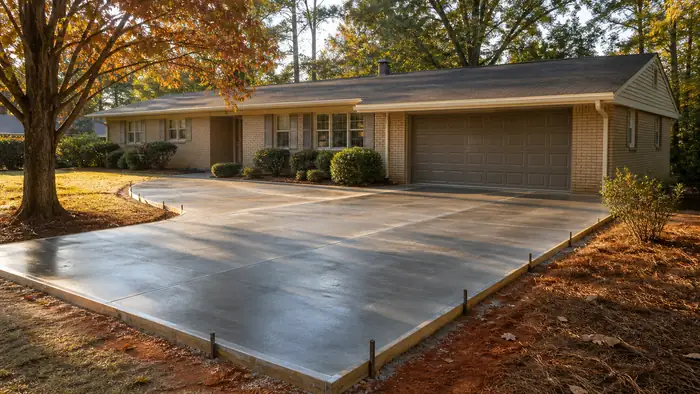
concrete construction services completed by a local contractor at a tan-brick colonial in Marietta, GA, in clear late-morning sun.

Concrete Construction Services in Marietta, GA

We pour and replace concrete for homes and businesses across Marietta: driveways, patios, walkways, slabs, and the structural work underneath them. The median house here was built in 1986, which means a lot of the original concrete has been carrying cars and weather for decades. Some of it still has plenty left. Some of it is cracked through, heaved at the joints, or pitched so water runs toward the foundation instead of away.

Cobb County sees about 59 inches of rain a year, and the ground rarely sits flat, so drainage decides how long a slab lasts. We grade and test every site on its own before forms go down, because slope and soil shift from one block to the next. The base, the reinforcement and the joint spacing get sized to that property, not to a standard sheet. If your concrete is showing its age, call for a free estimate.

Call +1 470-666-7021

Get Free Estimates

What Is Included in Concrete Construction Services

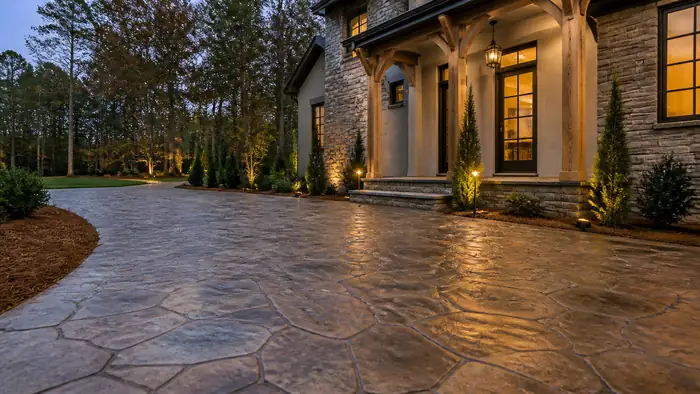
concrete slab installation completed by a local contractor at a stacked-stone and stucco home in Marietta, GA, in early morning light.

Concrete Slab Installation Cost

What a slab costs comes down to how much ground has to move, how thick the slab needs to be, and what goes inside it. A flat lot with easy truck access is simpler than a sloped one where we cut, fill and compact before any forms go down, and Cobb County has plenty of slope. Rebar costs more than wire mesh. A broom finish costs less than stamped or decorative work. Call for a free estimate on your property.
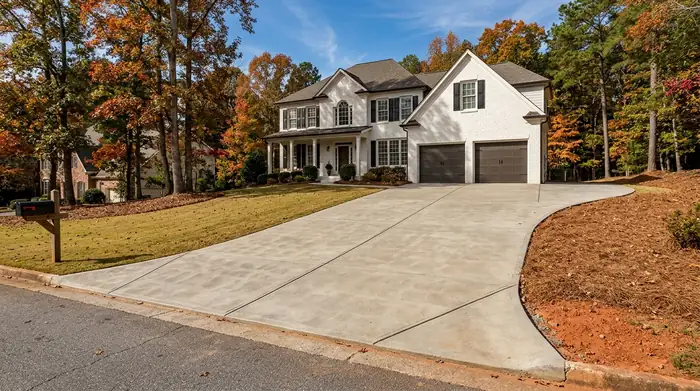
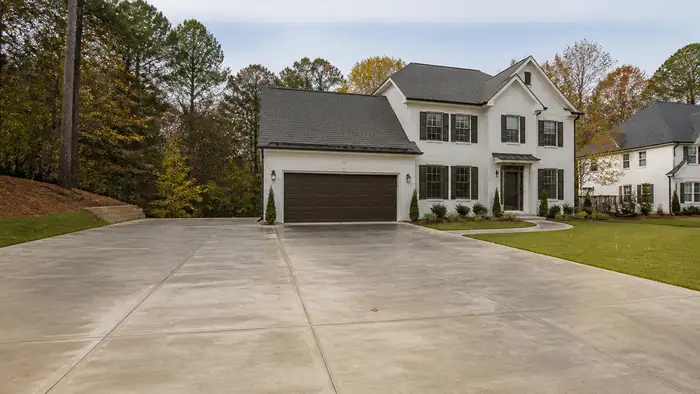
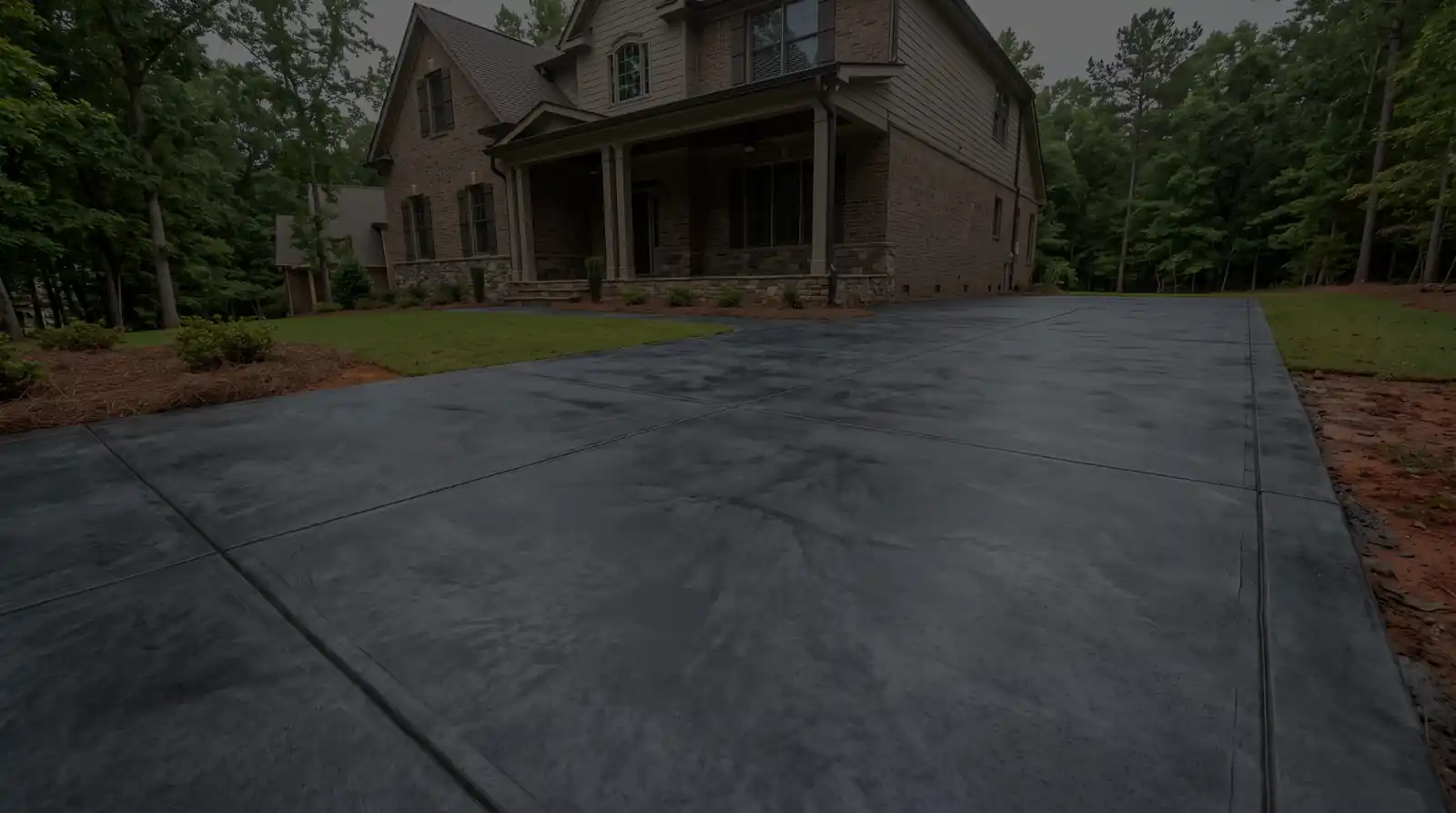
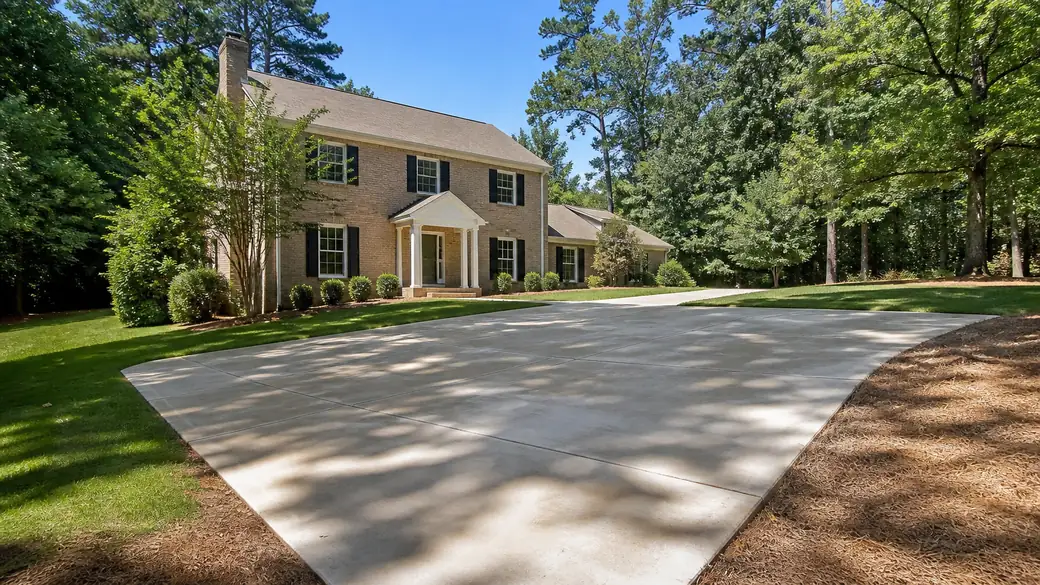
concrete driveway installation completed by a local contractor at a brick-and-siding two-story home in Marietta, GA, in open shade.

Concrete Driveway Installation

A driveway fails from underneath. We strip the topsoil, compact a gravel base, and set forms with enough pitch to carry water away from the garage, which matters in a place that gets about 59 inches of rain a year. Rebar sits on chairs so it ends up in the middle of the slab instead of on the dirt. Control joints go in the same day, so the slab cracks where we choose. Broom finish is standard; stamped is available.

concrete flooring installation completed by a local contractor at a painted-white-brick two-story home in Marietta, GA, under bright midday cloud.

Concrete Flooring Installation

Garage, basement, shop and commercial floors come down to flatness and moisture. We lay a vapor barrier over compacted stone, pour, and power-trowel the surface smooth and hard. Timing on the trowel matters: too early and the surface blisters, too late and it won't close up. Joints are sawn early to control cracking. From there the floor can be left plain, sealed, stained or polished, and it cures fully before anything heavy rolls across it.

concrete slab repair completed by a local contractor at a tan-brick colonial in Marietta, GA, under an overcast sky.

Concrete Slab Repair

Before we patch anything, we find out why it broke. A sunken slab usually means the base washed out or was never compacted. A crack that keeps widening points to roots, a leaking downspout, or a slab poured without reinforcement. Hairline shrinkage cracks can be routed and sealed. When the base underneath is gone, we cut out the bad section, rebuild the base, dowel into the sound concrete on either side, and pour back. Patching over a failure only hides it.

What Makes Marietta Professional Concrete's Concrete Work Different

We don't pour to a standard plan. Cobb County is hilly, with 199 feet of local relief within a few miles, and the ground changes from one block to the next. The dominant soil is Gwinnett, which drains well, but it varies across the county. So every site gets graded and tested on its own before a single form goes in.

The median Marietta home was built in 1986, so a lot of the concrete we tear out has been in the ground a long time. We look at why the old slab failed (a thin base, missing reinforcement, water with nowhere to go) and build against that. With about 59 inches of rain a year, slope and drainage get planned as carefully as the pour.

Our Concrete Process, Step by Step

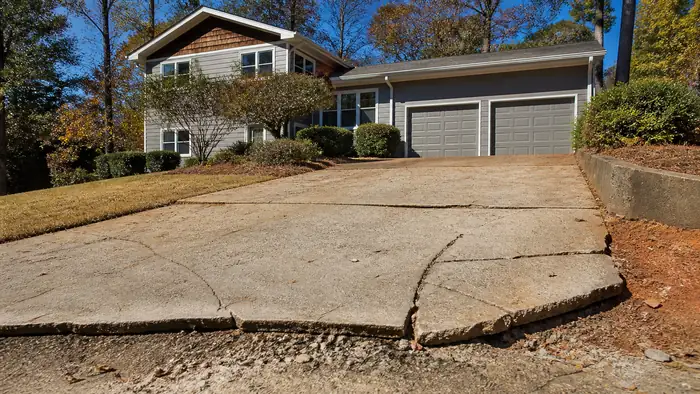
A worker examines an old driveway before replacement. at a grey split-level home in Marietta, GA, in clear late-morning sun.

Step 1: Site Assessment

We walk the property with you, measure the area and look at what is already there. Cobb County is hilly, with 199 feet of relief within a few miles, and the grade changes from block to block, so we shoot elevations on your lot instead of guessing. We test the soil on site too. Gwinnett soil is the dominant type here and drains well, but it varies. We note where water sheds, where roots run and whether an old slab comes out. If a permit is needed, we handle the permit.

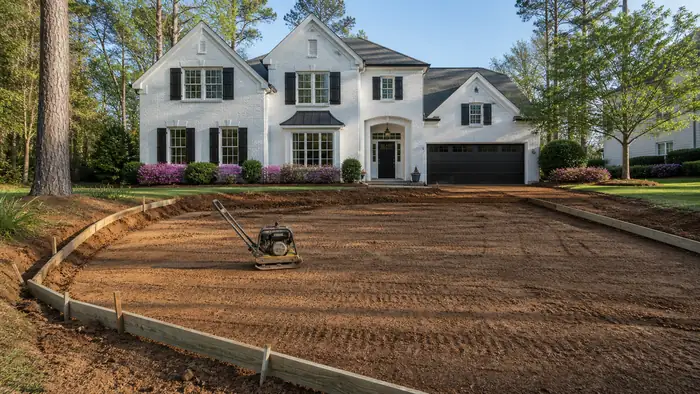
A plate compactor tamps down soil in a small excavated area. at a painted-white-brick two-story home in Marietta, GA, under low winter sun.

Step 2: Site Preparation

Excavation takes out sod, old concrete and any soft or organic soil until we reach firm subgrade. Then we set the grade so water runs away from the house and garage. With about 59 inches of rain a year, a slab pitched the wrong way holds puddles or sends water toward the foundation. We bring in crushed stone for the base, spread it in lifts and run a plate compactor over each one. A lot of cracked slabs trace back to loose fill underneath.

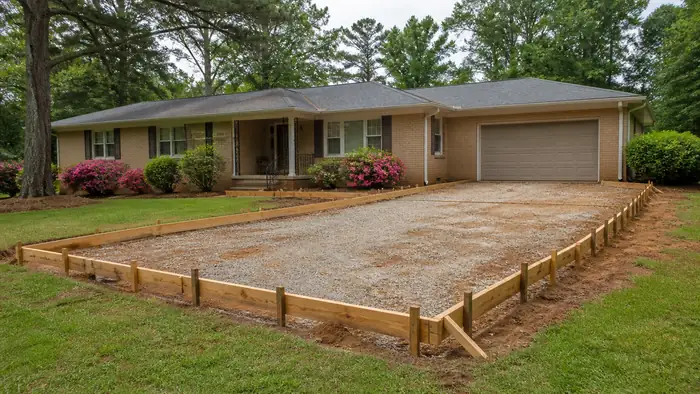
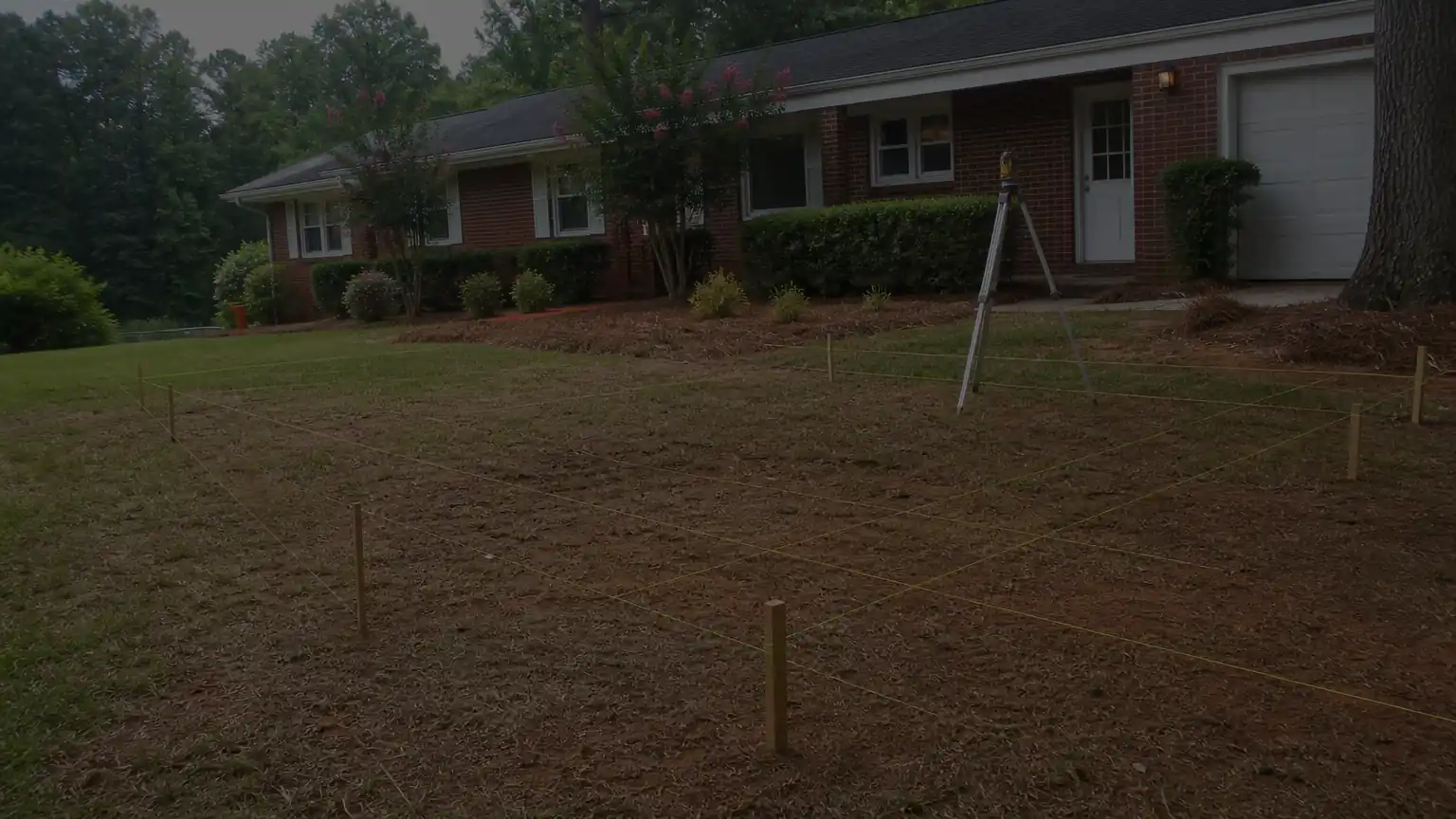
Wooden forms outline a patio slab before the pour. at a buff-brick ranch home in Marietta, GA, under bright midday cloud.

Step 3: Forming & Reinforcement

Straight runs get lumber forms staked tight and checked with a string line. Curves get flexible forms. The top of the forms sets the finished height and pitch, because the screed follows them exactly. Reinforcement depends on the load. A driveway that carries vehicles gets steel rebar tied on a grid and lifted on chairs, so it sits in the middle of the slab instead of lying on the base doing nothing. Patios and walks may get welded wire mesh or fiber in the mix.

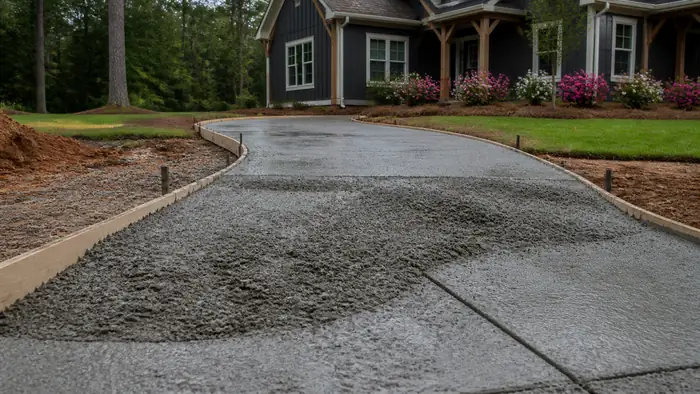
A ready-mix truck discharges concrete into a driveway form. at a charcoal farmhouse-modern home in Marietta, GA, under a darkening storm sky.

Step 4: Pouring

Pour day is planned around the forecast. We order a mix matched to the job and check the slump when the truck arrives. Nobody adds water on site to make it easier to spread, since extra water weakens the surface. The concrete goes in as close to its final spot as possible, gets worked around the steel so there are no voids, and is struck off with a straightedge riding the forms. On a sloped lot we pour from the low end up.

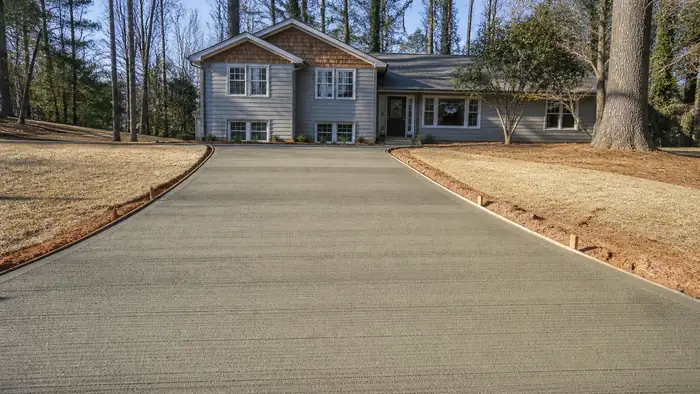
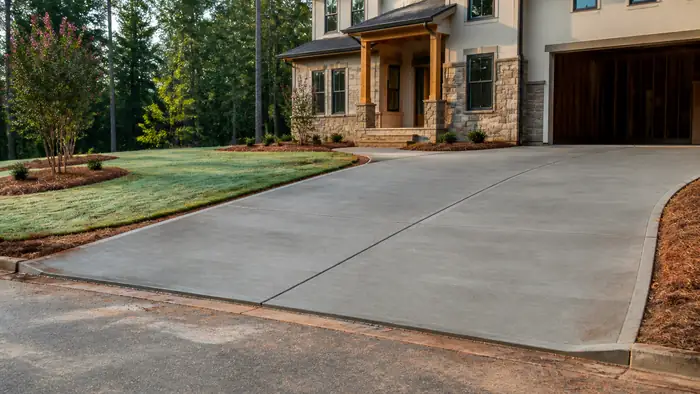
A broom drags across a driveway creating a slip-resistant texture. at a grey split-level home in Marietta, GA, in raking morning side light.

Step 5: Finishing

Timing matters more here than anywhere else. We bull float the surface to bring the cream up, then wait for the bleed water to leave before touching it again. Troweling that water back in is how you get a dusty, flaking top. Edges get rounded with an edger. Control joints are tooled or saw cut so the concrete cracks where we choose. Driveways and walks get a broom finish for traction. Stamped work gets its color, release and texture mats at this stage.

A hand sprayer applies curing compound to a finished patio. at a buff-brick ranch home in Marietta, GA, in late afternoon light.

Step 6: Curing

Curing is the step people skip, and it shows years later. Concrete keeps gaining strength for weeks, and it needs moisture to do that. We spray on a curing compound or cover the slab so the surface does not dry out ahead of the core. Average highs around 72°F make the work fairly forgiving, but a hot, windy afternoon still pulls moisture out fast. Foot traffic stays off at first, vehicles stay off longer, and we tell you when for your slab.

A finished stamped surface shows a glossy sealed sheen. at a stacked-stone and stucco home in Marietta, GA, at blue hour.

Step 7: Sealing

Sealer goes on once the slab has cured and dried, not before. On plain broom-finished concrete we usually use a penetrating silane or siloxane sealer. It soaks in, repels water and leaves no film to wear off. Stamped and decorative surfaces get an acrylic sealer that deepens the color and protects the pattern. Acrylic can get slick when wet, so we mix in a grit additive where people walk. Resealing every few years keeps water, oil and stains from working into the surface.

The Concrete Options Available in Marietta

Most Marietta properties call for one of four kinds of work: a plain broom-finished driveway, a patio, a stamped or decorative surface, or a structural slab for a garage, shed or addition. Broom finish is the workhorse. Its texture gives tires and shoes grip on a wet morning. Stamped concrete takes a pattern and color while it is still wet, so a patio can read as stone, slate or brick. Commercial work uses the same materials on a larger footprint.

The lot decides more than the catalog does. Cobb County is hilly, and with about 59 inches of rain a year, water has to go somewhere, so we set the slope of every slab before we talk finish. Reinforcement follows the load: rebar for driveways that carry trucks, mesh or fiber for lighter patios. The median home here was built in 1986, and we look at what the old concrete was doing before we pull it out.

Questions About Concrete Construction Services

What is the typical timeline for permitting, scheduling, and completing a commercial concrete construction job in Marietta?

The permit is usually the longest stretch, and it depends on the scope of the drawings and how much review they need. Once approval is in hand, site work and forming move quickly. Pour days follow the weather. With about 59 inches of rain a year here, we build some slack into every commercial schedule, and we give you a real calendar once the plans are settled rather than a guess up front.

Do I need a permit for concrete construction work in Marietta?

Yes, for nearly all commercial work and for a good share of residential projects too. Structural slabs, new driveways that meet the street, and anything that changes how water leaves the property are the usual triggers. Some small repairs don't need one. We handle the permit as part of the job: the drawings, the paperwork and the inspection visits. You see every document before it goes in, and nothing gets poured before sign-off.

Who are the best concrete contractors for parking lot construction in Marietta?

The good ones talk about the base before they talk about the surface. A parking lot fails from below: poor compaction, thin sections under truck lanes, water with nowhere to go. On hilly Cobb County ground, grading is half the job. Ask any contractor how they slope for drainage, where the joints go, and how thick the slab runs under delivery traffic. We're glad to walk a lot and answer those questions plainly.

How much does commercial concrete construction typically cost per square foot in Marietta?

A per-foot figure given over the phone is a guess, and we would rather not hand you one. Thickness, reinforcement, finish, truck access and the amount of grading all move the number, sometimes by a lot. Slabs of the same size can land far apart depending on what sits underneath them. What we can do is walk the property, measure it, and put a written number on the actual job. Call for a free estimate.

What factors influence the cost of a commercial concrete construction project in Marietta, and how are estimates put together?

Site preparation drives more of the cost than most owners expect. Cobb County has 199 feet of local relief within a few miles, so excavation and fill vary from one lot to the next. Soil changes across the county too, which is why we test every site. After that come slab thickness, reinforcement, finish, joint layout and access. We build the estimate line by line from measurements taken on site, so each part of the work is visible.

How much does concrete pool deck construction cost in Marietta, GA?

That comes down to the deck more than the pool. Size, shape and finish all change the number, and a stamped or decorative surface costs more to place than a broom finish. The median home here was built in 1986, so tearing out an older deck is often part of the work. Drainage matters as much as looks: the deck has to shed rain away from the water and the house. We price it after seeing the yard.

Get a Free Estimate

Get Free Estimates

Tap to call +1 470-666-7021