+1 470-666-7021
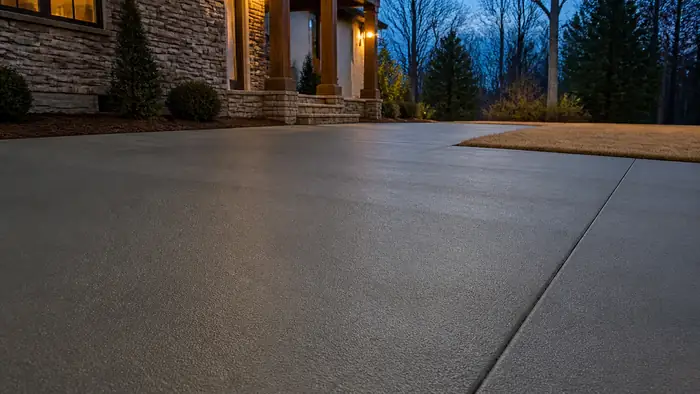
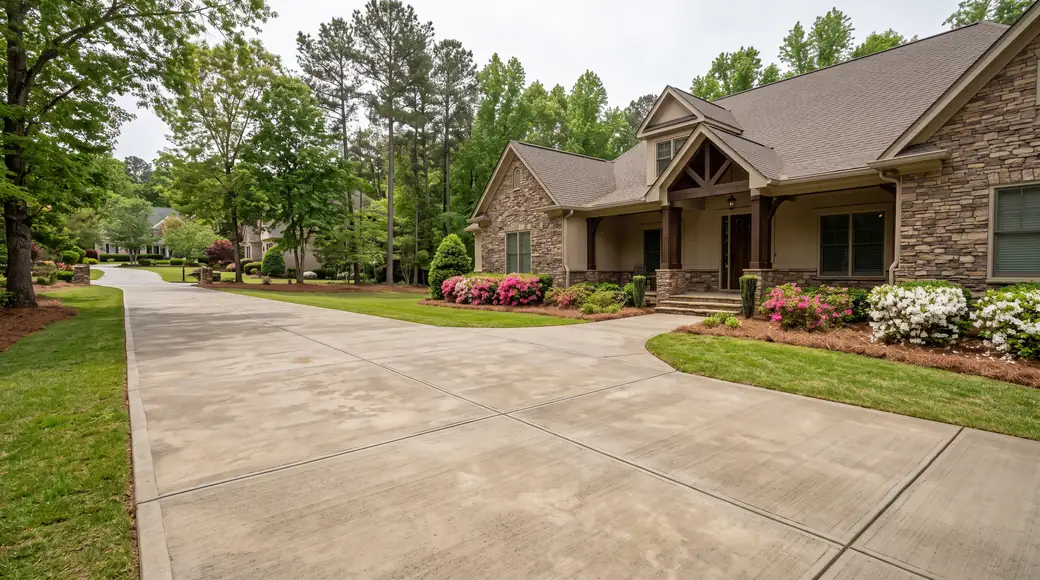
Wide view of finished concrete flatwork across the front of a home at a stacked-stone and stucco home in Marietta, GA, under bright midday cloud.

Stamped Concrete Installation in Marietta, GA

Stamped concrete is a structural slab first and a decorative surface second. We pour it, set the reinforcement, and while the top is still workable we press a pattern into it so it reads as stone, brick, slate or wood plank. Color goes in with the materials or onto the surface before stamping, which makes the finish part of the concrete rather than a coating sitting on it. In a city where the typical house went up around 1986, that often means a new patio out back, a pool deck, a front walk, or a driveway that has simply worn out. Done right, it is one solid piece that looks laid by hand.

The pattern is what people notice. The ground under it decides how long it lasts. Cobb County is hilly, with 199 feet of local relief within a few miles, and the slope changes from one lot to the next, so we grade and test every site on its own before work starts. The soil here is mostly well drained, though that varies across the county too. About 59 inches of rain a year will find any low spot we leave behind. That is why pitch and drainage get settled before texture does. A good stamp on a poor base still fails. Call us for a free estimate.

Call +1 470-666-7021

Get Free Estimates

What Is Included in Stamped Concrete Installation

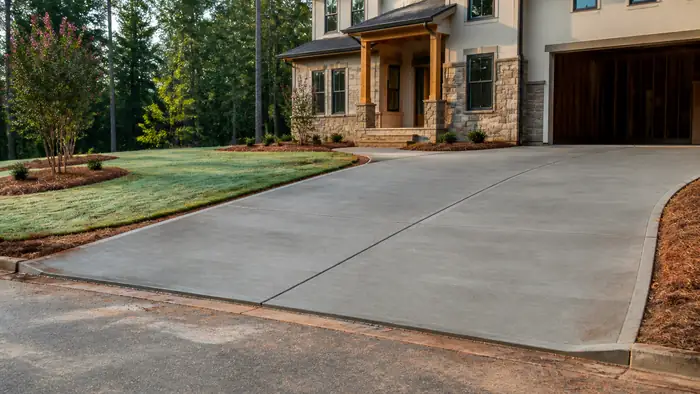
concrete slab installation completed by a local contractor at a stacked-stone and stucco home in Marietta, GA, in early morning light.

Concrete Slab Installation Cost

What a slab costs comes down to what sits under it and around it. We price the excavation, the compacted stone base, the forms, the rebar or wire mesh, the concrete itself and the finish, and each one gets its own line on the estimate so you can see where the money goes. On a hilly lot, grading and fill can matter as much as the pour. Stamping adds color, release agent and sealer. Call for a free estimate; we measure the site before we price anything.
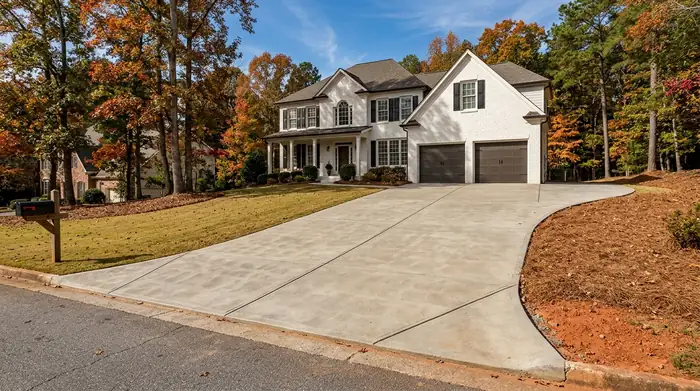
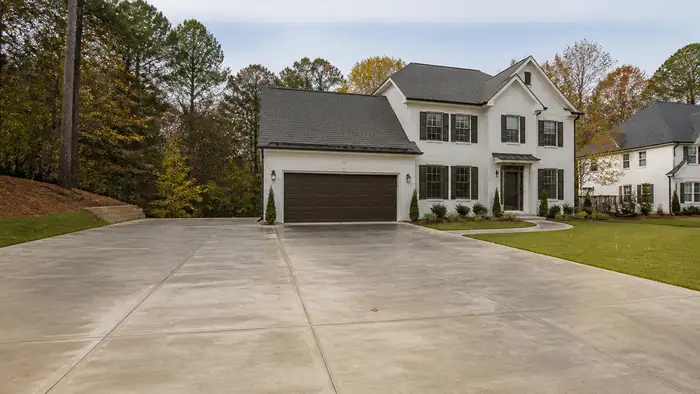
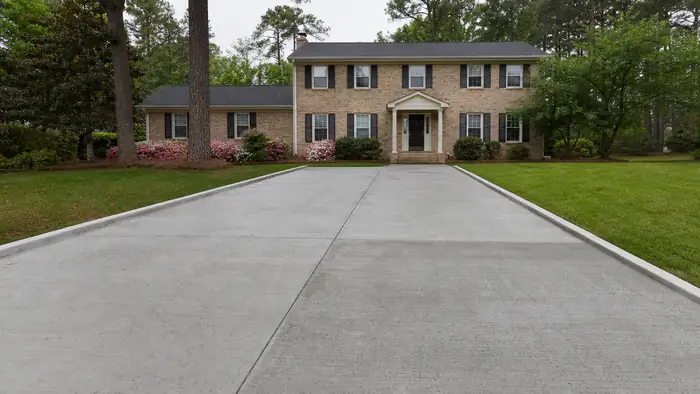
concrete driveway installation completed by a local contractor at a brick-and-siding two-story home in Marietta, GA, in open shade.

Concrete Driveway Installation

A driveway carries cars, delivery trucks and the odd trailer, so we pour it thicker than a patio and reinforce it with rebar. We break out the old surface, haul it off and compact a stone base before any concrete arrives. Control joints are cut to suit the slab, which is how a driveway cracks where we choose instead of where it wants. On a sloped Marietta lot we set the pitch so about 59 inches of rain a year runs off, not toward the garage.

concrete flooring installation completed by a local contractor at a painted-white-brick two-story home in Marietta, GA, under bright midday cloud.

Concrete Flooring Installation

Garages, basements, workshops and small commercial spaces get the same care as outdoor work. Under an interior slab we lay a vapor barrier over the compacted base so ground moisture stays out of the floor and away from whatever sits on it. The finish follows the use: a hard steel trowel for a garage, a broom texture where footing matters, stamped or stained concrete for a room people live in. In a house built around 1986, we check the existing footings and drainage before tying into them.

concrete slab repair completed by a local contractor at a tan-brick colonial in Marietta, GA, under an overcast sky.

Concrete Slab Repair

Not every cracked slab needs to come out. Hairline shrinkage cracks can be routed and sealed. Settled sections, heaved joints and spalled surfaces mean something failed underneath, usually a washed-out base or water with nowhere to go, and patching the top will not fix that. We find the cause first, then tell you plainly whether repair or replacement makes sense. Where we replace a section, we dowel the new concrete into the old so the two move together instead of splitting apart.

Our Concrete Process, Step by Step

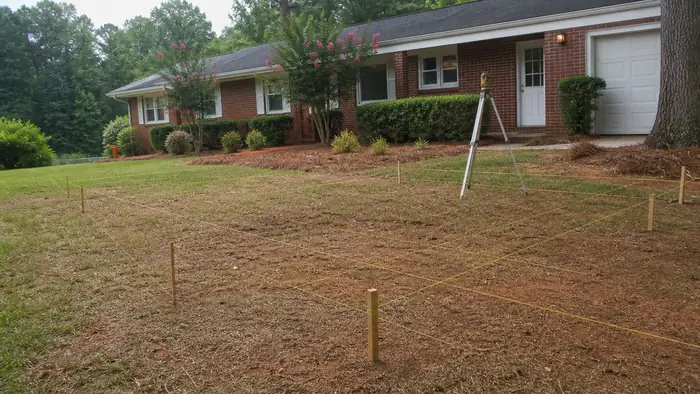
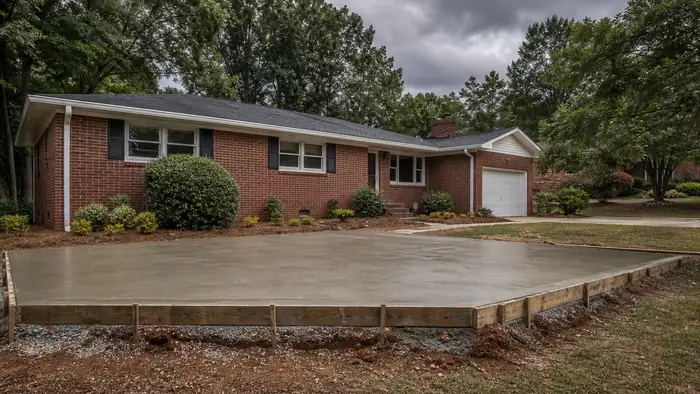
A contractor checks slope and drainage before work begins. at a red-brick ranch home in Marietta, GA, under a hazy afternoon sky.

Step 1: Site Assessment

Before any form goes down, we walk the property with you and watch where water runs when it rains. Cobb County is hilly, with 199 feet of local relief within a few miles, so slope shapes most jobs. We test the soil on every site, because the dominant Gwinnett soil drains well but changes from one yard to the next. We also settle pattern, color and where the slab meets the house. If the work needs a permit, we handle it.

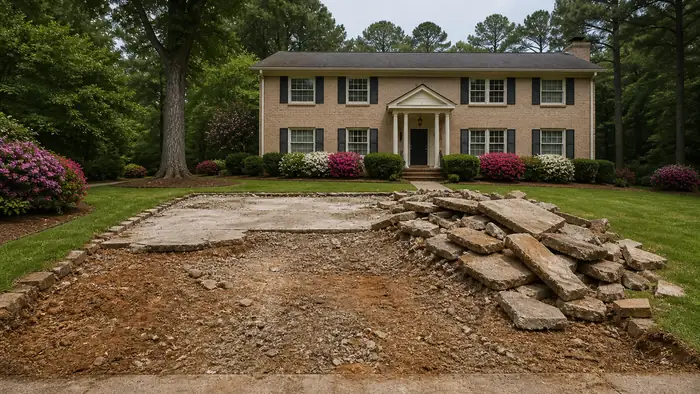
An old patio slab is broken up and hauled away. at a tan-brick colonial in Marietta, GA, under a hazy afternoon sky.

Step 2: Site Preparation

Most failures in stamped concrete start here, not at the finish. We dig out sod, roots and soft topsoil, then cut the grade to a steady fall away from the foundation. The subgrade gets compacted in lifts with a plate compactor. A crushed stone base goes on top and gets compacted too. With about 59 inches of rain a year, a patio that holds water against the house becomes a real problem. The pitch is set before anything else goes in.

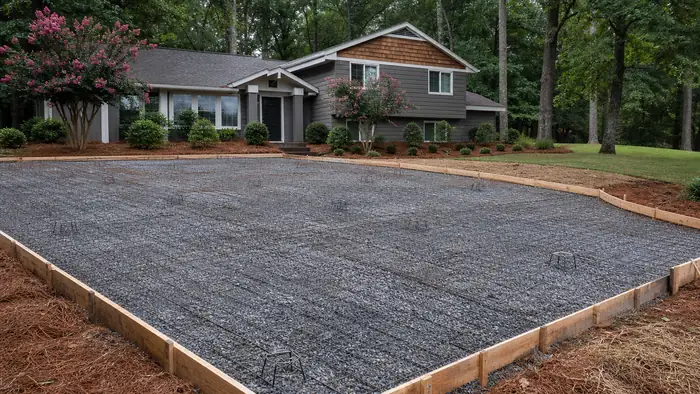
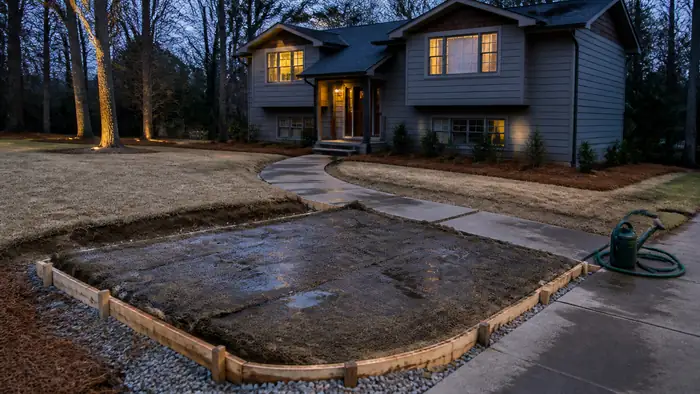
Wire mesh is unrolled across a driveway base before pouring. at a grey split-level home in Marietta, GA, after a rain shower.

Step 3: Forming & Reinforcement

Forms are set to string lines and staked tight. Curves for walkways and patio edges get bent from flexible form board. Depth follows the load: a patio carries foot traffic, a driveway carries tires, and the driveway gets more concrete under it. Rebar or wire mesh sits on chairs so it ends up in the middle of the slab, not pressed into the dirt at the bottom where it does nothing. Isolation joint material goes wherever the new slab meets the house.

A screed board levels fresh concrete on a small patio. at a red-brick ranch home in Marietta, GA, under a darkening storm sky.

Step 4: Pouring

Pour day is about timing. Stamped work leaves a narrow window between placing the concrete and pressing the pattern, so we size the crew to the slab and schedule the truck around it. The mix is placed, screeded to the forms and bull floated flat. Color goes in either as integral color mixed at the plant or as a color hardener broadcast by hand onto the wet surface. Extra water at the chute makes placement easier and the surface weaker, so we leave it out.

A hand trowel smooths a small patio surface to a hard finish. at a stacked-stone and stucco home in Marietta, GA, at blue hour.

Step 5: Finishing

This is where the pattern goes on. Once the surface holds a footprint without sinking, we dust on release agent and lay the stamping mats in sequence, walking each one in so its seams line up with the last. Edges and corners get flex mats and hand tools. Stamp too early and the pattern slumps. Stamp too late and it tears. Control joints are tooled or cut in to decide where the slab cracks, since all concrete does.

Damp burlap covers a small slab section during curing. at a grey split-level home in Marietta, GA, at blue hour.

Step 6: Curing

Concrete keeps gaining strength for weeks after the pour, and the first days decide a lot about the finished surface. We keep the slab from drying out too fast with a curing compound that is compatible with the sealer to come. Average daily highs here run around 72°F, and on warm, windy days a fresh slab gives up moisture quickly. Rushing this stage is how surfaces dust and scale. Foot traffic comes back first, cars later, and we tell you when for your slab.

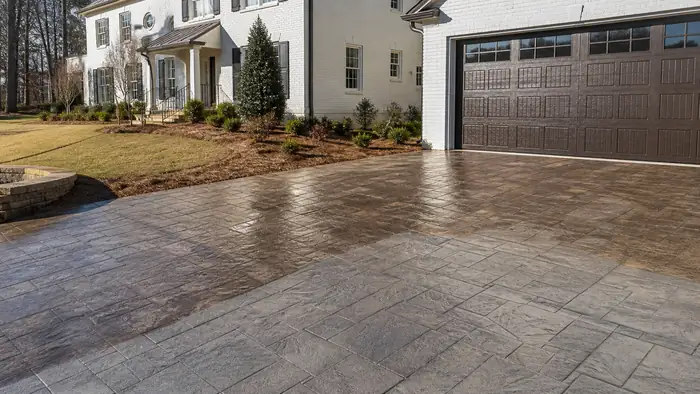
A roller applies sealer to a stamped patio surface. at a painted-white-brick two-story home in Marietta, GA, under low winter sun.

Step 7: Sealing

After the cure, we pressure wash off the leftover release agent and roll on a sealer, usually an acrylic in clear or lightly tinted. Sealer deepens the color, brings out the antiqued look the release leaves in the low spots, and keeps oil and leaves from staining the surface. Stamped concrete gets slick when wet, so on pool decks and steps we mix a grit additive into the sealer. Resealing every few years keeps the finish looking the way it did when we left.

The Concrete Options Available in Marietta

Stamped concrete comes in more patterns than most people expect. We pour ashlar slate, random flagstone, cobblestone, European fan and wood plank, and any of them can go on a driveway, a patio, a walkway or a pool deck. Color goes in two ways. Integral color is mixed through the whole slab, so a chip or scrape shows the same shade underneath. A color hardener is broadcast onto the fresh surface for a denser, brighter top layer. Then a release agent in a second tone settles into the joints and texture, and that contrast is what gives the stone look its depth. Borders in a different pattern are common too.

Picking among them is mostly about the house. The median Marietta home was built in 1986, and on a house that has settled into its look, a quieter slate or flagstone in an earth tone usually fits better than a bold pattern. Wood plank suits a back patio more than a front drive. We also pour plain broom finish and exposed aggregate where stamping is not the right call, and sometimes a stamped border around a broom-finished field is the better use of the work. With about 59 inches of rain a year, we keep the texture deep enough to hold footing when wet. Every stamped surface gets sealed. Samples are worth seeing against your own house before anything is decided.

How Much Does Stamped Concrete Installation Cost in Marietta?

Stamped concrete is priced off the site, not off a chart. The pattern and color matter less than most people expect. What moves the price is the work that happens before the stamp touches wet concrete: what has to come out, how the concrete gets to the forms, and what the ground and the water on your property ask of the base.

What changes the priceWhich wayWhy
An old slab, pavers or gravel already in placecosts moreBreaking it out and hauling it away is labor and disposal before any new work starts. The median home here was built in 1986, so there is often something to remove.
Truck access to the pourcosts more when blockedA mixer that can back up to the forms chutes straight in. A fence, a narrow side yard or a finished lawn means a pump or wheelbarrows.
Slope across the work areacosts moreCobb County is hilly, and a sloped yard needs cut, fill or a step before a level patio can go down.
Slab thickness and reinforcementcosts more for drivewaysA driveway carries vehicles and needs more depth and steel than a patio that carries a table.
How water leaves the sitecosts more if it poolsWith about 59" of rain a year, the surface has to shed water. Correcting the pitch or moving a downspout becomes part of the job.
Tree roots and buried linescosts moreRoots get cut back, and irrigation or utility lines found in the dig get worked around.
Borders, second patterns and curvescosts moreEach one adds forming and hand stamping while the concrete is still workable.

Put competing bids side by side on the same points: slab thickness, reinforcement, base preparation, tear-out and haul-away, the number of colors and patterns, and sealing. A lower bid that leaves one of those out is a smaller job, not a better price.

Questions About Stamped Concrete Installation

How long does stamped concrete last?

A well-built stamped slab lasts for decades, and what decides that is the slab under the pattern. We grade and test every site before we pour, set the reinforcement the job calls for, and cut control joints where the concrete wants to crack anyway. The color and pattern hold up best with a fresh coat of sealer every few years. With about 59 inches of rain a year here, that sealer earns its keep.

Do I need permits for stamped concrete patios in Marietta?

No, not for every patio, but some projects do need one. It depends on the size of the slab, where it sits on the lot, and whether it ties into the house or changes how water runs off the property. We look at all of that during the estimate. Where a permit is required, we handle the permit, so you are not left sorting out paperwork on your own.

What does stamped concrete cost in Marietta, GA?

That depends on the patio in front of us. Square footage matters, but so do the pattern, how many colors go into it, how much grading the site needs, and how easily we can get materials to the pour. A single-color pattern on a flat, open yard is one kind of job. A multi-tone slate pattern on a sloped lot is another. Call for a free estimate and we price it from real measurements.

What is the difference between stamped concrete and exposed aggregate?

Stamped concrete gets its look from the top. We color the surface, press textured mats into it while it is still workable, and the finished slab reads as stone, slate or brick. Exposed aggregate goes the other way: we wash off the top layer of paste to reveal the gravel mixed through it. The result is rougher, grippier underfoot and more casual. Both are decorative surfaces, and both get sealed.

What's the difference between stamped concrete and regular concrete?

Underneath, very little. Both start with the same base, the same reinforcement and the same pour. The difference is what happens in the short window after placement, while the surface is still soft enough to shape. For stamped work we add color, spread a release agent, and press the pattern in by hand before the concrete sets. Regular concrete gets a broom finish and is done. Stamped takes more crew, tighter timing and a sealer.

Will Marietta Professional Concrete take care of our city permits and inspections?

Yes. Permits and inspections are part of the job, not something we hand back to you. We handle the permit where the project needs one, keep the paperwork straight, and have the forms and reinforcement ready to be looked at whenever an inspection is called for. Whether your home is in Marietta or in Smyrna, the process is the same, and you never have to chase it yourself.

Get a Free Estimate

Get Free Estimates

Tap to call +1 470-666-7021