+1 470-666-7021
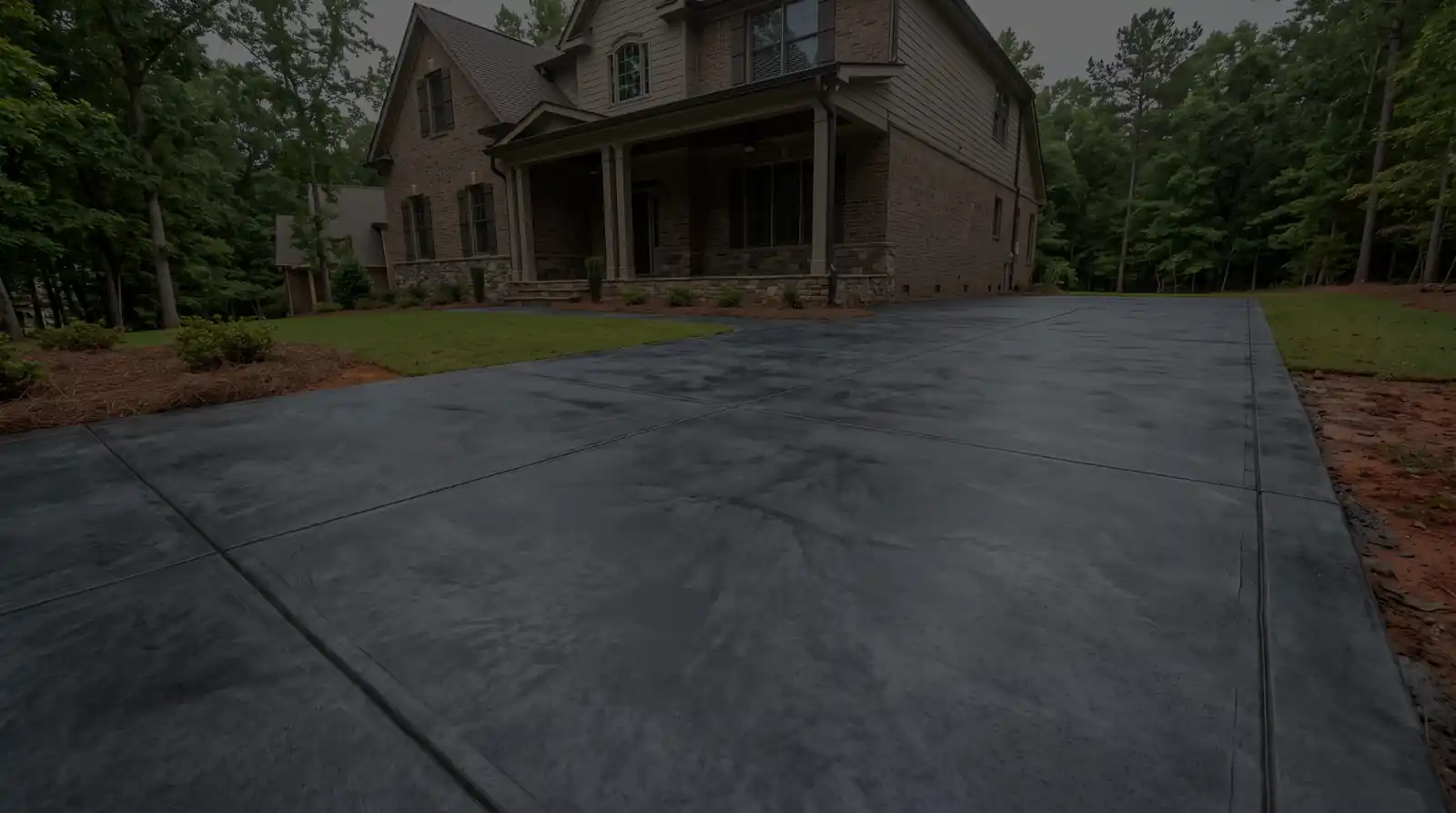
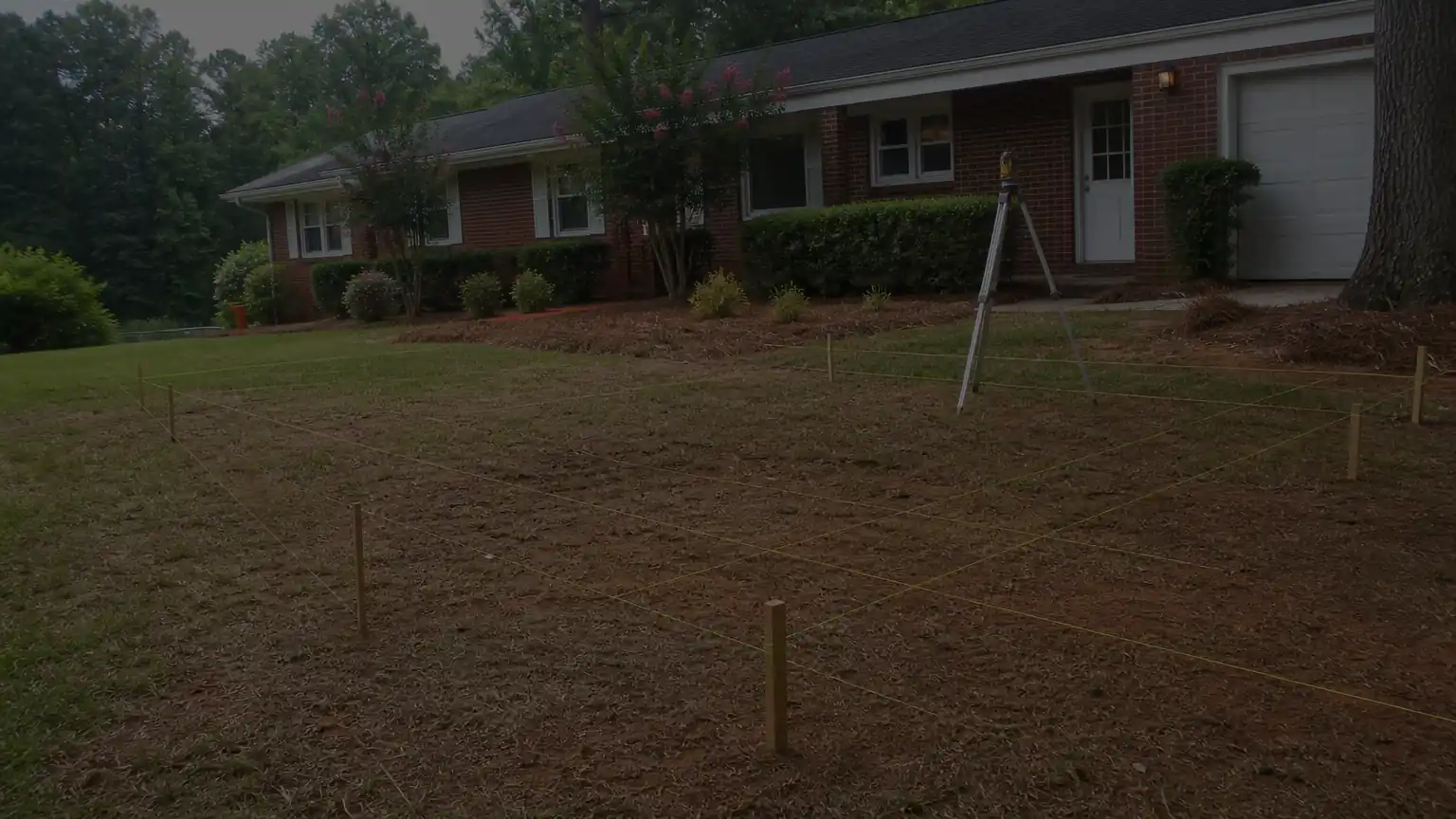
concrete slab repair completed by a local contractor at a tan-brick colonial in Marietta, GA, under an overcast sky.

Concrete Slab Repair in Marietta, GA

A cracked or sunken slab is usually telling you something about what sits underneath it. Concrete slab repair means finding that cause, fixing the base, and then restoring the surface so it carries weight again. In Marietta, where the median home was built in 1986, plenty of driveways, patios and garage floors have sat on the same ground for decades. Some just need patching. Others need a section cut out and poured new.

Water does most of the damage. Cobb County gets about 59 inches of rain a year, and on a hilly lot that runoff finds the low edge of a slab and works its way under. We look at drainage and grade before we touch the concrete, because a repair poured over the same problem fails the same way. Residential or commercial, the fix matches the conditions on that property. Call for a free estimate.

Call +1 470-666-7021

Get Free Estimates

What Is Included in Concrete Slab Repair

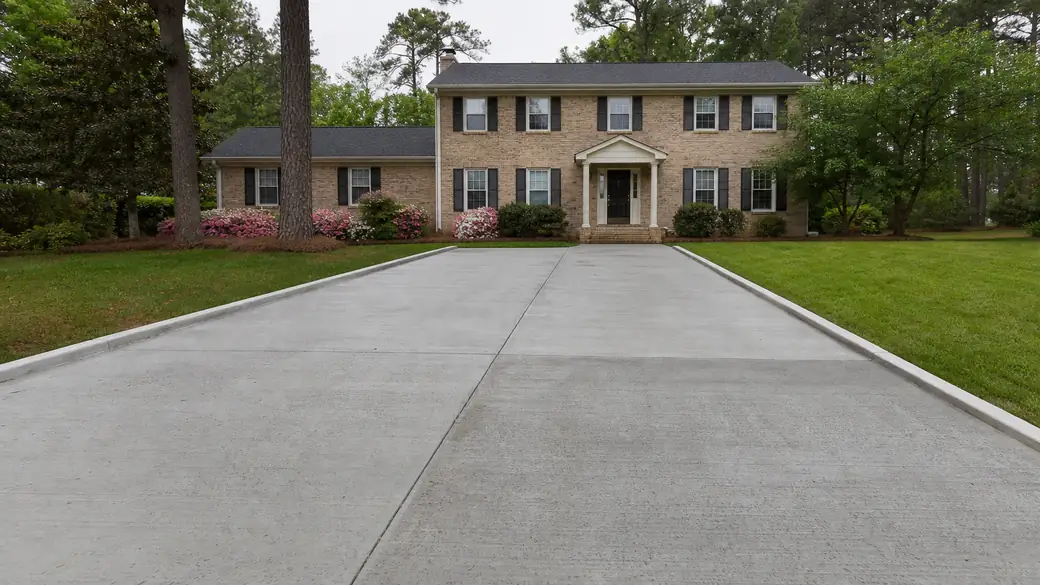
concrete slab installation completed by a local contractor at a stacked-stone and stucco home in Marietta, GA, in early morning light.

Concrete Slab Installation Cost

What a slab costs comes down to what sits under it and what sits on it. Base prep is the big variable: Cobb County carries 199 ft of local relief within a few miles, so on a sloped lot we may be cutting, filling and compacting before any forms go up. Thickness, reinforcement, the finish and how close the truck can get all move the number. We walk the site, test the ground and write an estimate for that property. Call for a free estimate.
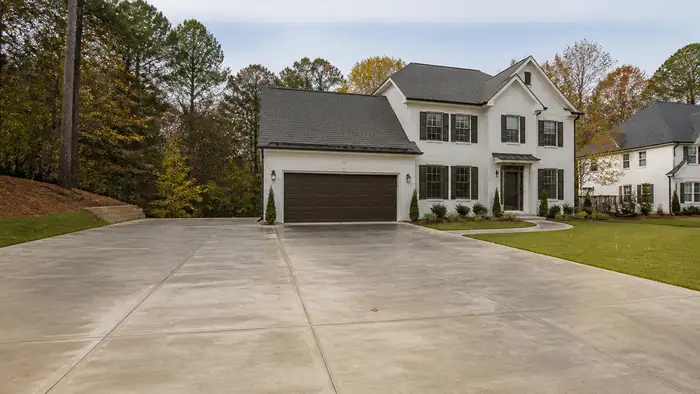
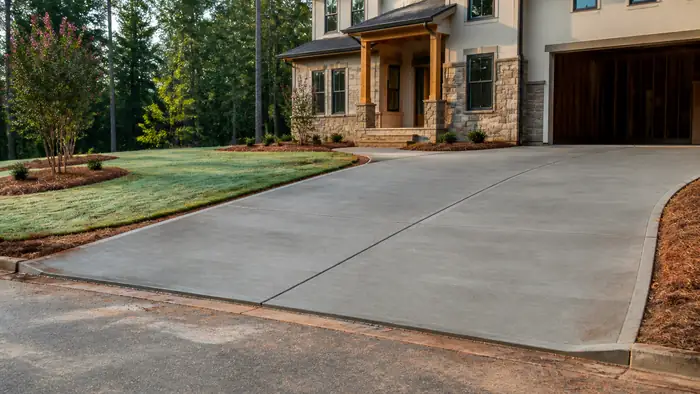
concrete driveway installation completed by a local contractor at a brick-and-siding two-story home in Marietta, GA, in open shade.

Concrete Driveway Installation

A driveway starts with excavation to firm ground and a compacted gravel base, because most driveway failures begin below the concrete. We set the forms to pitch water off the surface and away from the garage, which matters with about 59 inches of rain a year. Rebar or wire mesh sits on chairs so it lands mid-slab, not on the dirt. Control joints get cut before the slab picks its own crack lines. Finishes run from plain broom to stamped and decorative.

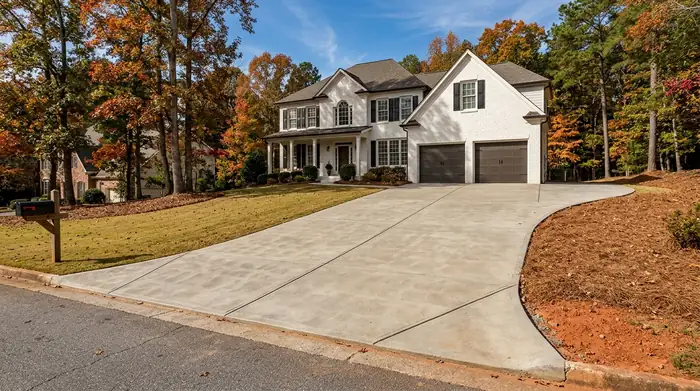
concrete flooring installation completed by a local contractor at a painted-white-brick two-story home in Marietta, GA, under bright midday cloud.

Concrete Flooring Installation

Interior slabs for basements, garages, shops and commercial spaces go down over a compacted base with a vapor barrier underneath, so ground moisture stays out of whatever sits on top. We reinforce for the load the floor will carry, float and trowel it flat, then cure it slowly so the surface does not dust or curl at the edges. The finish follows the use: a hard steel-trowel surface for a garage, sealed or polished for living space, stained where it shows.

Concrete Slab Repair

The median home here was built in 1986, so plenty of slabs have had decades to settle, crack and heave. We start by finding the cause: a washed-out base, a tree root, water pooling at an edge, or a joint that was never cut. Hairline cracks get routed and sealed. Sunken sections can be lifted and the voids filled. Where the base has failed, a patch only hides it, so we cut out the section, rebuild the base and pour new concrete doweled into the old slab.

What Makes Marietta Professional Concrete's Concrete Work Different

We treat every slab as its own problem. The median home in Marietta was built in 1986, and a crack in one house rarely has the same cause as a crack two doors down. Cobb County is hilly, with 199 feet of relief within a few miles, so we grade and test each site on its own before we decide how to fix anything.

Water is the other thing we plan for. The area takes about 59 inches of rain a year, and a lot of slab trouble starts with runoff that has nowhere to go. So we look at drainage, reinforcement and the base under the surface, not just the crack on top. Where a permit is needed, we handle it. When a simple repair will do, we say so.

Our Concrete Process, Step by Step

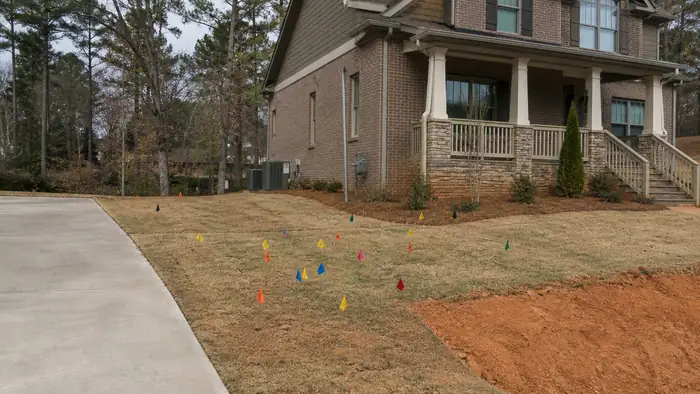
Utility flags mark buried lines before digging starts. at a brick-and-siding two-story home in Marietta, GA, under a hazy afternoon sky.

Step 1: Site Assessment

We start by finding out why the slab failed, because patching a crack without fixing its cause just buys a second one. We look for settlement, hollow spots under the surface, tree roots, and downspouts dumping water at the edge. The median home in Marietta was built in 1986, so many slabs here sit on decades-old base. Soil varies from lot to lot, and every site is tested on its own. If the job needs a permit, we handle the permit.

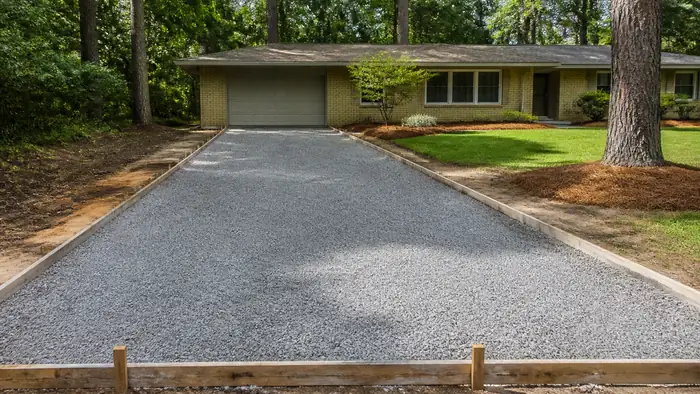
Crushed stone base is raked level inside driveway forms. at a buff-brick ranch home in Marietta, GA, in full afternoon sun.

Step 2: Site Preparation

Old concrete comes out in sections, and we dig past it until we reach firm ground. Soft or wet soil gets removed, not covered. The ground around here is hilly and changes block to block, so we grade each site for runoff and slope the new surface away from the house. Then we lay crushed stone base in lifts and compact each one with a plate compactor. A slab is only as flat and solid as the base under it.

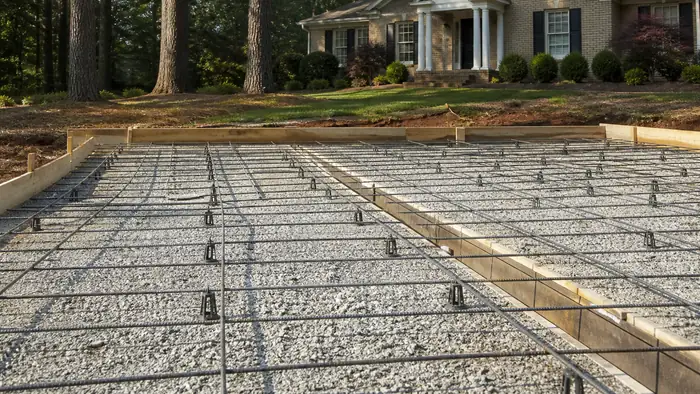
A worker ties rebar into a grid before a residential pour. at a tan-brick colonial in Marietta, GA, in raking morning side light.

Step 3: Forming & Reinforcement

Forms are straight lumber staked to string lines, set to the grade we established during prep. Inside them goes the reinforcement: rebar on a grid, tied at the crossings, or welded wire mesh for lighter residential work. Either way it sits on plastic chairs so it ends up in the middle of the slab, not lying on the dirt. Steel on the ground does nothing. Where new concrete meets an existing slab, we drill and pin dowels so the two move together.

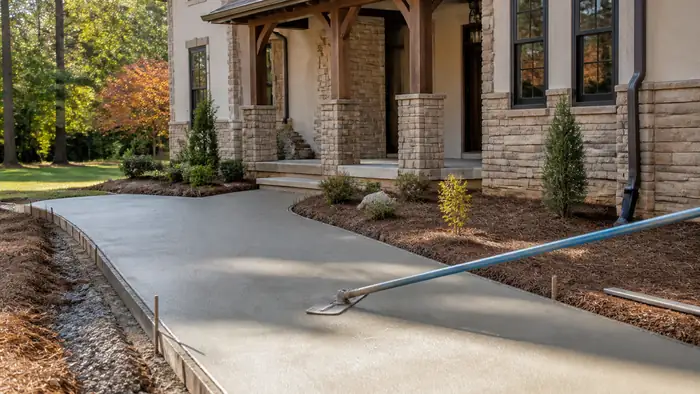
A bull float smooths a residential walkway surface after screeding. at a stacked-stone and stucco home in Marietta, GA, in full afternoon sun.

Step 4: Pouring

A pour runs on the truck's schedule, so the crew, tools and pump are ready before it arrives. We place concrete from the far corner back, working it around the steel so the edges have no voids. Adding water at the chute makes it easier to spread and weaker once it sets, so we don't do it. With about 59 inches of rain a year here, we watch the forecast and move a pour rather than gamble on it.

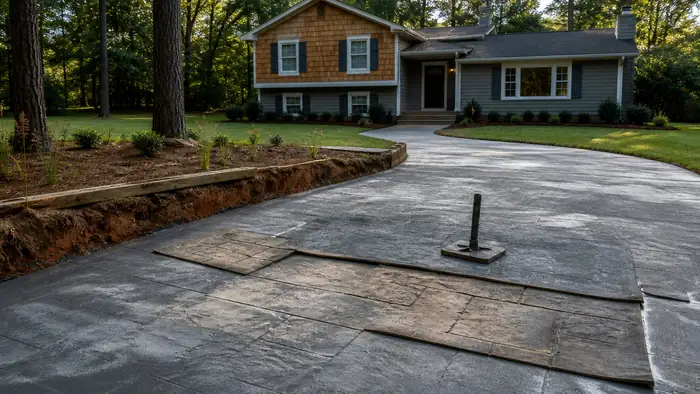
Stamping mats are pressed into a patio surface to imprint a pattern. at a grey split-level home in Marietta, GA, in early morning light.

Step 5: Finishing

Screeding strikes the concrete off flat to the forms, then a bull float pushes the stone down and brings cream to the top. We wait for bleed water to leave before troweling, because finishing too early traps it and the surface flakes later. Driveways and walks get a broom finish for grip. Stamped work gets its pattern now, while the slab is still soft enough to take it. Control joints go in at this stage too, so cracks follow our lines instead of their own.

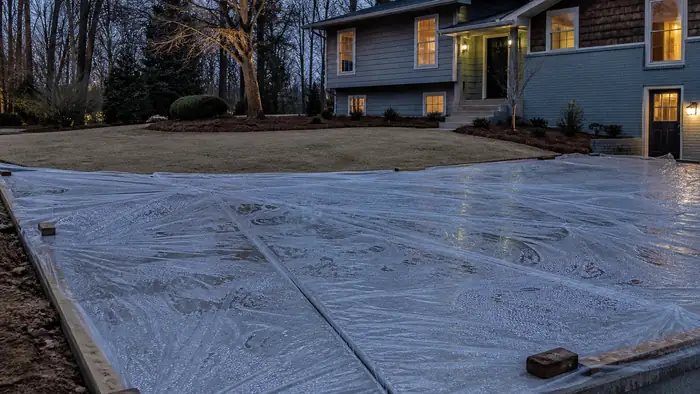
Plastic sheeting covers a curing driveway slab. at a grey split-level home in Marietta, GA, at blue hour.

Step 6: Curing

Plenty of cracked slabs trace back to curing, even though the damage takes a while to show. Concrete keeps gaining strength only as long as it holds moisture, so we keep the surface wet or cover it with a curing compound rather than let it bake dry. Average daily highs here run around 72°F, which is decent curing weather, but a hot, windy afternoon still pulls water out fast. Keep cars off a new driveway until we clear it.

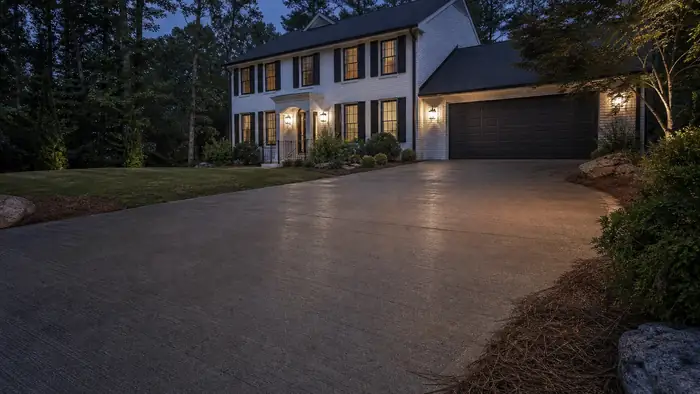
A sprayer applies sealer across a driveway. at a painted-white-brick two-story home in Marietta, GA, at blue hour.

Step 7: Sealing

Once the slab has cured, we clean it and apply a sealer matched to the surface. Plain broom-finished concrete usually gets a penetrating sealer that soaks in and stays slip-resistant. Stamped and colored work gets an acrylic that deepens the color and protects the pattern. Sealer keeps out water, oil and stains, and it slows the surface wear that leaves a driveway dull and pitted. Resealing every few years keeps it doing its job.

The Concrete Options Available in Marietta

Most cracked or sunken slabs don't need tearing out. For hairline and structural cracks, we clean and fill them with a flexible sealant or an epoxy injection, depending on whether the slab is still moving. Where a section has settled, we lift it back to grade by pumping material beneath it. A worn or scaled surface that is otherwise sound can take a bonded overlay, including a stamped or decorative finish on patios.

Replacement is the right call when the base underneath has washed out or the reinforcement has rusted through, because patching over that just moves the failure a few feet. The median home in Marietta was built in 1986, so plenty of slabs here have carried decades of load and around 59 inches of rain a year. We check the base on every job before recommending anything. If a repair will hold, we say so.

Questions About Concrete Slab Repair

How long does concrete slab repair take in Marietta and when can the area reopen?

Most of the waiting is curing, not repair work. Grinding down a raised edge or lifting a sunken section is quick, and people can usually walk on it soon after. Patching and section replacement take longer, because new concrete has to gain strength before it carries a car. When the area reopens depends on the method, the load the surface has to take, and the weather while it cures.

Which concrete slab repair method works best for uneven slabs and trip hazards in Marietta?

It depends on why the slab moved. A small lip at a joint gets ground flush. A section that sank in one piece can often be lifted back to level by filling the void underneath it. Concrete that is broken or crumbling gets cut out and replaced, with new reinforcement tied into the sound slab. Cobb County is hilly and conditions change from block to block, so we test every site before choosing.

How much does concrete slab repair typically cost in Marietta?

Price follows the job: how much of the slab has failed, what caused it, which method fixes it, and how easily equipment can reach it. A trip hazard on a front walk and a settled garage floor are very different projects. We don't quote from a description or a photo, because what is happening under the slab changes the answer. An accurate number starts with seeing it. Call for a free estimate.

What maintenance helps protect a repaired Marietta concrete slab from future damage?

Water is the main thing to manage. Marietta gets about 59 inches of rain a year, so point downspouts and sprinklers away from the slab and keep the soil beside it sloping away. Refill joints and cracks with a flexible sealant when they open. Stamped and decorative surfaces hold up better with regular resealing. Keep heavy loads off the edges, where a slab has the least support beneath it.

What are the warranty or guarantee terms for services provided by Marietta Professional Concrete?

We don't publish warranty terms on this site. Whatever terms apply to a repair belong in writing on the estimate for that job, spelled out plainly: what is covered, for how long, and what is excluded. Read that part before you sign anything, and ask about any line that is unclear. That advice holds for every contractor you talk to, not only us.

Is Marietta Professional Concrete licensed, insured, and bonded?

Ask for proof before any work begins, from us or anyone else. A contractor who carries a license, insurance and bonding can hand you the documents, and you can confirm each one with the issuing body or the insurer directly. Check that the coverage is current and in the same business name that appears on your estimate. It takes a few minutes and protects your property if something goes wrong.

Get a Free Estimate

Get Free Estimates

Tap to call +1 470-666-7021