+1 470-666-7021
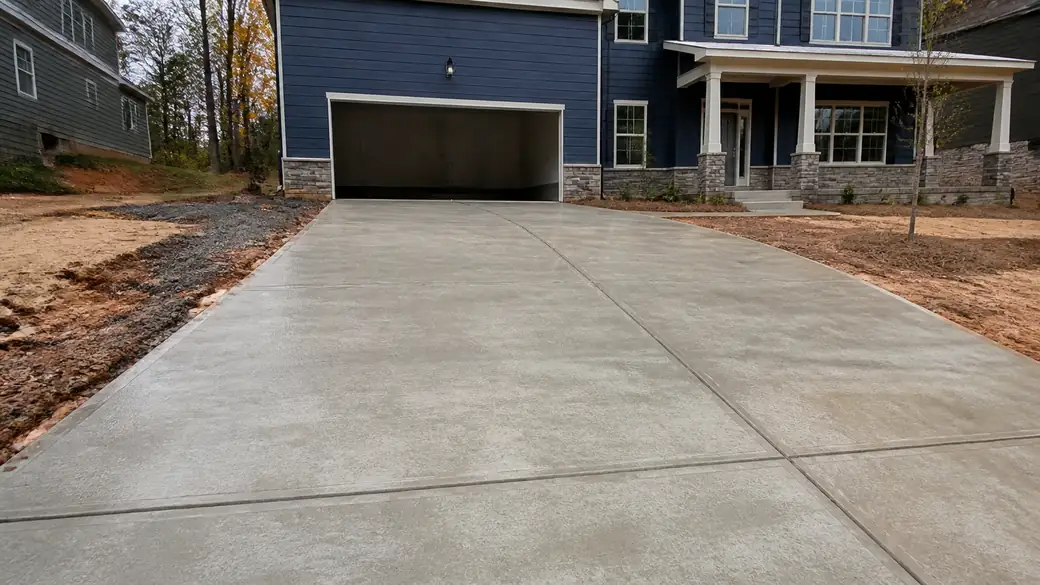
concrete installation completed by a local contractor at a brick-and-siding two-story home in Marietta, GA, after a rain shower.

Concrete Installation in Marietta, GA

We pour new concrete for homes and businesses in Marietta: driveways, patios, walkways, slabs, and decorative and stamped surfaces. The median home here was built in 1986, so a lot of the concrete around town is original to the house, and it shows. Cracked driveway aprons. Patios that have settled away from the back door. Walks lifted by roots. We break out concrete that has done its time and put down new work that sits flat and sheds water the way it should. Commercial property gets the same attention, from shop walks to the pads behind the retail and restaurant frontage around Marietta Square.

Good concrete starts below the surface. Cobb County is hilly, and the ground can change from one block to the next, so we grade and test every site on its own before a single form goes in. The dominant soil across the county drains well, but we don't take that on faith for any one yard. With about 59 inches of rain a year, water has to go somewhere, and a slab pitched the wrong way sends it toward the foundation or leaves it standing on the surface. We set the base, the reinforcement and the slope for the conditions we find, handle the permit, and pour. Call us for a free estimate.

Call +1 470-666-7021

Get Free Estimates

What Is Included in Concrete Installation

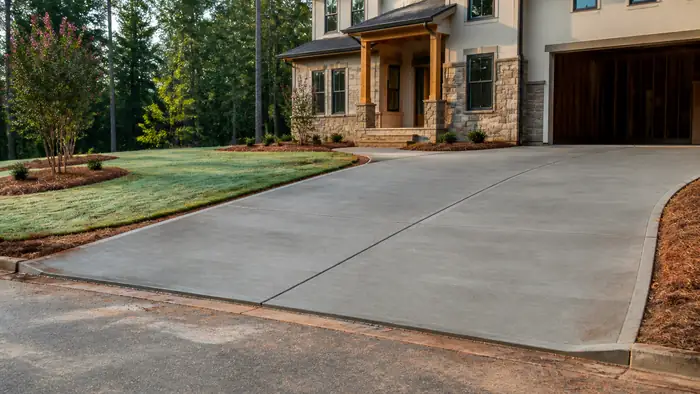
concrete slab installation completed by a local contractor at a stacked-stone and stucco home in Marietta, GA, in early morning light.

Concrete Slab Installation Cost

What a slab costs depends on what sits under it and what goes on top. Square footage matters, but so do thickness, how much grading the lot needs, whether old concrete has to be broken out and hauled away, and how close the truck can get to the pour. Cobb County is hilly, so a yard that looks flat can still need real cut and fill. Rebar runs more than wire mesh. Stamped runs more than broom finish. We measure on site, then price it. Call for a free estimate.
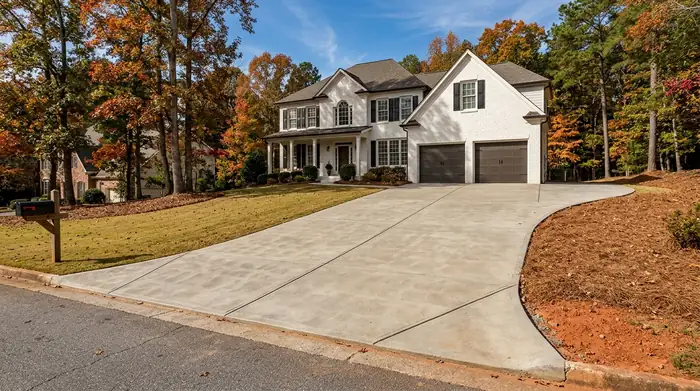
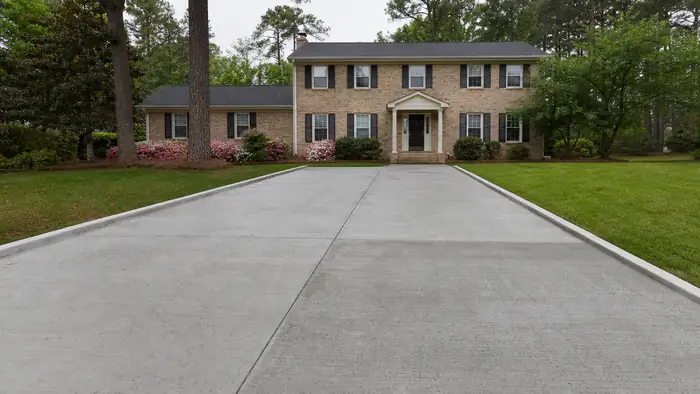
concrete driveway installation completed by a local contractor at a brick-and-siding two-story home in Marietta, GA, in open shade.

Concrete Driveway Installation

Driveways fail from the bottom up, so most of the work happens before the truck arrives. We strip the old surface, compact a gravel base, and set forms with enough pitch to shed water away from the garage. This area sees about 59 inches of rain a year, so drainage is part of the design, not an afterthought. Reinforcement sits on chairs in the middle of the slab, not lying in the dirt. Control joints are cut on a grid so cracks follow the lines.

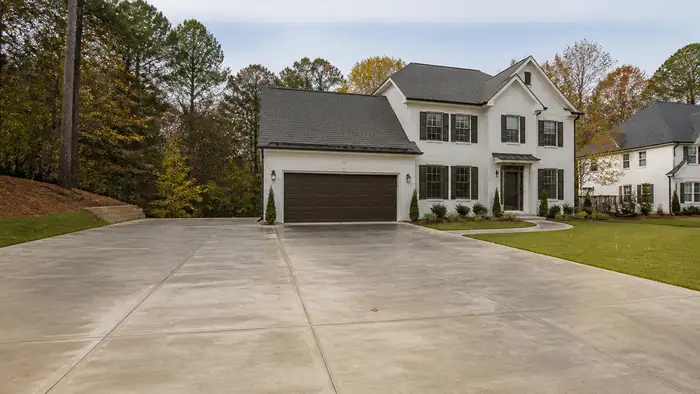
concrete flooring installation completed by a local contractor at a painted-white-brick two-story home in Marietta, GA, under bright midday cloud.

Concrete Flooring Installation

Garage floors, basements, workshops and commercial interiors all start the same way: a level slab over a compacted base, with a vapor barrier underneath. That plastic sheet is what keeps ground moisture from lifting paint, epoxy or glued-down flooring later. Interior floors get a steel trowel finish for a hard, tight surface, or a lighter texture where footing matters. Sealed, polished or stained, the finish is chosen before the pour. It changes how we place and work the concrete.

concrete slab repair completed by a local contractor at a tan-brick colonial in Marietta, GA, under an overcast sky.

Concrete Slab Repair

Not every cracked slab needs tearing out. Hairline shrinkage cracks are normal, and we rout and seal them. Sunken sections, heaved edges and cracks that keep widening point to something underneath: a washed-out base, a downspout dumping at the edge, roots, or fill that was never compacted. The typical Marietta home was built around 1986, and plenty of original slabs are showing their age. We find the cause first. Then we patch, resurface, or cut out and replace the failed section.

Our Concrete Process, Step by Step

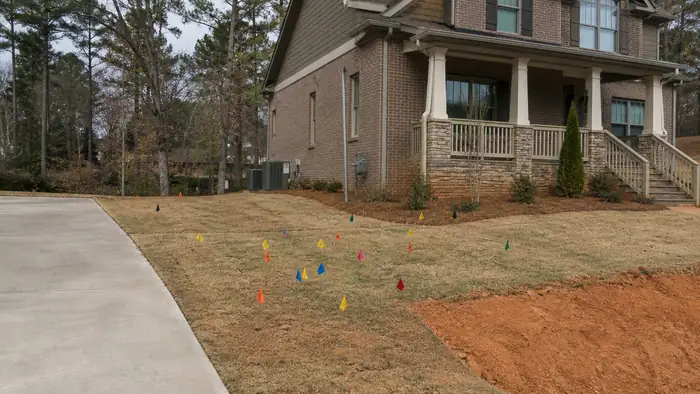
Utility flags mark buried lines before digging starts. at a brick-and-siding two-story home in Marietta, GA, under a hazy afternoon sky.

Step 1: Site Assessment

Before we price anything, we walk the property and watch where the water goes. Cobb County is hilly, with 199 feet of local relief within a few miles, and the grade changes from one block to the next. So we measure slope at your site, test the soil here instead of assuming it matches the county's well-drained Gwinnett type, and mark roots, buried lines and any old concrete that has to come out. If the job needs a permit, we handle the permit.

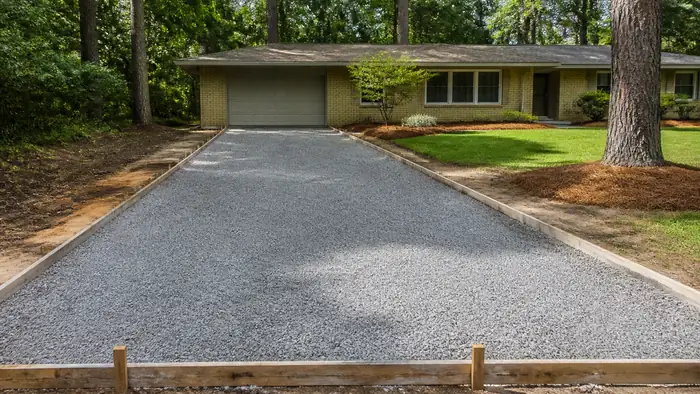
Crushed stone base is raked level inside driveway forms. at a buff-brick ranch home in Marietta, GA, in full afternoon sun.

Step 2: Site Preparation

Most slabs that crack early failed underneath, not at the surface. We dig out topsoil and organic material down to firm subgrade, bring in crushed stone for the base, and compact it in lifts with a plate compactor until it stops moving. Then we set the grade so water runs away from the house and off the slab. This area gets about 59 inches of rain a year, and a surface that holds puddles is one that wears out early.

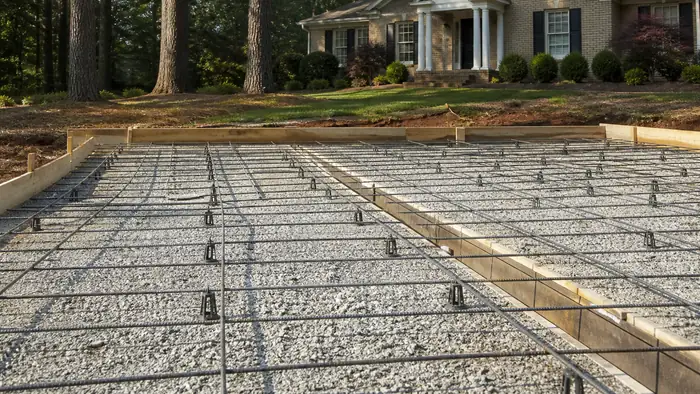
A worker ties rebar into a grid before a residential pour. at a tan-brick colonial in Marietta, GA, in raking morning side light.

Step 3: Forming & Reinforcement

Forms go in next, staked straight and set to the finished height and pitch, because whatever shape they hold is the shape the concrete keeps. Reinforcement depends on the load. A driveway gets steel rebar laid in a grid, tied at the crossings and lifted on chairs so it sits inside the slab, not under it. Patios and walks may use welded wire mesh or fiber in the mix. Rebar lying flat on the dirt does nothing.

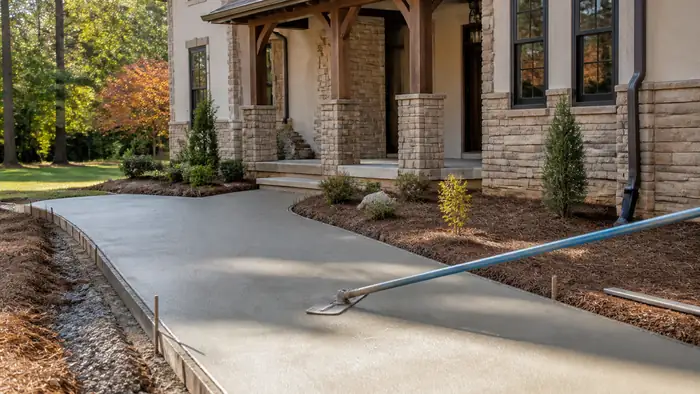
A bull float smooths a residential walkway surface after screeding. at a stacked-stone and stucco home in Marietta, GA, in full afternoon sun.

Step 4: Pouring

Pour day gets scheduled around the forecast, since rain on fresh concrete ruins the surface. We order a mix matched to the project and do not add water at the truck to make it flow easier. Extra water weakens the slab and invites cracking. The concrete is placed, pushed into the corners and consolidated along the forms to close up air pockets. Then we screed it flat off the forms while it is still workable.

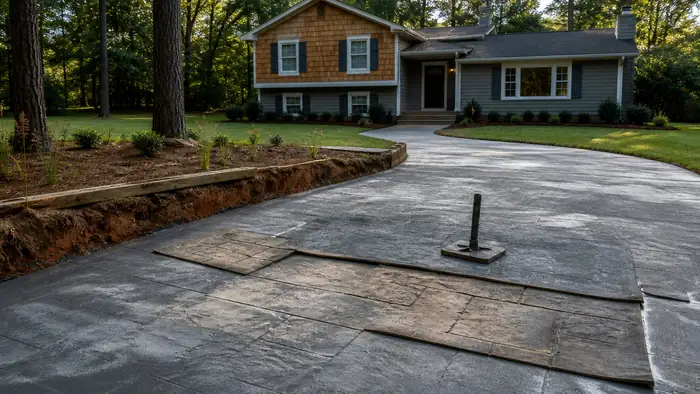
Stamping mats are pressed into a patio surface to imprint a pattern. at a grey split-level home in Marietta, GA, in early morning light.

Step 5: Finishing

Timing is most of finishing. We bull float right after the screed, wait for the bleed water to leave the surface, then edge the perimeter and tool control joints so the slab cracks where we choose, not at random. Driveways and walks usually get a broom finish for grip. Stamped and other decorative finishes happen in this same short window, so the crew works in a set order and does not stop until the pattern is done.

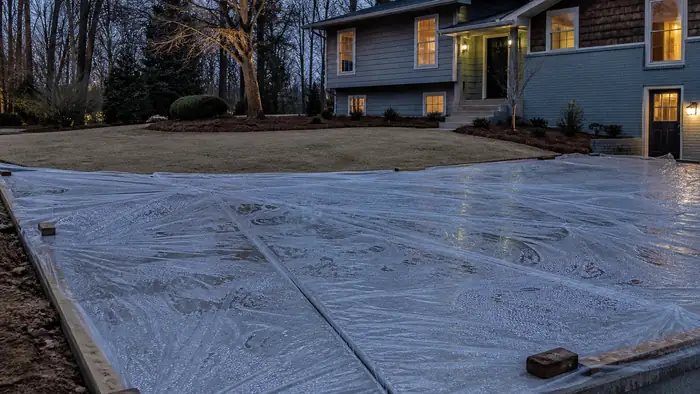
Plastic sheeting covers a curing driveway slab. at a grey split-level home in Marietta, GA, at blue hour.

Step 6: Curing

Concrete keeps gaining strength for weeks after the pour, and it needs moisture to get there. Once the surface can take it, we apply a curing compound or cover the slab so the top does not dry faster than the inside. Rushed drying is what causes surface crazing, dusting and weak edges. You can walk on it after a short wait. Cars stay off a new driveway longer, and we tell you the day.

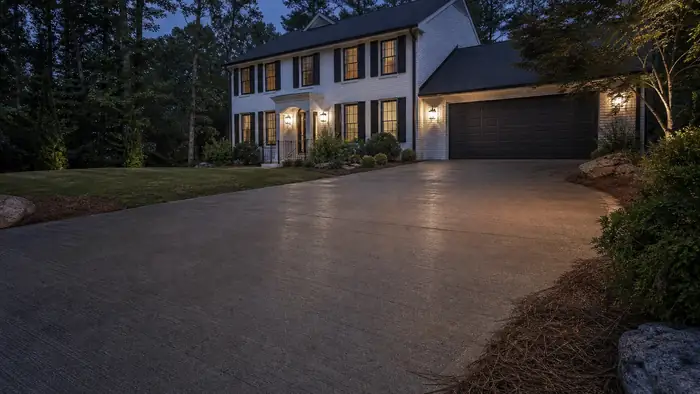
A sprayer applies sealer across a driveway. at a painted-white-brick two-story home in Marietta, GA, at blue hour.

Step 7: Sealing

Sealer goes on only after the slab has cured, usually around a month after the pour. Plain broom-finished concrete takes a penetrating silane or siloxane sealer, which keeps water and oil stains out without changing the look. Stamped and colored surfaces usually get an acrylic sealer that deepens the color and protects the pattern. Acrylic wears with foot traffic and sun, so it needs a fresh coat every few years. Skipping the sealer on decorative work is how stamped patios fade.

The Concrete Options Available in Marietta

Most driveways and patios we pour start from the same base: a reinforced slab with a broom finish, which gives good traction on a wet morning and stands up to daily traffic without fuss. The surface is where the choices open up. Stamped concrete takes a pattern (slate, flagstone, brick or wood plank) pressed into the slab while it is still workable. Exposed aggregate washes back the top layer to show the stone underneath. Color can be mixed through the whole pour or worked into the surface after placement. Commercial walks and pads usually stay plain, because plain is easier to keep clean and safe.

Choosing among them comes down to the property as much as taste. Marietta sees about 59 inches of rain a year, and a slick finish on a sloped driveway is a real problem, so we keep decorative surfaces on patios and flatter ground and keep grip where cars and feet climb. Cobb County is hilly, and every site is graded and tested on its own, which decides where a stamped pattern can run cleanly. The median home here was built in 1986. On a house that age, restraint usually wins: the right color and texture beat the busiest pattern. Call for a free estimate.

Questions About Concrete Installation

How long does it take to construct and cure new concrete steps in Marietta?

Forming and pouring a set of steps is the quick part, once the ground is graded and the base is set. Curing is where the patience goes. You can walk on new steps carefully after a few days, but the concrete keeps gaining strength for weeks, so we ask you to keep heavy loads off. Marietta sees about 59 inches of rain a year, so we cover fresh work and cure it under our control rather than leaving it to the weather.

What's the best concrete contractor for patios in Marietta?

The right one is whoever will show you what goes under the slab, not just what goes on top. Ask any contractor how they grade the site, what base they lay, where the control joints go, and how water drains away from the house. Those answers tell you more than a brochure will. We are glad to walk you through ours in plain terms. Call for a free estimate and judge us on what we say.

How should existing concrete in Marietta be prepared before staining?

Cleaning comes first, and it matters more than the stain itself. We strip any old sealer, paint or coating, degrease oil spots, and scrub the surface until water soaks in rather than beading on top. That simple water test tells us whether stain will take. Cracks and spalled patches get repaired beforehand, since a stain shows every flaw instead of hiding it. Then the slab dries fully before any color goes down.

What makes polished concrete a practical long-term choice for Marietta businesses and property owners?

It asks very little of you. A polished floor handles foot traffic, carts and spills, and day-to-day care is sweeping and a damp mop, with no waxing or stripping. For the retail and restaurant frontage around Marietta Square, that matters. The ground surface is dense, it resists stains once sealed, and it throws back light in a shop or office. Homeowners get the same benefit in basements and garages.

What concrete mix specs and reinforcement standards does Marietta Professional Concrete use?

There isn't one mix for every job, and we don't pretend there is. A walkway, a driveway and a structural slab each carry different loads, so we match mix strength and reinforcement to the work: steel rebar, welded wire mesh or fiber, set on chairs so it sits within the slab instead of lying in the dirt. Cobb County is hilly and its soils vary, so every site is graded and tested before we decide. Both are written into your estimate.

Do I need permits for concrete curbing in Marietta?

Yes, sometimes. It depends on where the curb sits. Landscape edging inside your own yard is a different matter from curbing that meets a street, a public sidewalk or a drainage path. We look at the layout first and confirm what applies to your property. Where a permit is needed, we handle the permit, so you are not sorting out paperwork while the forms wait.

Get a Free Estimate

Get Free Estimates

Tap to call +1 470-666-7021