+1 470-666-7021
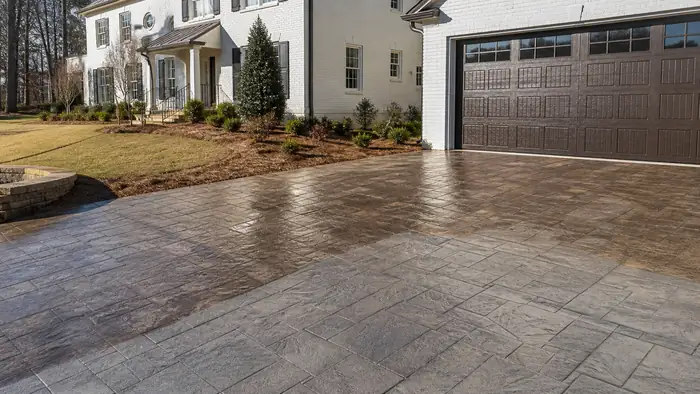
Wide view of finished concrete flatwork across the front of a home at a stacked-stone and stucco home in Marietta, GA, under bright midday cloud.

Concrete Repair And Resurfacing in Marietta, GA

Cracked, pitted or sunken concrete does not always need to come out. The median home in Marietta was built in 1986, so a lot of the driveways, patios and walks around town have been carrying cars and shedding water for decades. We repair and resurface those slabs: we fill and seal cracks, bring settled sections back to level, and bond a fresh surface over sound old concrete so it looks and wears like new work.

Resurfacing only holds on a slab that is solid underneath, so that is the first thing we check. With about 59 inches of rain a year and ground that rises and falls from one block to the next, water finds every weak spot. A clean topcoat over a failing base just hides the problem for a while. Where repair makes sense, we say so. Where it does not, we tell you that too. Call for a free estimate.

Call +1 470-666-7021

Get Free Estimates

What Is Included in Concrete Repair And Resurfacing

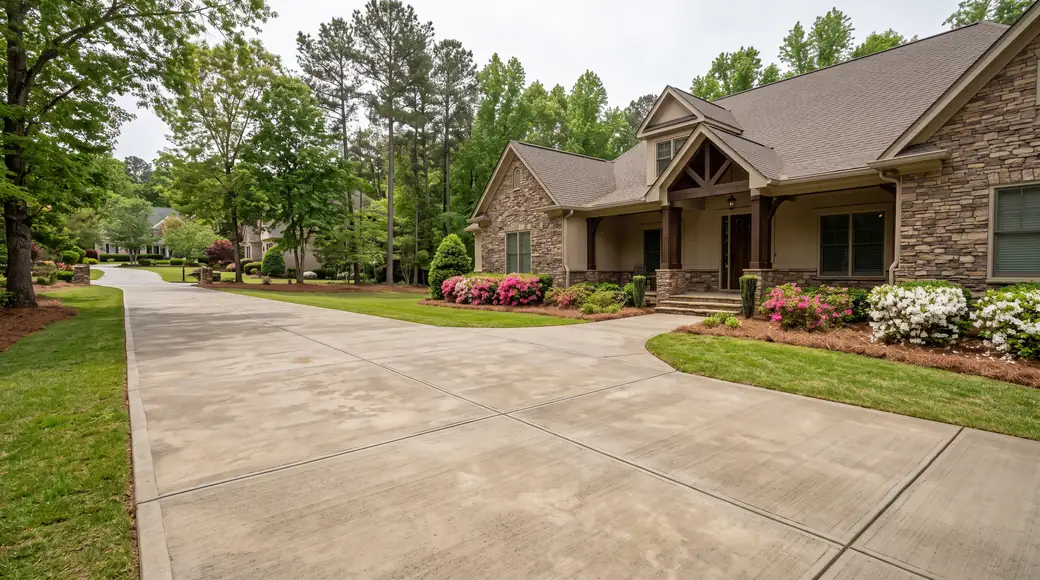
concrete slab installation completed by a local contractor at a stacked-stone and stucco home in Marietta, GA, in early morning light.

Concrete Slab Installation Cost

A slab's price comes down to how much ground has to move, how thick it pours, what goes inside it, and how it gets finished. Cobb County is hilly, so a patio on a sloped lot can take more grading and forming than the pour itself. Rebar costs more than wire mesh. A broom finish costs less than stamped. We walk the property, test the site, and put every line item in writing before any concrete arrives.
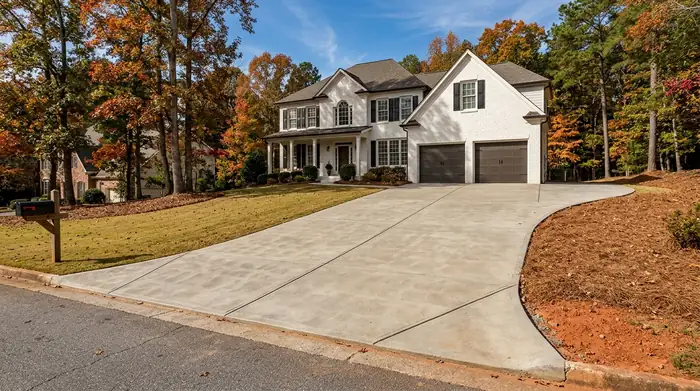
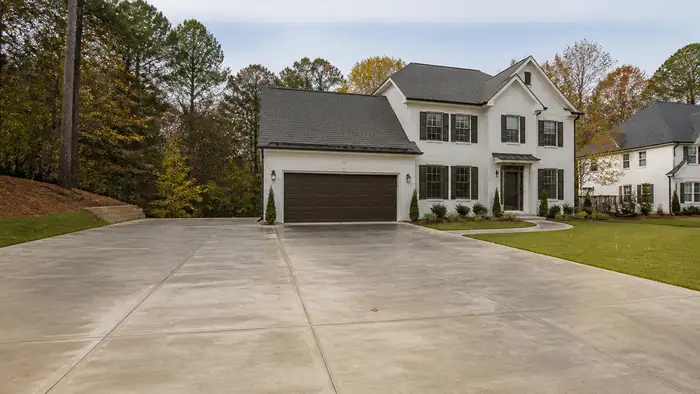
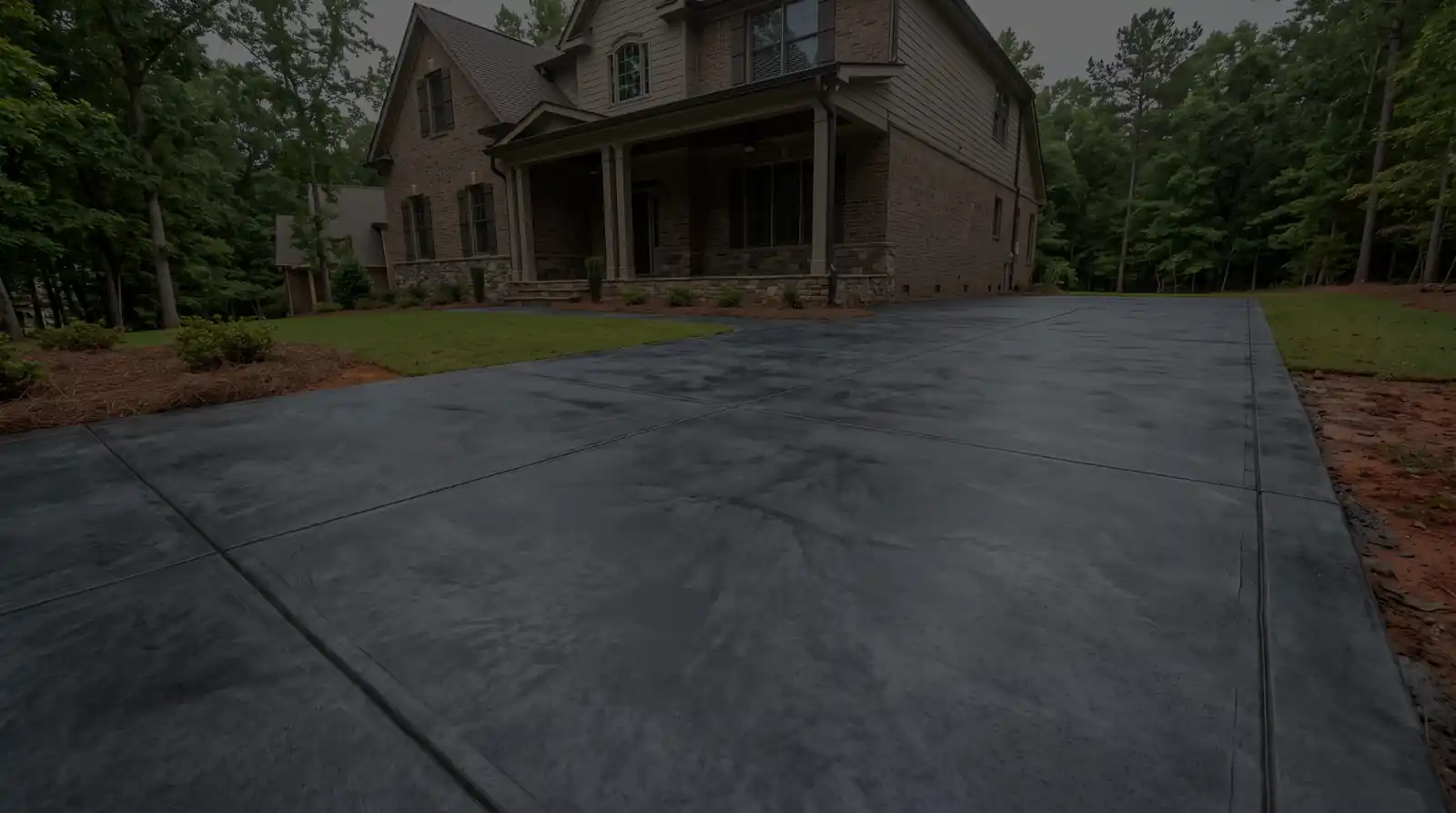
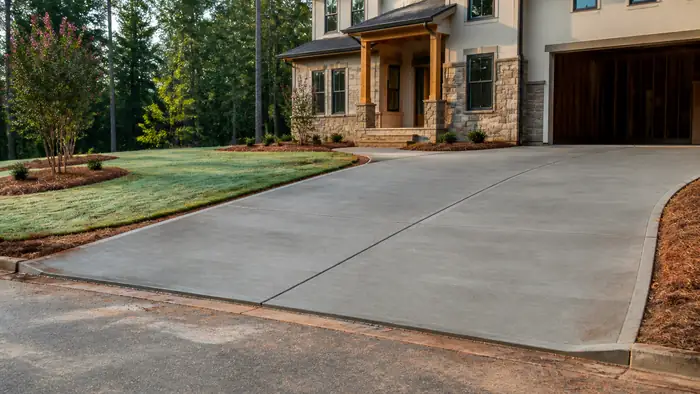
concrete driveway installation completed by a local contractor at a brick-and-siding two-story home in Marietta, GA, in open shade.

Concrete Driveway Installation

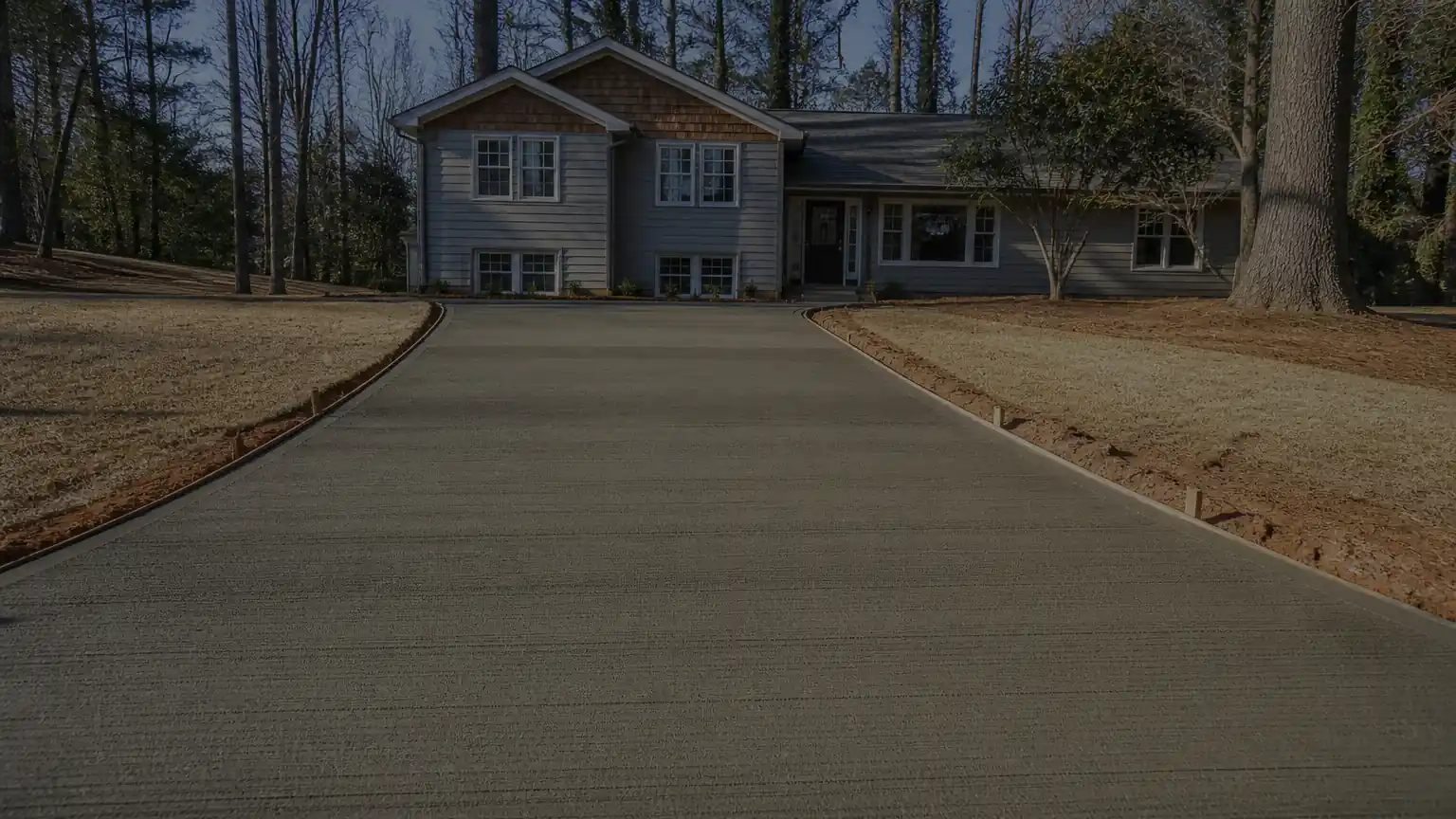
Most driveway failures start under the concrete, not in it. We remove the old surface, compact a gravel base, and set rebar on chairs so the steel sits in the middle of the slab instead of lying in the dirt. The apron at the street gets a thickened edge, since that is where the weight lands. Control joints go in before the slab has a chance to crack on its own. Finishes run from plain broom to stamped and decorative borders.

concrete flooring installation completed by a local contractor at a painted-white-brick two-story home in Marietta, GA, under bright midday cloud.

Concrete Flooring Installation

Garage floors, basements, shops and commercial rooms all start the same way: a level, compacted base with a vapor barrier under the pour so ground moisture stays out of the finished floor. With about 59 inches of rain a year here, we do not skip that layer. Interior slabs get a smooth trowel finish that can be sealed, polished, or left ready for tile. We cut control joints on a grid so any shrinkage cracks follow a straight line.

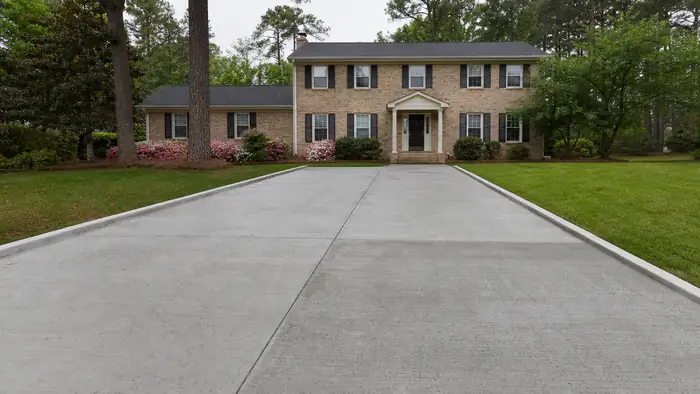
concrete slab repair completed by a local contractor at a tan-brick colonial in Marietta, GA, under an overcast sky.

Concrete Slab Repair

Cracks, sunken sections and flaking surfaces each need a different fix. Hairline cracks get routed and sealed. A slab that has settled usually means the base washed out or was never compacted, so we find the cause before we patch anything. Scaled or spalled surfaces can take a bonded resurfacing overlay if the concrete underneath is sound. When it is not, we say so and replace the section. Plenty of Marietta homes date from around 1986, and a slab that old has had time to move.

What Makes Marietta Professional Concrete's Concrete Work Different

We find out why a slab failed before we put anything on top of it. The median home here was built in 1986, so many of the driveways and patios we see have carried cars and weather for decades. Some only need a thin resurfacing layer. Others have a structural problem underneath that a new surface would hide for a season, and we tell you which one you have.

Water is usually behind it. Marietta gets about 59 inches of rain a year, and on a hilly lot that water runs to the low side of a slab and works into every open crack and joint. So we look at where it goes, repair the damage at its source, and match the materials to the conditions on your property. Call for a free estimate.

Our Concrete Process, Step by Step

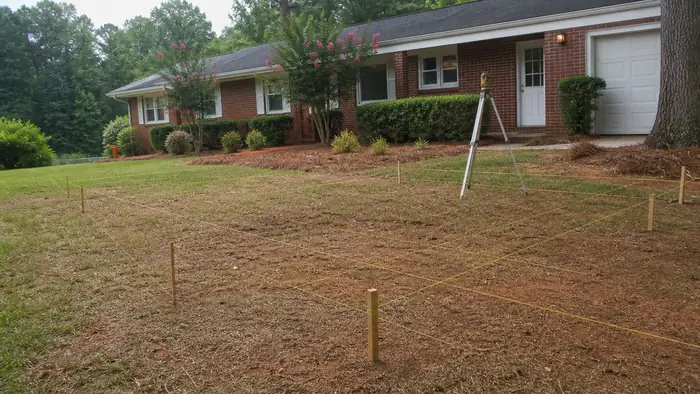
A contractor checks slope and drainage before work begins. at a red-brick ranch home in Marietta, GA, under a hazy afternoon sky.

Step 1: Site Assessment

We start by walking the slab and reading its cracks. A hairline shrinkage crack, a panel heaved by a tree root and a corner that sank because the base washed out each need a different fix. Resurfacing over the wrong one just hides it for a season. We check drainage, slope and where water leaves the surface. With a median build year of 1986, plenty of driveways and patios here are original. We tell you plainly whether yours can be repaired or needs to come out.

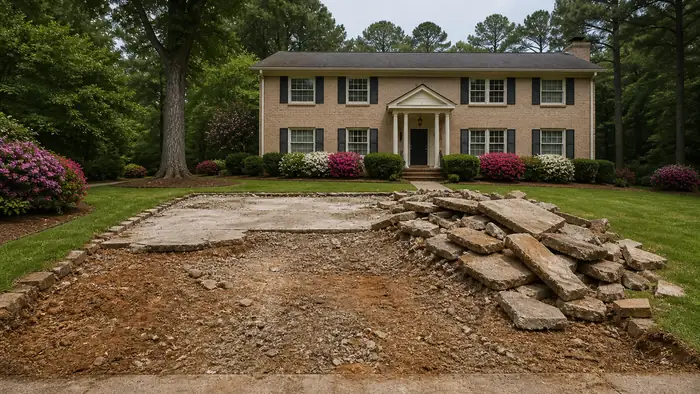
An old patio slab is broken up and hauled away. at a tan-brick colonial in Marietta, GA, under a hazy afternoon sky.

Step 2: Site Preparation

Resurfacing only holds if the old concrete is clean and open. We pressure wash, grind off sealers, paint and failing overlays, and cut spalled or delaminated patches back to sound material. Cracks get routed and filled. Where a section has to be replaced, we saw-cut clean edges, break it out and rebuild the base with compacted gravel. Cobb County is hilly and the soil changes from one lot to the next, so every site is graded and tested on its own before work starts.

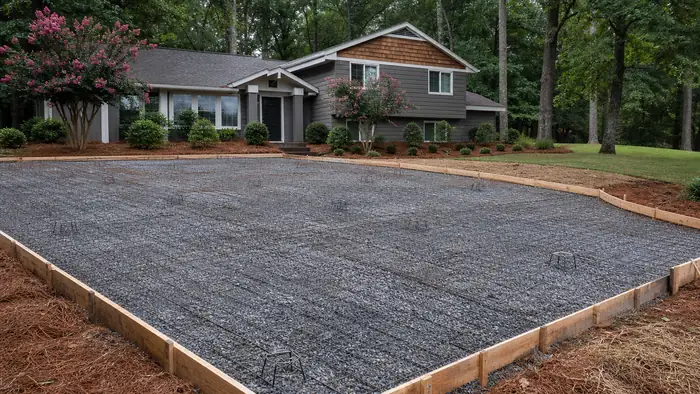
Wire mesh is unrolled across a driveway base before pouring. at a grey split-level home in Marietta, GA, after a rain shower.

Step 3: Forming & Reinforcement

For replaced sections, we set forms from straight lumber or steel, staked tight and pitched so water runs away from the house instead of pooling against it. Rebar or wire mesh sits on chairs in the middle of the slab, not flat on the gravel where it does nothing. New panels get doweled into the existing concrete so the two move together. On overlays, the structural work already lives in the old slab. Our job there is a strong bond, so we prime the surface first.

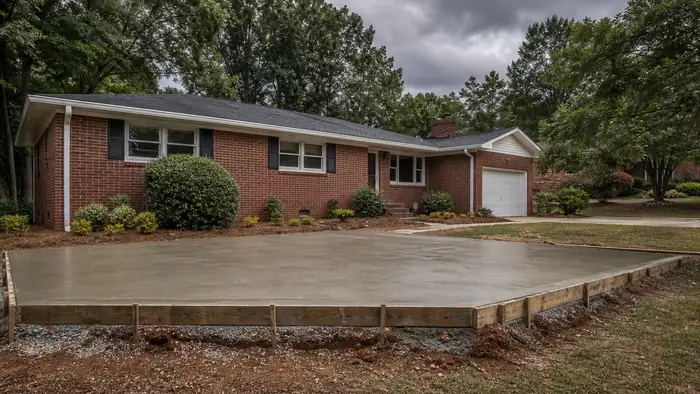
A screed board levels fresh concrete on a small patio. at a red-brick ranch home in Marietta, GA, under a darkening storm sky.

Step 4: Pouring

Concrete goes down fast and is placed close to where it ends up, because dragging it across the form separates the stone from the paste. We watch the mix at the chute. Extra water makes it easier to spread and weaker for the life of the slab, so we don't add it. With about 59 inches of rain a year here, we check the forecast and move a pour rather than place concrete ahead of a storm. Resurfacing mortar goes on in thin, even passes.

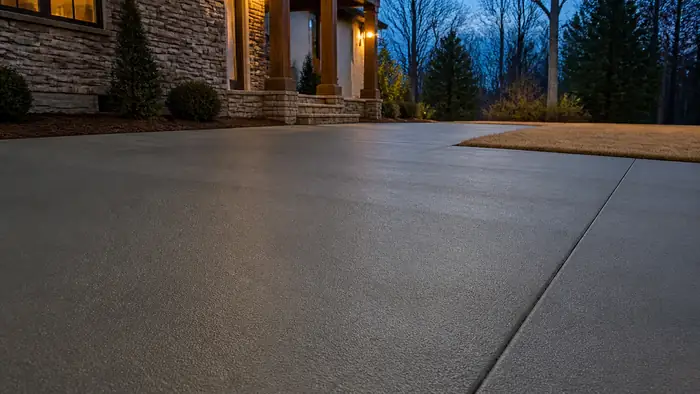
A hand trowel smooths a small patio surface to a hard finish. at a stacked-stone and stucco home in Marietta, GA, at blue hour.

Step 5: Finishing

Timing decides the finish. We screed and bull float, then wait for bleed water to leave before edging and cutting control joints deep enough that the slab cracks where we choose. Troweling that water back into the surface is what causes flaking later. Driveways get a broom finish for grip. Patios can be stamped, stained or given a decorative texture, and resurfaced slabs take the same patterns, so a tired gray driveway can come back looking like new work.

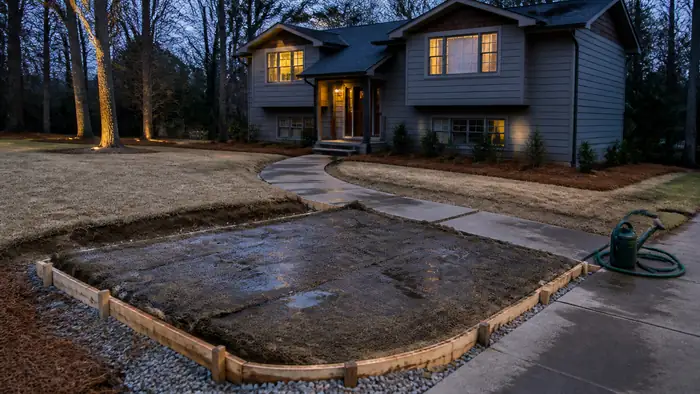
Damp burlap covers a small slab section during curing. at a grey split-level home in Marietta, GA, at blue hour.

Step 6: Curing

Concrete gains strength by holding its water, not by drying out. Right after finishing, we apply a curing compound or cover the surface so sun and wind can't pull moisture out too quickly. Average highs around 72°F are kind to curing, but summer afternoons are not, and hot-day pours get extra attention. We keep foot traffic off at first and cars off longer, and we tell you when each is safe. Poor curing is behind much of the dusting and scaling that later needs repair.

A roller applies sealer to a stamped patio surface. at a painted-white-brick two-story home in Marietta, GA, under low winter sun.

Step 7: Sealing

Once the concrete has cured, we seal it. A penetrating silane or siloxane sealer soaks in and keeps water and oil out without changing the look, which suits plain broom-finished driveways. Stamped and stained surfaces usually get an acrylic sealer that deepens the color and leaves a light sheen. Sealer wears, so plan on resealing every few years to keep the surface protected. For a free estimate on repair or resurfacing at your property, give us a call.

The Concrete Options Available in Marietta

Much of the concrete around here can be repaired rather than torn out, and the right fix depends on what is happening underneath. Hairline cracks and chipped edges get cleaned out and filled with repair materials that bond to the old slab. A worn or pitted surface takes a resurfacing overlay, a thin layer that gives a driveway or patio a new face. Decorative and stamped overlays do the same job with pattern and color added.

An overlay only lasts as long as the slab under it. If a section has sunk, heaved or broken through, resurfacing just hides the problem for a while, so we cut it out and pour new concrete with fresh reinforcement. The median home in Marietta was built in 1986, and a driveway that age often needs a mix: one panel replaced, the rest repaired. We look at every slab on its own and tell you which is which.

Questions About Concrete Repair And Resurfacing

How long does concrete resurfacing take to complete?

Most residential resurfacing jobs are measured in days, not weeks. The hands-on work moves quickly: we clean the surface, cut out and fill cracks, patch spalled spots, then apply the overlay and any stamped or decorative finish. Curing sets the real pace. We mark when the new surface can take foot traffic and when it can take a car. Rain moves the schedule too, so with about 59 inches a year here, we plan around the forecast.

How much does concrete resurfacing cost compared to replacement?

Resurfacing usually costs less than tearing out and pouring new, because the existing slab stays put. There is no demolition, no haul-off, and far less new material. That saving only holds if the slab underneath is sound. A driveway that has settled, heaved or cracked through its full depth needs replacement, since an overlay would just crack along the same lines. We look first and tell you which one your property needs. The free estimate is where the real number comes from.

What is the standard width for commercial sidewalks in Marietta?

It depends on where the sidewalk sits and what it connects. Walks along public frontage, accessible routes and private paths behind a building can each fall under different requirements, so there is no single figure that fits every commercial property. We confirm the required width for your site before any forms go down, and we handle the permit. If you are resurfacing an existing walk rather than replacing it, the width generally stays as built.

What areas beyond Marietta do you serve?

We work across the surrounding part of metro Atlanta, not only inside the Marietta city limits. A resurfacing job in Smyrna gets the same crew, the same prep and the same materials as any other. What changes from one address to the next is the ground itself. Slope and soil vary block to block across Cobb County, so every site is graded and tested on its own. Not sure your address is in range? Call and ask.

What are the warranty or guarantee terms for services provided by Marietta Professional Concrete?

That is a fair question to raise during your estimate, and any answer worth having belongs in writing before work starts. We would say the same about any contractor. What we can speak to here is what makes resurfacing hold up: sound concrete underneath, a thoroughly cleaned surface, cracks repaired properly rather than covered over, and an overlay applied in the right conditions. Skip any one of those, and no piece of paper will keep the surface from failing.

Is Marietta Professional Concrete licensed, insured, and bonded?

Ask to see current documents for all three before any contractor sets foot on your property, us included. Paperwork you have read yourself is worth more than a line on a website. Check that the company name matches the one on your estimate and that the dates are current. It takes a few minutes, and it protects you on every project, from a small patio repair to a full driveway resurfacing.

Get a Free Estimate

Get Free Estimates

Tap to call +1 470-666-7021